
How to file a roof insurance claim
Roofing Contractor Specializing in Roof Repair and Storm Damage Roofing in Denver
Providing roof repair, emergency roof repair, storm damage roofing, and roof replacement services throughout the Metro Denver Area
Family-Owned Legacy Built on Quality Since 1978
Fast scheduling and quick response – reach out today
Request Estimate
Ernies Roofing
Colorado Roof Insurance Claims
How to File a Roof Insurance Claim in Colorado
Complete Step-by-Step Process for Denver Homeowners
Filing a roof insurance claim in Colorado is not complicated if you know the right steps. Most Denver homeowners who get shortchanged on a claim made one of three mistakes: they waited too long to report, they let the adjuster inspect without a contractor present, or they accepted a settlement before understanding what the damage actually cost to repair. This guide covers every step so none of those happen to you.

Why How You File the Claim Matters As Much As the Damage Itself

Insurance companies are not adversaries, but they are not on your side either. They are businesses managing risk and costs. The adjuster they send to your home is trained to identify damage and calculate what it costs to restore your roof to its pre-loss condition. What the adjuster finds, documents, and reports determines what the insurance company pays. If the documentation is incomplete, the settlement will be incomplete.
Nearly fifty years of working with Denver homeowners through the insurance claim process has shown us the same pattern repeatedly. Homeowners who go through the process with a licensed contractor present recover more, resolve claims faster, and avoid the supplemental claim process that adds months to the timeline. The ones who handle it alone often find out after the settlement that items were missed, depreciation was applied incorrectly, or the scope of work was too narrow to actually complete the repairs.
This guide gives you the exact steps. Follow them in order and you put yourself in the strongest position possible before the adjuster ever gets on your roof.
erniesroofing.com/storm-and-hail-damage-roof-repair/
Step One and Two: Document First, Then Call Your Insurance Company

The first thing most Denver homeowners do after a hail or wind event is call their insurance company. That is actually the second thing you should do. The first is documentation. Before you make that call, walk the exterior of your home with your phone and photograph every piece of storm damage you can see. Dented gutters. Damaged window screens. Bruised or missing shingles. Damaged fascia. Hail marks on metal surfaces like air conditioning units, downspouts, and flashing. All of it.
This documentation matters because it establishes the condition of your property at the time of the storm. Insurance adjusters inspect roofs days or sometimes weeks after a storm event. Between the storm and the inspection, weather can obscure some damage indicators. Your photos from the day of the storm are evidence of what happened and when.
Once you have that documentation, call your insurance company to open the claim. Most carriers have a specific window in which storm damage must be reported. In Colorado that window can be as short as one year from the date of loss, but some policies are shorter. Report the damage promptly. Get the claim number. Write down the name of everyone you speak with and the date of the conversation.
erniesroofing.com/emergency-roof-repair/
Step Three and Four: Get a Contractor Inspection Before the Adjuster Arrives
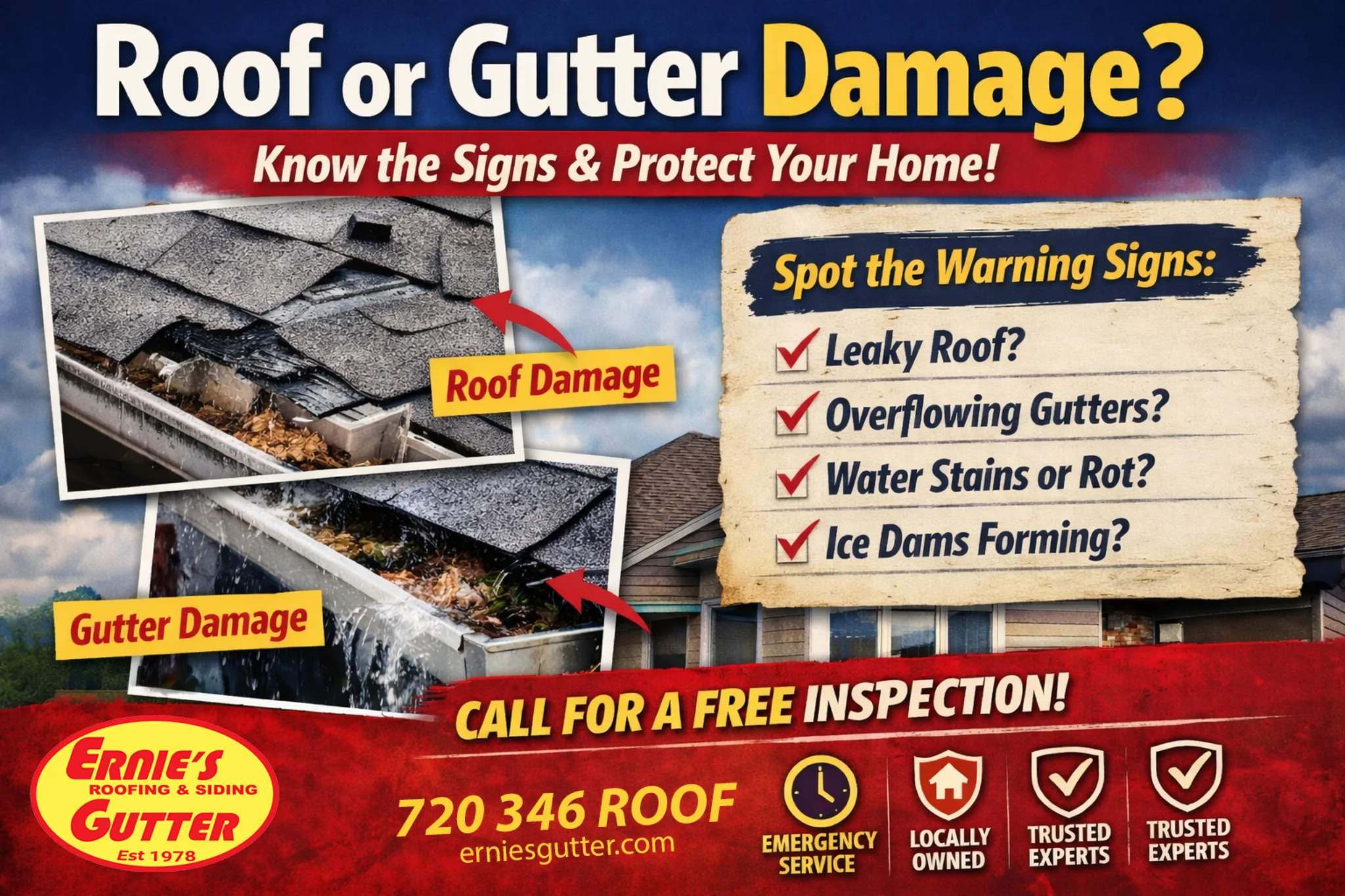
After you open the claim, your insurance company will schedule an adjuster to inspect the damage. Before that appointment happens, get a licensed roofing contractor on your roof first. This is the step that most homeowners skip and the one that costs them the most money.
A contractor inspection before the adjuster gives you an independent assessment of the damage scope. When the adjuster arrives, you or your contractor can walk the roof with them, point out specific damage areas, and ensure that nothing is overlooked or undervalued. An adjuster who inspects alone determines the scope of the claim alone. An adjuster who inspects with a knowledgeable contractor present works from a much more complete picture.
Ernie's Roofing will meet the adjuster on-site at no charge. We document the damage in writing and with photos before the adjuster arrives, walk the roof with the adjuster during the inspection, and identify any items that should be included in the claim scope that the adjuster might otherwise pass on.
erniesroofing.com/roof-repair/
Step Five and Six: Review the Estimate and Negotiate Before You Accept

After the adjuster inspection, the insurance company will issue a claim estimate. This document lists the damage found, the repair scope, and the dollar amount the carrier is offering. Read it carefully before you sign or cash anything. The estimate is not a final take-it-or-leave-it settlement. It is the starting point for a negotiation if the numbers do not align with the actual repair cost.
Compare the adjuster's estimate line by line against your contractor's written estimate. Common discrepancies include items that were not included in the adjuster's scope, depreciation applied at a higher rate than the policy allows, incorrect measurements, and missing line items for code-required upgrades that Colorado law may require when re-roofing. Any significant gap between the two estimates should be addressed with your insurance company before you accept the settlement.
This process is called a supplement claim and it is entirely normal. It is not confrontational. It is you providing documentation that supports a more accurate settlement. Ernie's Roofing handles this process with insurance companies on behalf of Denver homeowners regularly. We know how to document the gap, how to present it to the carrier, and how to get claims resolved correctly without unnecessarily prolonging the process.
erniesroofing.com/residential-roofing/
Need Help With Your Roof Insurance Claim Right Now?
Do not go through the adjuster process alone. Ernie's Roofing will inspect your roof, document the damage, and meet the adjuster on-site at no charge. Nearly fifty years of Denver roofing means we know exactly what adjusters look for and what gets missed.
720 346 ROOF
Six Mistakes That Reduce Colorado Roof Insurance Claims
These are the mistakes we see Denver homeowners make repeatedly after hail and wind events. Each one reduces what they recover from an otherwise valid claim.
Waiting Too Long To Report
Colorado policies have reporting windows. Missing the deadline can result in a denied claim regardless of how legitimate the damage is. Report storm damage promptly after every significant weather event.
No Pre-Adjuster Inspection
Letting the adjuster inspect alone means the adjuster defines the damage scope alone. Get a licensed contractor on the roof before the adjuster arrives and present with you during the inspection.
No Photo Documentation
Photos taken immediately after the storm establish condition at time of loss. Without them, damage found weeks later is harder to attribute directly to the storm event. Document everything the day it happens.
Accepting the First Settlement
The initial adjuster estimate is not the final offer. It is the starting point. If it does not cover the actual repair cost, a supplement claim is the next step. Never cash the first check without comparing it to a contractor estimate.
Missing Code Upgrade Items
Colorado building codes require certain upgrades when re-roofing. These costs are often covered under the policy but only if they are specifically included in the claim. Many homeowners miss these line items entirely.
Using an Unlicensed Contractor
Insurance carriers require licensed contractor documentation for claim payments. Using an unlicensed contractor can void your claim or create liability issues that complicate the settlement. Always verify contractor licensing before signing anything.
What Colorado Homeowner Insurance Typically Covers and What It Does Not
Understanding the difference between what your policy covers and what it excludes is essential before you file. Colorado policies vary by carrier and by policy type, but these general categories apply to most standard homeowner policies in the Denver area.
Typically Covered
Hail damage from a documented storm event. Wind damage that causes sudden loss. Damage from falling objects. Emergency repairs required to prevent further damage. Code-required upgrades during re-roofing (with the right endorsement). Full replacement when damage exceeds repair threshold.
Typically Not Covered
Damage caused by age or normal wear and tear. Pre-existing conditions present before the policy was issued. Damage from lack of maintenance. Gradual deterioration that was not storm-related. Cosmetic damage only without functional impairment on some policies. Damage to property excluded in the policy terms.
Why Documentation Decides
The line between covered storm damage and excluded wear-and-tear damage is often determined by documentation. A licensed contractor inspection with photos, written findings, and storm date correlation is the strongest evidence you can present. Without it, carriers have more latitude to apply the wear-and-tear exclusion.
The Complete Roof Insurance Claim Process Start To Finish

Every Ernie's Roofing insurance claim engagement follows the same complete process. We do not drop in for the inspection and disappear. We stay with you through every step from the first photo to the final payment so nothing falls through the cracks and the settlement reflects the actual cost of restoring your roof correctly.
- Storm documentation: We advise you on what to photograph and document immediately after the weather event before any condition changes.
- Claim opening: We help you understand what to say when you open the claim and what information your carrier needs to start the process correctly.
- Pre-adjuster inspection: We get on your roof before the adjuster arrives and produce a written damage assessment with photos of every finding.
- Adjuster meeting: We attend the adjuster inspection on-site, walk the roof with the adjuster, and present our findings to ensure nothing is overlooked.
- Estimate review: We compare the adjuster's estimate against our scope line by line and identify any discrepancies in coverage, scope, or pricing.
- Supplement filing: If the adjuster's estimate is incomplete, we prepare and submit a supplement claim with full documentation supporting the additional items.
- Settlement review: We review the final settlement with you before you accept to confirm it covers the full scope of work needed to restore your roof correctly.
- Repair or replacement: Once the claim is settled, we complete the roofing work to the same standard we would apply to any job, claim or no claim.
Do Not Let the Insurance Process Cost You What You Are Owed
Ernie's Roofing has been navigating Colorado roof insurance claims with Denver homeowners since 1978. We know how adjusters work, what carriers look for, and how to document damage the right way. Call before the adjuster arrives and we will make sure your claim tells the complete story.
Get Claim Help TodayFrequently Asked Questions: Roof Insurance Claims Colorado
How long do I have to file a roof insurance claim in Colorado?
Most Colorado homeowner policies require storm damage to be reported within one year of the date of loss. Some policies are shorter. Check your policy documents or call your carrier directly. Do not assume you have unlimited time. Report storm damage promptly after every significant weather event.
Should I call my insurance company or a contractor first?
Document the damage first with photos, then call your insurance company to open the claim, then call a licensed contractor for a pre-adjuster inspection. That order gives you the strongest position going into the adjuster meeting. Calling your carrier before you have any documentation puts you at a disadvantage.
Can a roofing contractor help me with my insurance claim?
Yes. A licensed roofing contractor can inspect your roof before the adjuster arrives, attend the inspection on-site, provide written documentation of findings, and help you identify discrepancies between the adjuster's estimate and the actual repair cost. Ernie's Roofing does this for Denver homeowners at no charge as part of the claim process.
What is a supplement claim and do I need one?
A supplement claim is an additional claim filed after the initial settlement when items were missed, undervalued, or excluded from the original adjuster estimate. They are common and entirely legitimate. If the adjuster's estimate does not cover the full cost of restoring your roof, a supplement is the way to correct that before work begins.
Will filing a roof claim raise my insurance rates in Colorado?
It depends on your carrier and your claim history. A single weather-related claim on an otherwise clean record rarely triggers a significant rate increase in Colorado. Carriers generally treat hail and wind claims differently than claims involving negligence or repeated losses. Contact your carrier directly to understand how a claim might affect your specific policy.
What is actual cash value versus replacement cost value?
Actual cash value pays you what the damaged roof was worth at the time of the storm, accounting for age and depreciation. Replacement cost value pays what it actually costs to replace the damaged roof with new materials. Most Colorado homeowners benefit significantly from replacement cost value coverage. Check your policy to understand which type you have.
How do I patch my roof after a storm while waiting for the claim?
A heavy-duty tarp secured over the damaged area is the most reliable temporary fix while the claim is being processed. Document the temporary repair with photos. Most policies cover reasonable emergency repairs taken to prevent further damage. Call 720 346 ROOF for emergency patching and we will keep the damage from compounding while the claim moves forward.
Who do I call for wind damage on my Denver roof?
Call Ernie's Roofing at 720 346 ROOF. We respond quickly after wind events, inspect for damage, provide emergency stabilization if needed, and guide you through the insurance claim process from first contact through final payment. Wind damage documentation needs to happen before the next weather event changes the condition of the roof.
Can my claim be denied if I used an unlicensed contractor?
Yes. Insurance carriers require work to be performed by licensed contractors and will request documentation of licensing before releasing final payment. Work performed by unlicensed contractors can void the claim, create liability exposure for the homeowner, and result in repairs that do not meet Colorado building code requirements.
How do I get Ernie's Roofing to help with my claim?
Call 720 346 ROOF or use the button below. We will schedule a roof inspection, document the damage, and walk you through the claim process at no charge. If you have already opened a claim and have an adjuster appointment scheduled, call us before that date so we can inspect the roof and be present during the inspection.
Related Reading
Get The Claim Help You Need Before The Adjuster Arrives
Ernie's Roofing has been guiding Denver homeowners through the roof insurance claim process since 1978. Free inspection. On-site adjuster meeting. Full documentation. No pressure. Call us before you meet the adjuster and we will make sure your claim reflects the full picture.
Get Claim Help Now720 346 ROOF
Protection starts at the top of the home.

Roof leaks in Denver often begin long before water appears inside. Discover the real causes of delayed roof leaks and when Denver homes need inspection. Since 1978
This content is provided for general informational and educational purposes only. It does not constitute professional construction, roofing, or contracting advice. Every property, structure, and situation is different. Always consult a qualified roofing or gutter professional for inspections, recommendations, and repairs specific to your home or building.