Roof Maintenance Schedule

Roofing Contractor Specializing in Roof Repair and Storm Damage Roofing in Denver

Providing roof repair, emergency roof repair, storm damage roofing, and roof replacement services throughout the Metro Denver Area

Family-Owned Legacy Built on Quality  Since 1978

Fast scheduling and quick response – reach out today

Request Estimate 

Ernies Roofing

You’re Info is safe with us – we never share your information. We value our customers privacy!
Roof Maintenance Schedule for Colorado | Ernie's Roofing Denver

Colorado Roof Care Guide

Roof Maintenance Schedule for Colorado

Monthly and Seasonal Checklist for Denver Homeowners

Colorado weather does not give roofs a break. UV exposure runs three hundred days a year. Hail season arrives every spring. Freeze-thaw cycles punish every seam and flashing detail through the winter. A roof maintenance schedule built for the Front Range keeps small problems from becoming expensive ones by giving you a clear checklist for every season and every month.

Featured Answer: A Colorado roof maintenance schedule should include spring inspection and gutter cleaning after winter, pre-hail-season assessment in April, post-storm checks through June, summer ventilation review, fall debris clearing and penetration sealing before the first snow, and winter attic moisture monitoring. Professional inspection every two years minimum, annually for roofs over fifteen years old.
Roof maintenance schedule Colorado Denver homeowner checklist

Why Colorado Roofs Need a Different Maintenance Schedule

Denver roof maintenance inspection Colorado Front Range

A roof maintenance schedule designed for the Southeast or the Pacific Northwest does not translate to Colorado. Those climates produce steady moisture or mild temperatures. Denver produces extremes. The same week in March can deliver sixty degrees and sunshine followed by a foot of snow and temperatures below freezing. That kind of thermal cycling stresses every component of a roofing system in ways that mild-climate schedules simply do not account for.

The Front Range also sits in one of the highest hail frequency corridors in the country. Spring storms that bring hail one day and strong winds the next can arrive repeatedly from April through June. A generic maintenance schedule that says "inspect in spring" misses the window entirely. A Colorado schedule front-loads inspection activity before hail season begins and includes post-storm protocols for every significant weather event.

The schedule below is built for Denver and the Front Range specifically. Follow it and you stay ahead of the damage Colorado weather produces instead of reacting to it after the fact.

erniesroofing.com/residential-roofing/

Spring Roof Maintenance Schedule: March Through June

Spring roof maintenance schedule Denver Colorado checklist

Spring is the most important season for Colorado roof maintenance. Winter leaves roofs stressed and hail season arrives fast. The spring maintenance window between March and April is your best opportunity to find and address problems before storms make them worse.

  1. March — Post-Winter Inspection: Walk the exterior and look for shingles that shifted, lifted, or cracked through freeze-thaw cycles. Check gutters for damage from ice and snow load. Look at flashing around chimneys and vents for any separation that the cold created.
  2. March — Gutter Cleaning: Clear all debris that accumulated through fall and winter. Check gutter hangers for pulling, sagging sections, and proper slope toward downspouts. Confirm downspouts are clear and draining away from the foundation.
  3. April — Pre-Hail Season Professional Inspection: Schedule a professional roof inspection before hail season peaks. This is the inspection that tells you exactly where your vulnerabilities are before spring storms exploit them. Document findings in writing with photos for insurance reference.
  4. May and June — Post-Storm Checks: After any significant hail or wind event, walk the perimeter and check gutters for granule accumulation. Look for visible shingle damage from the ground using binoculars. Call for a professional assessment if any storm damage is suspected.

erniesroofing.com/storm-and-hail-damage-roof-repair/

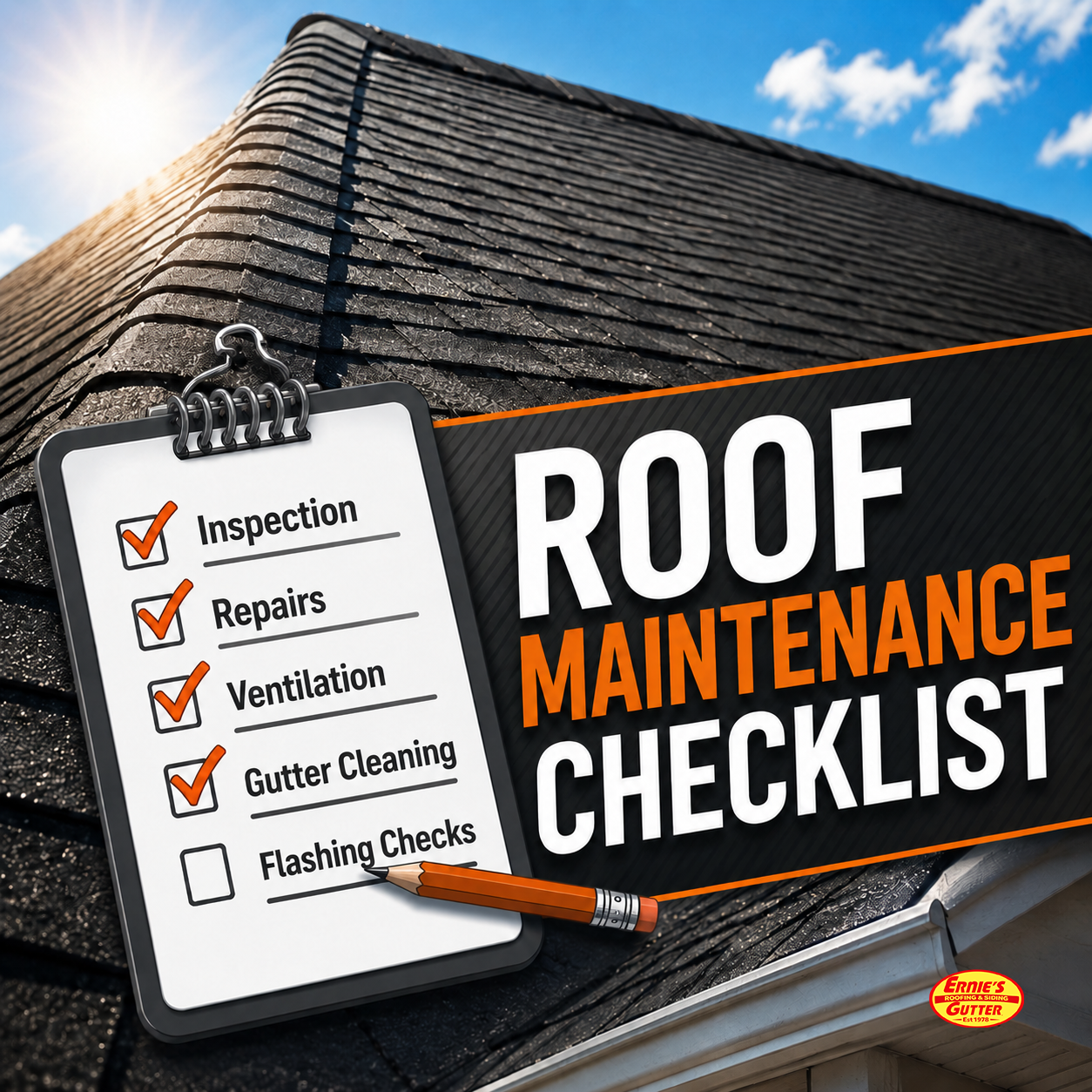
Summer and Fall Roof Maintenance Schedule: July Through November
Fall roof maintenance Denver Colorado seasonal checklist

Summer in Denver is a UV marathon. Three hundred days of sunshine sounds appealing until you consider what that does to asphalt shingles over fifteen years. Summer maintenance focuses on ventilation, UV wear assessment, and catching any damage from the late spring hail season before it sits unaddressed through the heat. Fall switches the focus to preparing for snow load and freeze-thaw cycles.

  1. July — Ventilation Check: Check soffit vents for blockage from insulation or debris. Confirm ridge vents are clear and functioning. Excessive attic heat in summer bakes shingles from underneath and shortens their lifespan. Address ventilation issues before the peak heat months.
  2. August — UV Wear Assessment: Look for shingles showing accelerated granule loss, surface cracking, or color change that indicates UV breakdown. These are candidates for close monitoring going into fall. Document with photos.
  3. September — Debris Clearing: Clear all roof and gutter debris before fall leaves accumulate. Debris holds moisture against the roof surface and accelerates wear. Keep gutters clear so they can handle fall rain and early snowmelt without backing up.
  4. October — Pre-Winter Penetration Seal Check: Inspect all pipe boot seals, flashing caulk joints, and penetration seals before freeze-thaw cycles stress them. Reseal any cracked or separated caulk around chimney flashing, vent collars, and skylight perimeters before the first freeze locks in any existing gaps.
  5. November — Final Gutter Clean: Clear all remaining fall debris from gutters and downspouts before the first significant snowfall. Clogged gutters in winter create ice dams that push water under shingles. This is one of the most preventable causes of winter roof damage.

erniesroofing.com/roof-repair/

Winter Roof Maintenance Schedule: December Through February
Winter roof maintenance Denver Colorado snow ice dam prevention

Winter roof maintenance in Colorado is primarily about monitoring rather than active work. Getting on a snow-covered roof is dangerous and rarely necessary if the fall maintenance was done correctly. The focus shifts to watching for warning signs from the interior and the exterior that indicate problems developing under the winter conditions.

  1. December — Attic Moisture Check: Check the attic for signs of frost, condensation, or moisture staining on the sheathing. Winter moisture in the attic indicates a ventilation problem that will accelerate wood rot and shingle failure if not addressed. This check takes five minutes and can prevent thousands of dollars in damage.
  2. January — Ice Dam Monitoring: After periods of snow followed by partial melts, watch the eaves for ice dam formation. Ice dams form when heat escaping from the attic melts snow that then refreezes at the cold eave. If ice dams are forming repeatedly, the attic insulation or ventilation needs attention, not just the ice itself.
  3. February — Interior Leak Watch: Walk the interior of the home and check ceilings in rooms under the roof for any new staining. Fresh stains after winter storms mean water is entering somewhere. Document with photos and call for inspection as soon as weather allows access.

erniesroofing.com/emergency-roof-repair/

Need a Professional Roof Inspection Before the Next Season Hits?

Ernie's Roofing has been helping Denver homeowners stay ahead of Front Range weather since 1978. Free inspection. Written findings. No pressure. Call before the next season makes the decision for you.

Colorado Roof Maintenance: Month by Month Quick Reference

Use this grid as your annual reference. Each card covers the primary maintenance task for that month specific to Denver and Front Range conditions.

January

Monitor eaves for ice dam formation. Check attic for frost or moisture on sheathing. Watch ceilings for new staining after snowfall.

February

Interior leak inspection after winter storms. Document any new ceiling or wall stains. Schedule spring inspection as weather allows.

March

Post-winter exterior inspection. Clean gutters of winter debris. Check flashing for freeze-thaw separation. Assess shingle condition from ground.

April

Professional inspection before hail season. Document all findings. Address any vulnerabilities found before storms arrive.

May

Post-storm checks after every significant hail or wind event. Check gutters for granule accumulation. Call for assessment if damage is suspected.

June

Continue post-storm monitoring. Peak hail season. Any confirmed hail impact should trigger professional inspection and insurance documentation.

July

Ventilation check. Confirm soffit and ridge vents are clear. Address attic heat buildup that shortens shingle life and softens the deck.

August

UV wear assessment. Look for granule loss, surface cracking, and color change indicating UV breakdown. Document candidates for monitoring.

September

Debris clearing from roof surface and gutters before fall leaf accumulation begins. Clear downspouts and confirm drainage away from foundation.

October

Pre-winter penetration seal check. Reseal any cracked caulk at flashing, pipe boots, and skylight perimeters before the first freeze.

November

Final gutter clean before first significant snowfall. Clear all fall debris. Clogged gutters in winter create ice dams. This task is critical.

December

Attic moisture check before full winter sets in. Look for frost, condensation, or staining on sheathing. Address ventilation if moisture is present.

What You Can Do Yourself vs When To Call A Professional

Most of the Colorado roof maintenance schedule involves observation from the ground, attic checks, and gutter cleaning. Those are homeowner tasks. The professional tasks are the ones that require safe roof access, accurate damage assessment, and licensed repair work.

Homeowner Tasks

Ground-level visual inspection with binoculars. Gutter cleaning and downspout clearing. Attic moisture and daylight checks. Interior ceiling monitoring for new stains. Debris clearing from visible roof areas. Photographing damage after storms. Reporting concerns to a professional promptly.

Professional Tasks

Full roof surface inspection including walking the deck. Flashing condition assessment and resealing. Pipe boot replacement. Shingle repair or replacement. Hail damage evaluation for insurance purposes. Soft spot and sheathing damage assessment. Ridge and hip cap inspection. Ventilation system evaluation.

When To Call Immediately

Any time you notice a new interior stain after a storm. Any visible shingle damage from the ground. Any confirmed hail event on your property. Any visible sagging, soft spots, or structural concern. Any flashing or pipe boot visible failure. Any time you are unsure about what you are seeing on your roof.

What Ernie's Roofing Covers In A Professional Maintenance Inspection

Ernie's Roofing Denver professional roof maintenance inspection

Nearly fifty years of Denver roofing has given Ernie's Roofing a very specific picture of what fails on Front Range roofs and when. Our professional maintenance inspections are built around that knowledge. We are not checking boxes. We are looking for the specific failure patterns that Colorado weather produces on Denver residential roofs across every decade of construction.

  1. Full shingle surface inspection: Granule retention, tab bond, surface integrity, curling, cracking, and missing sections documented across the entire roof.
  2. Flashing condition: Step flashing, counter flashing, chimney, skylight, vent, valley, and drip edge all inspected and assessed.
  3. Pipe boot seals: Every plumbing penetration checked for UV cracking and seal failure.
  4. Ridge and hip cap: Cap shingles and ridge vent evaluated for lifting, cracking, and fastener exposure.
  5. Roof deck: Soft spots and sheathing compromise identified where accessible.
  6. Attic: Ventilation adequacy, moisture signs, insulation condition, and active water intrusion indicators.
  7. Gutter condition: Hanger integrity, slope, seam condition, and fascia attachment evaluated alongside the roof inspection.
  8. Written summary with photos: Every finding documented so you have a clear maintenance record going forward.

A Little Maintenance Today Prevents Big Problems Tomorrow

Ernie's Roofing has been keeping Denver roofs performing through Colorado's toughest weather since 1978. A free professional inspection costs nothing and gives you the information you need to stay ahead of the damage before it starts.

Schedule Free Inspection Today

Frequently Asked Questions: Roof Maintenance Schedule Colorado

How often should a Denver roof be professionally inspected?

Every two years minimum for roofs in good condition. Annually for roofs over fifteen years old. After any significant hail or wind event regardless of when the last inspection was. Any time you notice a warning sign like granule loss, interior staining, or visible damage from the ground.

What is the most important month for roof maintenance in Colorado?

April is the single most important month. It falls after winter stress has accumulated and before hail season peaks. A professional inspection in April gives you the clearest picture of your roof's condition and the most time to address vulnerabilities before spring storms hit.

How do I prevent ice dams on my Denver roof?

Ice dams form when heat escaping from the attic melts roof snow that refreezes at the cold eave. Prevention requires adequate attic insulation to keep the roof surface cold and proper ventilation to remove warm air before it melts the snow above it. Gutter cleaning in November also removes the debris that can worsen ice dam formation.

Can I do my own roof maintenance in Colorado?

Homeowners can handle ground-level inspections, gutter cleaning, attic moisture checks, and interior monitoring. Walking on the roof requires proper safety equipment and is best left to licensed contractors who do it every day. The risk of a fall injury on a steep residential roof is real and the cost of a professional inspection is minimal by comparison.

How do I know if my gutters are affecting my roof?

Clogged gutters back water up against the fascia and under the eave shingles. Signs include water staining on the fascia board, paint peeling on the soffit, water pooling along the foundation after rain, and gutters that overflow during storms rather than draining properly. Clean gutters twice a year minimum in Colorado — spring and late fall.

How do I patch a roof after a storm until repairs can be made?

A heavy-duty tarp secured over the damaged area and extending past the ridge is the most reliable temporary fix. Weight or fasten it properly so wind cannot lift it. Do not attempt permanent repairs until the area can be assessed safely by a licensed contractor. Call 720 346 ROOF for emergency patching in Denver.

Who do I call for wind damage on my Denver roof?

Call Ernie's Roofing at 720 346 ROOF. We inspect wind-damaged roofs, document findings for insurance claims, provide emergency stabilization when needed, and handle the full repair or replacement process. Wind damage should be assessed before the next weather event changes the condition of the roof.

What does a roof maintenance inspection cost in Denver?

Ernie's Roofing provides free roof inspections for Denver homeowners. The inspection includes a full written summary with photos of any findings. There is no charge and no obligation. The cost of missing a problem that worsens through a Colorado winter is always higher than the cost of catching it early.

How does altitude affect roof maintenance in Denver?

At 5,280 feet, Denver receives significantly more intense UV radiation than lower elevation cities. This accelerates shingle granule loss and mat degradation faster than manufacturers' warranty timelines often reflect, which are typically based on sea-level performance data. Colorado homeowners should expect to inspect more frequently and consider Class 4 impact-resistant materials at replacement time.

How do I start a roof maintenance program for my Denver home?

Start with a professional inspection to establish a baseline for your roof's current condition. That inspection gives you a written record of what needs attention now and what to monitor going forward. From there, follow the monthly checklist on this page and schedule professional inspections at the intervals appropriate for your roof's age and condition.

Put Your Denver Roof On A Maintenance Schedule That Works

Ernie's Roofing has been helping Denver homeowners protect their roofs through every season Colorado produces since 1978. Free inspection. Written findings. No pressure. Call us and we will tell you exactly where your roof stands and what it needs to get through the next year.

Schedule Free Inspection

720 346 ROOF

Protection starts at the top of the home.

Read our Google Reviews

Roof leaks in Denver often begin long before water appears inside. Discover the real causes of delayed roof leaks and when Denver homes need inspection. Since 1978

1195 W Custer Pl Denver, CO 80223
Monday, Tuesday, Wednesday, Thursday, Friday, Saturday, Sunday9:00 am – 5:00 pm
Ernie's Roofing

General Information Disclaimer
This content is provided for general informational and educational purposes only. It does not constitute professional construction, roofing, or contracting advice. Every property, structure, and situation is different. Always consult a qualified roofing or gutter professional for inspections, recommendations, and repairs specific to your home or building.

OUR SERVICES

Your Neighborhood Roofing Contractor

Get more information concerning our service, do not wait to call us at 720 346 ROOF today. We’ll be more than happy to schedule a meeting with you.

home icon

Residential Roofing Contractor

Ernie’s Roofing specialize in residential roofing in Denver and have a team of experienced professional Roofers available to help you get the job done right The First Time. From minor repairs and maintenance to fullscale roof replacements,

building

Commercial Roofing

We construct, repair, as well as maintain Commercial Roofing systems for services both large and also small, creating personalized services that conserve our client’s time, cash, and also power. Call us at 720 346 ROOF and book a consultation today.

raining

Hail Damage

Their knowledgeable staff is ready to help you assess the damage caused by storms and provide you with a comprehensive repair evaluation & plan. We specialize in all types of roof damage, including hail, wind, and even lightning strikes. Hail Claim Help

Rectangle 45

INSURANCE CLAIMS HELP

Our team of experienced insurance claim specialists will work with you to ensure that the insurance claim process is as stress-free as possible. We will work with your insurance company to provide all necessary documentation and estimates to ensure that your claim is processed quickly and correctly.

wind damage

Wind Damage

When it comes to roof damage, it can be difficult to determine whether the damage was caused by hail or wind. While both types of damage can cause similar symptoms, they have different causes and require different repair methods.