
Roof Repair Denver and Roofing Services
Roofing Contractor Specializing in Roof Repair and Storm Damage Roofing in Denver
Providing roof repair, emergency roof repair, storm damage roofing, and roof replacement services throughout the Metro Denver Area
Family-Owned Legacy Built on Quality Since 1978
Fast scheduling and quick response – reach out today
Request Estimate
Ernies Roofing
Five Roof Weaknesses
Spring Storms
Exploit in Colorado
Your roof is taking a beating you cannot see. Spring storms in Denver don't just happen. They find the weak spots. Know what they are before hail season hits.
Schedule Free Inspection →720 346 ROOF • No Pressure • Just the Facts

INSPECTION
Available Now
Roofing Experience
Weaknesses
No Pressure
Est. Denver
Why Spring Is the Most Dangerous
Season for Denver Roofs
Colorado's spring hail season peaks from late April through June. Storms roll in fast, drop hail at high velocity, and push sustained winds that test every weak point on a roof structure. What makes spring particularly brutal is what comes before it.
Winter leaves roofs stressed. Freeze-thaw cycles expand and contract flashing seals repeatedly. Attic moisture builds through the cold months. Shingles absorb UV damage all year long. By the time spring storms arrive, many roofs are already compromised. The storm does not cause the failure. It reveals it.
Spring in Denver does not wait for anyone to get ready. The inspection window between winter and peak hail season is narrow. Act before April.
erniesroofing.com/storm-and-hail-damage-roof-repair/

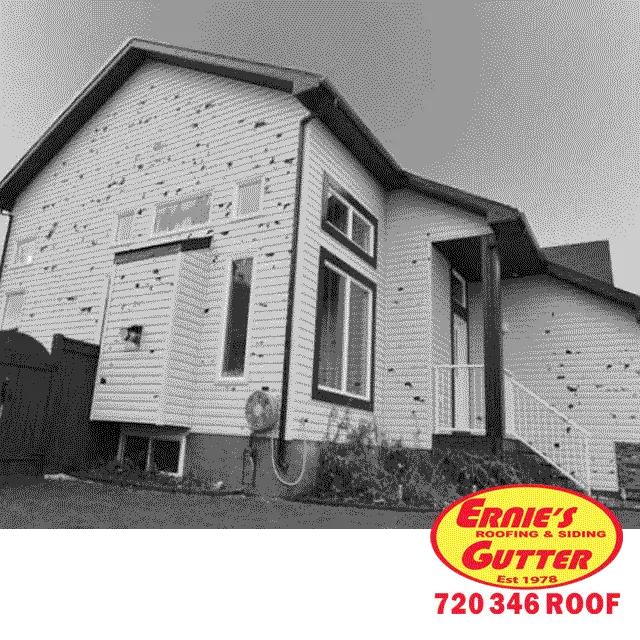
Age and Material Degradation
Asphalt shingles have a lifespan. Most quality shingles last fifteen to twenty years in Colorado's climate, where intense UV exposure, temperature swings of sixty degrees in a single day, and heavy snowfall accelerate wear. After that window, the adhesive that seals shingle tabs weakens, granules wash away with every rain, and the underlying mat becomes brittle.
A shingle that has lost its granule layer is no longer absorbing hail impact. It is cracking under it. Wind catches the curled edges of deteriorated shingles and tears them off at speeds that would never touch a newer roof. If your roof is approaching or past fifteen years, spring storms are not a question of whether damage will occur. They are a question of how much.
Granules collecting in gutters after rain. Curling or cupping shingle edges visible from the ground. Dark discolored patches on the roof surface.
erniesroofing.com/roof-replacement/
Don't Wait Until Water Finds You
Get eyes on your roof before spring storms make that decision for you.
720 346 ROOFSchedule Your Free Inspection →
No obligation. No pressure. Just the truth about your roof.
Poor Drainage and Clogged Gutters
Water is relentless and patient. Clogged gutters back up during spring rains and hail events, pushing water under eaves and behind shingles at the roofline. Even small gaps become entry points when water has nowhere to go. Debris trapped in gutters holds moisture against the fascia and roof deck continuously, rotting wood from the outside in.
Spring thunderstorms drop large volumes of water fast. If your gutters cannot move that water off the roof and away from the foundation, it pools and exploits every available opening. Nail holes, flashing seams, shingle laps, pipe boot seals. None of them are designed to hold back standing water.
Gutters pulling away from fascia. Overflowing during heavy rain. Pooling water along foundation. Staining on exterior siding below gutter lines.
erniesroofing.com/gutter-repair/
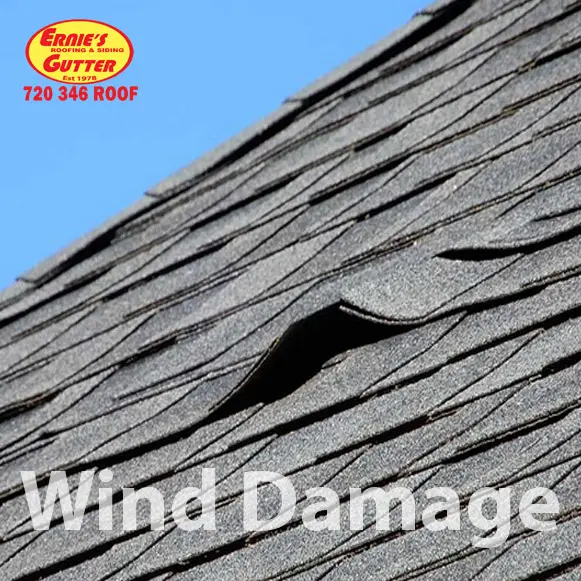
Compromised Flashing and Penetration Seals
Flashing is the metal barrier that seals every point where your roof surface meets a vertical element. Chimneys, skylights, plumbing vents, dormers, and roof valleys all depend on properly installed flashing to keep water out. Caulk used to seal flashing joints dries, cracks, and shrinks with every temperature cycle.
A single compromised flashing detail can flood an attic in one heavy storm. Water does not need a large opening. It needs a gap of any size and gravity to do the rest. Skylights are among the most frequently failed penetrations we find on inspection. These failures are largely invisible from the ground.
Chimney step flashing. Skylight perimeter seals. Plumbing vent boots. Dormer wall intersections. Valley flashing along roof pitch changes.
erniesroofing.com/roof-repair/
Inadequate or Blocked Ventilation
A healthy roof breathes. Soffit vents pull cool air in along the eaves. Ridge vents exhaust warm moist air at the peak. When that system is blocked by debris, insulation, or poor original design, heat and moisture trap inside the attic. The result is a slow invisible failure that accelerates every other weakness on this list.
Trapped moisture causes wood rot in the sheathing and framing. Rotted wood cannot hold fasteners. When hail hits a roof with compromised sheathing, fasteners pull through instead of holding shingles down. Excessive attic heat also bakes shingles from underneath, causing premature curling and cracking. This is one of the most underestimated vulnerabilities in Denver's older housing stock.
Ice dams forming in winter. Excessive attic heat in summer. Shingles aging faster than expected. Frost or moisture visible in the attic during cold months.
erniesroofing.com/residential-roofing/
Failed or Missing Underlayment
Beneath your shingles lies a layer of underlayment. This is your secondary line of defense. When wind lifts shingles or hail punches through them, quality underlayment stops water from reaching the roof deck. Cheap underlayment, aged underlayment, or missing sections create conditions where a single shingle failure becomes a structural one.
If the shingle comes off and the underlayment beneath it is already compromised, water and weather have direct access to your decking, insulation, and interior structure. Underlayment failure is rarely visible without removing shingles. It shows up as widespread leak patterns after storms in areas that look intact from the outside.
Multiple leak points after a single storm event. Water entering in areas where shingles look visually intact. Widespread staining across ceiling surfaces.
erniesroofing.com/re-roof/
Nearly Fifty Years of Denver Roof Knowledge
Three generations of contractors. Nearly fifty years of Front Range roofing. We have seen every way a roof can fail in Colorado weather, and we have fixed every one of them. When we inspect your roof, you get the truth, not a sales pitch.
We handle the full claims process with your insurance company. We know how to document storm damage the right way, how to communicate with adjusters, and how to get your roof back to the condition it deserves.

Three Steps Before Hail Season Arrives
Spring in Denver does not wait. The window between winter and serious storm season is narrow. Here is exactly what to do right now.
Call 720 346 ROOF or click below. We put eyes on your roof, document every weakness with photos, and give you a straight written summary of what we find. No surprises.
Know exactly where your vulnerabilities are, what needs immediate attention, and what can wait. You leave with real information, not a vague estimate and a sales push.
Address problems now at repair cost. Wait until after the storm and you are looking at emergency rates, insurance claims, and structural damage that spreads quickly.
erniesroofing.com/contact-us/
Free Inspection.
Just the Facts.
No pressure. No runaround. We show up, put eyes on your roof, document what we find, and give you a straight answer. That is it. You decide what happens next.
720 346 ROOF Schedule Free Roof Inspection →erniesroofing.com/contact-us/

Scan for
Free Quote
Denver Homeowners Ask.
We Answer Straight.
How do I know if my Denver roof is vulnerable to spring storms?
Age is the starting point. Any roof over ten to twelve years old in Colorado has been through enough UV exposure, freeze-thaw cycles, and weather stress to develop vulnerabilities. The only way to confirm what is actually happening is a professional inspection.
What does hail damage look like on an asphalt shingle roof?
Hail impact leaves circular bruise marks or punctures on asphalt shingles, knocking granules loose and exposing the black asphalt mat underneath. Hail damage also shows up on metal gutters, downspout elbows, and aluminum flashing as visible dents.
How do I patch a roof after a spring storm hits?
For immediate protection, a heavy-duty tarp secured over the damaged area is the most reliable temporary fix. Extend it past the ridge and fasten it properly so it does not act as a sail in follow-up winds. Call 720 346 ROOF for emergency patching in Denver.
Who do I call for wind damage to my Denver roof?
Call Ernie's Roofing at 720 346 ROOF. We handle wind damage from initial inspection through full repair or replacement, including documentation for insurance claims. Wind damage gets worse quickly in follow-up weather. Do not let it sit.
Does my homeowner's insurance cover spring storm roof damage in Colorado?
Most standard Colorado homeowner's policies cover hail and wind damage as sudden loss events. What they do not cover is damage attributed to age or maintenance failure. A professional inspection immediately after a storm creates the documentation that supports your claim.
How long does a professional roof inspection take?
A thorough inspection of a standard Denver residential roof takes between forty-five minutes and ninety minutes depending on size and complexity. You receive a written summary with photos of any conditions we identify. We do not rush inspections.
Can I inspect my own roof before spring storm season?
You can perform a ground-level visual using binoculars to look for obvious issues. What you cannot evaluate is flashing condition, underlayment integrity, sheathing moisture, or soft hail impact marks. A professional inspection catches what a homeowner cannot safely see from the ground.
What is the best roofing material for Colorado's spring hail season?
Class 4 impact-resistant shingles are the most effective defense against Colorado hail. They are tested against two-inch steel ball impacts and many Colorado homeowners with Class 4 shingles qualify for insurance premium discounts. Metal roofing is another strong long-term option.
How often should a Denver roof be professionally inspected?
Every two years is a reasonable baseline for roofs in good condition. After any significant hail or wind event, inspection should happen within a few weeks regardless of when the last one was. Roofs over fifteen years old benefit from annual inspections.
What happens if I ignore small roof damage going into spring storm season?
Small problems compound rapidly under storm conditions. A minor flashing gap becomes a flood path. A cosmetically damaged shingle cracks under the next hail impact. Water spreads through decking and insulation long before you see a stain on the ceiling inside your home.
Sources
Colorado Roofing Association. Filing a Roofing Insurance Claim in Colorado. coloradoroofing.org
National Roofing Contractors Association. Asphalt Shingle Roofing for Residential Structures. nrca.net
Insurance Institute for Business and Home Safety. Impact-Resistant Roofing Products. ibhs.org
Colorado Division of Insurance. Homeowner Insurance Claims After Natural Disasters. doi.colorado.gov