
Third-Generation Family Roofing · Since 1978
Roof Coating Denver: What To Know Before You Coat
Before roof coating, understand what is underneath it. This Denver homeowner guide explains roof suitability, moisture, drainage, preparation, and the written scope so you can ask useful questions before approving work.
Ernie’s Roofing has served Denver since 1978. For evaluation and installation details, visit our roof coating service page.
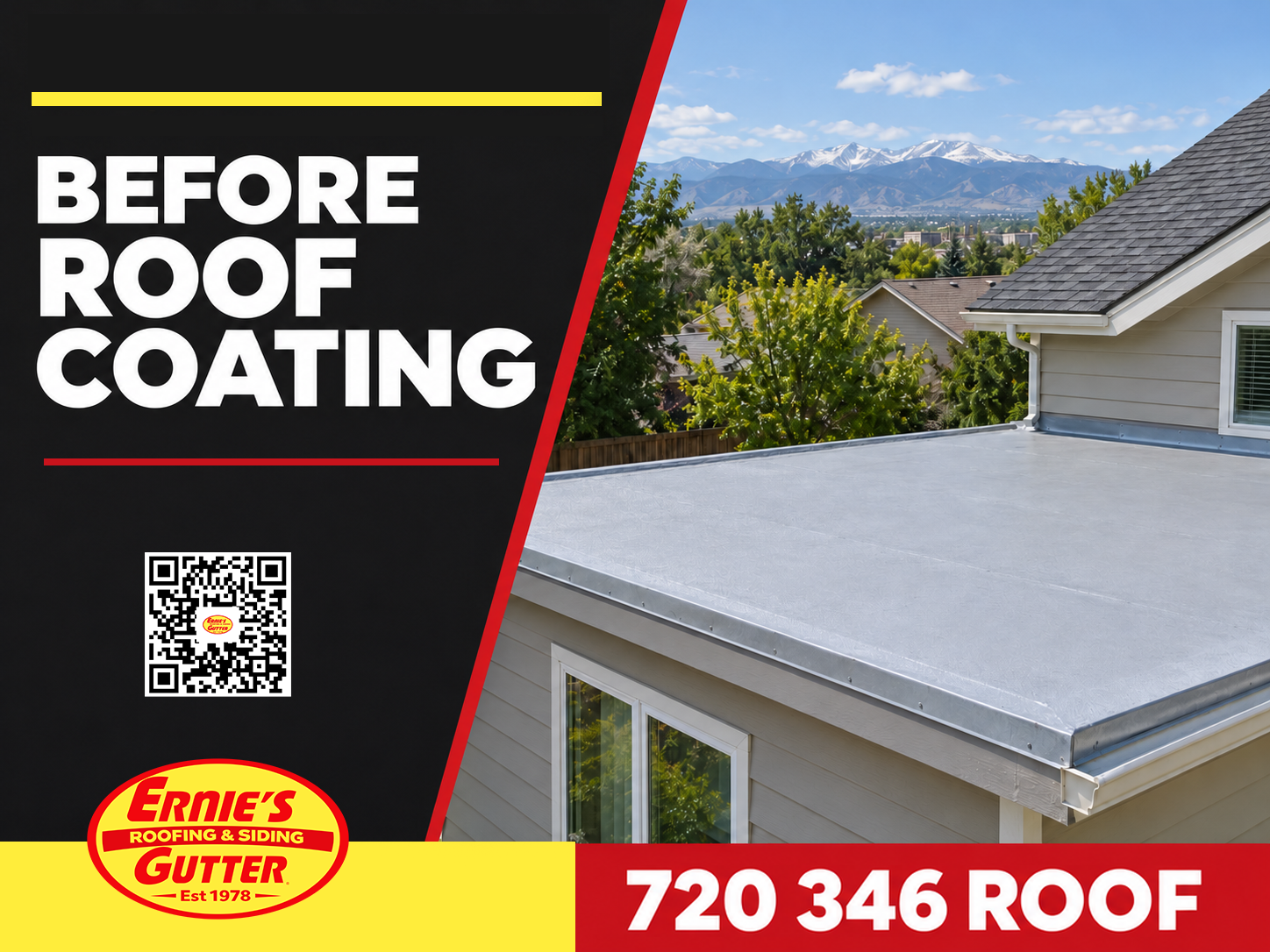
Before approving roof coating in Denver, confirm that the existing roof is a suitable candidate. The evaluation should address moisture, drainage, surface condition, previous coatings, adhesion, and needed repairs. A written proposal should identify the coating system, preparation, application requirements, warranty terms, and conditions that could require additional work.
Start With The Roof You Have
A clean white finish can make an older roof look renewed. Appearance does not tell you whether the assembly underneath is dry, firmly attached, compatible with the product, or worth restoring. Those questions come before choosing a color or comparing prices.
If this is your first time hearing this, the substrate is the surface receiving the coating. It might be a roofing membrane, metal, a previously coated surface, or another approved material. Different substrates can require different cleaners, primers, repairs, and application procedures.
A Possible Coating Candidate
A serviceable roof with repairable details and a compatible surface may be worth evaluating for restoration. Its drainage, attachment, moisture condition, previous work, and product requirements still need review.
A Roof That Needs More Investigation
Recurring leaks, loose materials, blisters, soft areas, deteriorated decking, or suspected wet insulation deserve investigation. A coating cannot restore structural strength or turn a failed assembly into a sound one.
Know What To Ask Before Choosing A Coating
Meet Ernie’s Roofing in this company introduction. When considering a coating, bring the conversation back to your existing roof: what material is there, what has failed, and what needs correction before any surface treatment is approved?
A fresh finish is not the starting point. Ask how the roof will be evaluated, which conditions could rule out coating, and what the written scope will include. Your leak history, previous repairs, and safely taken photographs can help explain the concern.
Make sure you understand what is being retained and what is being repaired. If the proposal relies on coating over the existing surface, ask how compatibility and adhesion will be confirmed. If moisture or damaged materials are suspected, ask how those findings will be investigated and authorized.
This guide covers the questions to ask before approving work. For evaluation and installation details, visit our main roof coating service page. The appropriate recommendation depends on the condition of the roof, not simply its age or appearance.
Find The Leak Before Covering The Surface
A ceiling stain is evidence of water reaching the interior. It does not identify the entry point by itself. Water may travel along roofing layers, framing, or a wall transition before it appears indoors. The problem may involve a seam, penetration, flashing detail, adjoining wall, or another component.
Describe when the leak occurs, whether wind direction matters, how long water continues after a storm, and what previous repairs were attempted. Share safely taken indoor or ground-level photographs. Do not climb onto a wet, icy, steep, or damaged roof to collect evidence.
What A Visual Review Cannot Establish
A surface review cannot confirm the condition of every concealed layer. If moisture is suspected, ask how the concern will be investigated and what permission is needed for testing or openings. The appropriate method depends on the roof and the agreed investigation scope.
Covering wet materials can leave the original problem hidden. If additional deterioration is discovered later, the cost may include removing newly applied material as well as repairing the underlying roof. Ask how those findings will be handled before work begins.
For an isolated failure, our roof repair service explains targeted repair options. If water is actively entering or roofing is suddenly exposed, use our emergency roof repair contact path.
Unsure Whether Your Roof Is Worth Coating?
Start with the roof condition rather than a product promise. Our main coating service page explains the evaluation and the next step.
Before Roof Coating: Compatibility And Preparation
“Silicone,” “acrylic,” and “elastomeric” are not complete project specifications. Elastomeric describes a material’s ability to stretch and recover; it does not establish that every product suits every roof. The exact system and its approved application matter.
Identify Existing Materials
Determine the membrane or roof covering and any previous coating. Unknown patches, surface contamination, loose layers, or incompatible repairs may change the preparation or make the proposed system unsuitable.
Check Adhesion
Adhesion means how well the coating bonds. Ask whether the manufacturer requires a test, how the test will be performed, and what happens if the result is unacceptable. A primer decision should follow the actual surface and product requirements.
Define Repairs Before Application
The proposal should identify seams, penetrations, roof edges, flashing, and other details requiring correction. A broad instruction to “coat the roof” leaves too much uncertainty about work at the places water commonly enters.
Follow The Product Instructions
Cleaning, drying, primers, reinforcement, coverage, application conditions, and curing need to match the chosen system. A method suitable for one product is not automatically suitable for another.
As a manufacturer example, Gaco’s S42 product information calls for adhesion testing to confirm compatibility. This is a reference for understanding product-specific requirements, not a claim that this product is specified for your roof.
Standing Water And Denver Weather Need Separate Attention
A coating that tolerates water does not change roof slope, raise a low area, or remove debris from a drain. Find out why water remains and whether corrective work is appropriate. A blocked outlet and a low section of roof are different conditions, even when both produce a puddle.
Ask what the selected system permits and how drainage details will remain functional. Do not assume that every coating has the same standing-water limitations. Scuppers, drains, transitions, and roof edges should be evaluated as part of the assembly.
Application Conditions Are Product-Specific
Denver sunshine does not automatically make a roof ready for coating. Surface moisture, roof temperature, overnight conditions, wind, and the forecast may affect preparation, application, or curing. Ask which manufacturer limits apply and how the crew will respond if conditions change.
A stated drying time is not always the same as readiness for rain, another coat, or foot traffic. Those milestones should come from the selected product instructions. Avoid approving a schedule that depends only on the roof looking dry from the ground.
Compare The Written Scope Before Comparing Prices
Two coating proposals can have different totals because they describe different work. One may include repairs, detail reinforcement, testing, and documentation that the other does not. Compare the specified system and preparation before deciding that a lower total provides the same result.
- Area and existing roof: What surfaces are included, and what materials are being retained?
- Products: Which coating, primer, repair materials, and accessories are proposed?
- Preparation: What cleaning, drying, removal, and surface treatment are included?
- Detail work: Which seams, flashing areas, penetrations, drains, and edges will be corrected?
- Application: What coverage, finished thickness, and other system requirements apply?
- Completion: How will the work be checked, documented, cleaned up, and reviewed?
- Additional findings: How will concealed damage and changes be approved and priced?
- Coverage and care: What warranty, exclusions, inspections, and maintenance apply?
Why Thickness Deserves A Plain-English Explanation
Wet-film thickness describes material during application; dry-film thickness describes the coating after curing. Requirements vary by product and assembly. Ask which measurements or other checks the specification requires and what record you will receive.
A fresh color, a number of coats, or a stack of empty containers does not establish uniform compliance across the roof. The contractor should explain how the quantity, application, and completion checks relate to the specified roof area and system.
Cost And Warranty Are More Than One Number
Access, roof size, surface condition, repairs, preparation, disposal, testing, and the selected system affect price. There is no price on this guide because a roof-specific scope is needed. A coating proposal should not hide unresolved roof problems behind an attractive square-foot figure.
Warranty length alone does not describe coverage. Ask who provides it, which materials and labor it covers, what exclusions apply, whether registration or inspections are required, and how a service request is handled. A product warranty and a contractor’s workmanship commitment are different documents.
Choose Repair, Coating, Or Replacement For The Actual Condition
Repair Or Restore A Serviceable Roof
A limited defect may need targeted repair. A broader restoration plan may suit a compatible, serviceable roof after necessary corrections. The evaluation should explain why the retained materials are worth protecting.
Investigate Broader Failure
Widespread deterioration, damaged decking, extensive moisture, or an unsuitable surface may make replacement or more substantial work appropriate. Our roof replacement service covers that separate decision.
Reflectivity Does Not Replace Insulation
A reflective surface and thermal insulation perform different jobs. Annual energy results depend on the building, climate, insulation, and heating and cooling operation. Consider winter heating effects as well as summer cooling; a fixed savings promise is not appropriate for every property.
The U.S. Department of Energy’s cool-roof guide explains this distinction. For the separate subject of reflective surfaces, read our cool roof coating guide.
What You Can Document Safely
Keep prior proposals, warranty papers, repair invoices, and photographs. Note changing stains and when leaks occur. Do not pressure-wash, puncture, scrape, or apply a test patch yourself to establish suitability. Those actions may damage the roof or complicate an existing warranty.
Insurance Claim Support
Coating suitability and insurance coverage are separate questions. If a storm may have damaged the roof, document accessible conditions before repair decisions. A restoration product should not be used to assume either that a claim is necessary or that damage can be ignored.
Ernie’s Roofing can explain visible roofing findings and the proposed work. Your insurer determines coverage and payment under the policy. Our roofing insurance claim guidance explains the documentation side.

Ernie Says
“A coating can help extend roof life when the roof underneath is still worth protecting. The mistake is thinking you can coat over wet insulation, bad decking, failed seams, or major damage and make those problems disappear.”
Understand The Roof Before Approving The Coating
Use this guide to prepare your questions. When you are ready to discuss the existing roof and a possible restoration scope, start with our main roof coating service.
Questions Homeowners Ask Before Coating
Can my flat roof be coated instead of replaced?
Possibly, if the existing roof remains serviceable and is compatible with the proposed coating system. Moisture, attachment, drainage, previous repairs, and the condition of the underlying materials need evaluation first. Roof age alone does not establish whether coating is a sound investment.
What should be checked before coating an existing roof?
Identify the roof covering, previous coatings, surface condition, seams, flashing, penetrations, and drainage. Review leak history and accessible evidence of moisture. Ask how suspected concealed damage will be investigated, whether adhesion testing is needed, and what findings could change the proposed scope.
Can roof coating stop an existing leak?
A specified coating system can be part of a repair and restoration plan, but coating the surface does not automatically correct every leak. Failed seams, flashing, penetrations, and adjoining materials may require separate repairs. Identify the likely entry path and define those repairs before approving coating.
Can you coat over wet roofing or insulation?
Wet materials should not simply be sealed beneath another layer. The affected assembly needs investigation and an appropriate corrective plan. A surface coating does not dry saturated insulation or restore deteriorated decking. Ask what testing, opening, removal, or repair is needed before restoration can proceed.
Is silicone or acrylic better for a Denver roof?
There is no universal winner based on the city alone. Compare the exact products, approved substrates, existing coating, drainage conditions, preparation, application limits, and maintenance requirements. A product suitable for one roof may be unsuitable for another; manufacturer instructions and the actual assembly should guide selection.
Does a coating that tolerates ponding water fix poor drainage?
No. Water resistance and drainage correction are different issues. A coating does not change roof slope, raise a low area, or clear a blocked outlet. Determine why water remains and what corrective work is appropriate. Check the selected product requirements rather than assuming every coating tolerates standing water.
What belongs in a roof-coating proposal?
The proposal should identify the roof area and substrate, exact products, cleaning, repairs, primers where required, detail treatment, specified application requirements, and completion checks. It should also explain weather restrictions, exclusions, concealed-damage procedures, cleanup, maintenance, and applicable warranty conditions. Compare those items before comparing total prices.
How can I tell whether enough coating was applied?
Ask what coverage rate and finished thickness the selected system requires and how compliance will be checked and documented. Wet-film and dry-film measurements describe different stages of application. A freshly white surface, a coat count, or a bucket total alone does not prove that every area meets the specification.
Will a white coating insulate my roof or guarantee lower bills?
No. Reflectivity and insulation perform different jobs. A reflective coating may reduce solar heat absorption, but annual energy results depend on insulation, roof construction, heating and cooling equipment, climate, and building use. Consider winter heating effects as well as summer cooling; no fixed savings percentage applies to every Denver property.
Can roof coating be applied over asphalt shingles?
Do not assume a product approved for a low-slope membrane is approved for asphalt shingles. Check the exact coating instructions, roof-covering manufacturer requirements, and existing warranty. Some coating products expressly exclude three-tab and architectural shingles. Select a system for the actual roof rather than treating every coating as interchangeable.
Disclaimer: Service recommendations depend on property conditions, safe access, and the agreed written scope. A visual inspection cannot identify every concealed condition. Pricing, removal, drainage work, testing, warranties, and additional repairs apply only as stated in the project agreement. Insurance coverage and claim payments are determined by the insurer under the policy.