
Why Is My Attic
So Hot
Providing roof repair, emergency roof repair, storm damage roofing, and roof replacement services throughout the Metro Denver Area
Family-Owned Legacy Built on Quality Since 1978
Fast scheduling and quick response – reach out today
Request Estimate
Ernies Roofing
Why Is My Attic So Hot?
A hot attic is not just uncomfortable. It can be a sign that heat is getting trapped under the roof deck because the attic ventilation system is not moving air the way it should. In Denver, strong sun, dry heat, sudden storms, and fast temperature swings make attic heat a real roofing concern.
Ernie’s Roofing helps Denver homeowners figure out why the attic is running hot. We look at roof vents, soffit intake, attic airflow, insulation blockage, roof deck condition, and whether a solar attic fan or ventilation correction makes sense for the home.
Featured answer: Your attic may be hot because the roof system is trapping heat instead of moving it out. Common causes include blocked soffit intake, not enough exhaust ventilation, poor insulation clearance, damaged roof vents, mixed vent styles, or a roof design that needs better airflow planning.

A hot attic usually means heat is entering faster than it can escape
If this is your first time hearing this, the attic is not supposed to act like a sealed oven. The roof absorbs heat from the sun, the roof deck warms up, and that heat collects in the attic. A proper ventilation system gives that heat a controlled path to leave.
When the airflow path is blocked or undersized, the attic temperature can climb fast. That heat can push into upstairs rooms, stress insulation, bake the underside of the roof deck, and make the home feel harder to cool. The fix depends on what is actually stopping the airflow.
Contractor plain talk: A hot attic is a symptom, not the diagnosis. The real question is whether the home has enough intake air, enough exhaust air, clean vent paths, and roof ventilation that works together instead of fighting itself.

Reasons your attic may be hotter than it should be
Homeowners often assume the answer is simple: just add a fan. Sometimes a solar attic fan is the right move. Sometimes it is not. A hot attic can come from several problems, and adding one more roof product without checking the system can waste money or create a roof leak.
Blocked soffit intake
If air cannot enter low near the eaves, roof vents and attic fans cannot pull air through the attic correctly. Intake blockage is one of the most common hidden problems.
Not enough exhaust
Hot air needs a place to leave. A solar attic fan may help when the home has enough intake air and the fan can be flashed properly into the roof.
Damaged roof vents
Cracked, bent, loose, or poorly sealed vents can reduce airflow and increase leak risk. Roof vent repair should be handled like roofing work.
Insulation blocking airflow
Insulation packed tight at the eaves can choke the attic. The home may have vents on paper, but the airflow path may still be blocked.
Mixed ventilation styles
Different exhaust vents can short circuit each other when they are mixed wrong. More vents do not always mean better ventilation.
Storm-damaged ventilation
Colorado hail and wind can damage roof vents, fan housings, flashing, and vent caps. After a storm, ventilation parts should be checked too.
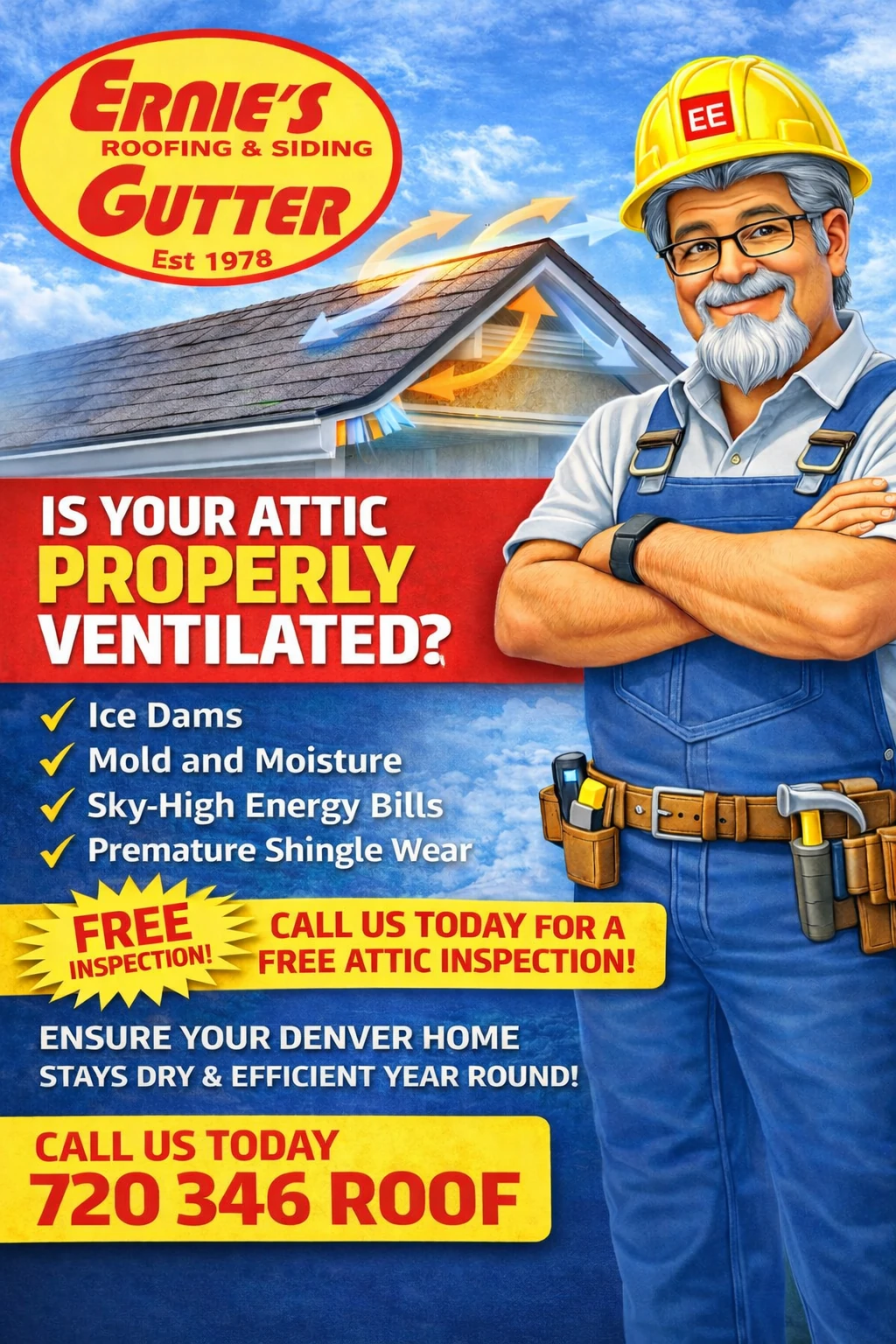
Colorado sun can turn a weak attic system into a heat trap
Denver roofs take strong sun at elevation. That heat hits the shingles, transfers into the roof deck, and collects in the attic space. If the attic cannot move air, the heat has nowhere useful to go. That is why upstairs bedrooms may feel hot even when the air conditioner is running.
Hot attic air can also work against the roof itself. Over time, trapped heat can add stress to shingles, roof decking, insulation, and anything stored in the attic. The roof might look fine from the street while the attic is telling a different story.
That is why we do not treat attic heat like a comfort complaint only. It is a roof system issue. The right fix starts with finding the airflow problem.
A fan helps only when the roof ventilation system is ready for it
A solar attic fan can be a smart solution for hot attic problems, but only when the home has enough intake air and the roof is ready for a clean installation. Cutting a new opening into the roof without checking the full system is how homeowners end up with poor results or future leak problems.
Roof ventilation fixes that may help a hot attic
The right solution depends on why the attic is hot. Ernie’s Roofing checks the roof and attic together so the recommendation fits the house instead of forcing a one-size-fits-all fix.
Attic ventilation review
We look at intake, exhaust, roof vents, attic airflow, insulation clearance, and heat or moisture clues before recommending a fix.
Solar attic fan installation
A solar attic fan can help pull hot air out of the attic during sunny hours when attic heat is building the fastest.
Roof vent repair
Loose, cracked, or poorly flashed vents can hurt ventilation and create leak risks. Vent repair belongs in the roof system.
Roof system correction
Sometimes attic heat is tied to the way the roof was built, repaired, or vented. We look for the system problem, not just the symptom.
Ventilation before replacement
Before replacing a roof, attic ventilation should be reviewed so the new roof is not installed over an old hidden heat problem.
Hot attic estimate
We can inspect the roof ventilation, explain what is going on, and let you know whether a fan, vent repair, or airflow correction makes sense.
Hot attic problems usually start with intake and exhaust balance
Think of attic ventilation like breathing. Intake lets air in. Exhaust lets air out. If the attic cannot breathe in, it cannot breathe out correctly. That is why a house can have roof vents and still have poor ventilation.
Balanced airflow gives outside air a path to enter low, travel through the attic, and exit high. When soffit vents are blocked, attic baffles are missing, roof vents are damaged, or exhaust styles are mixed wrong, airflow can stall.
That stalled air is what makes the attic feel like an oven. A good inspection should identify the airflow path before recommending any new product.
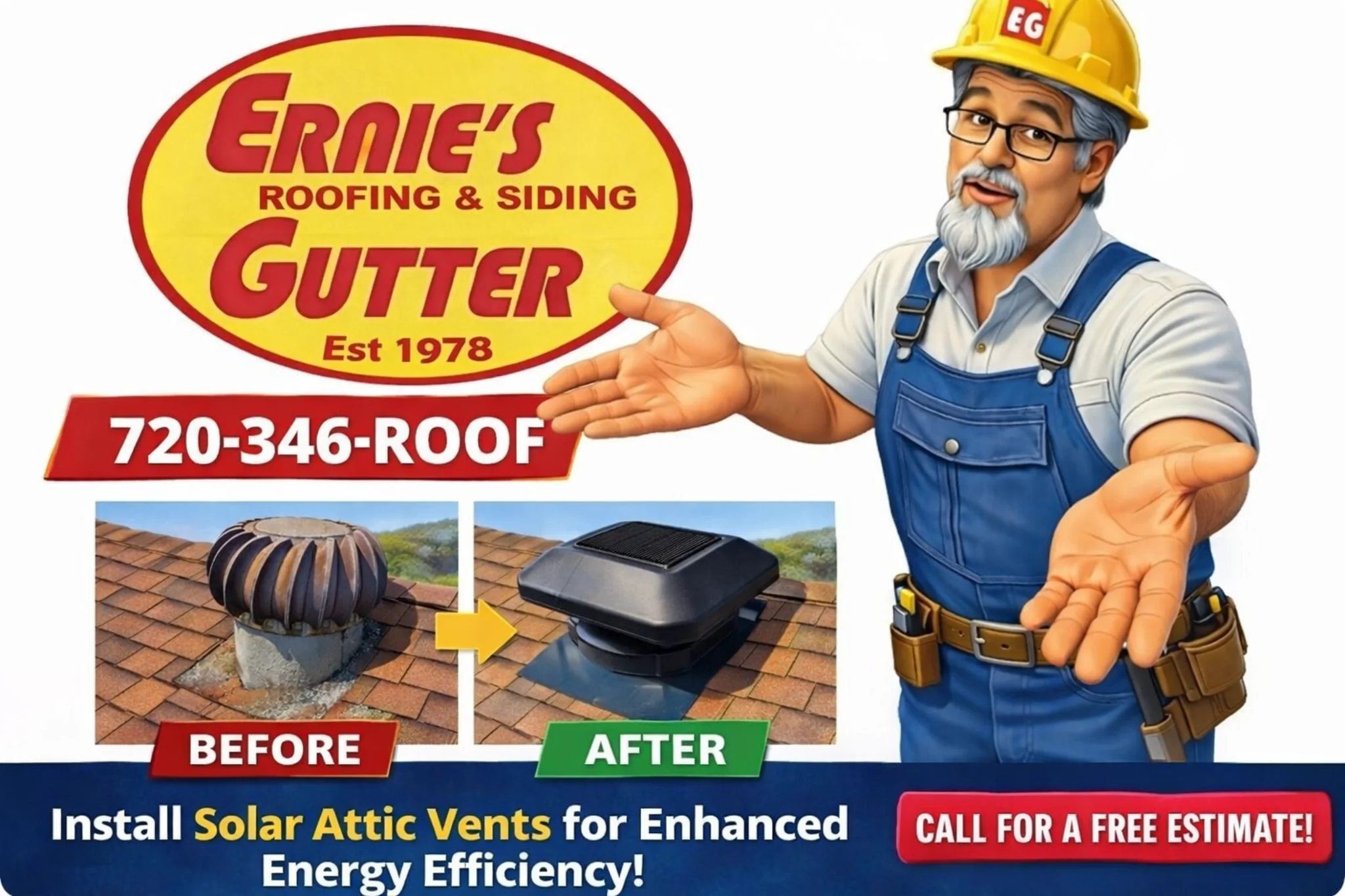
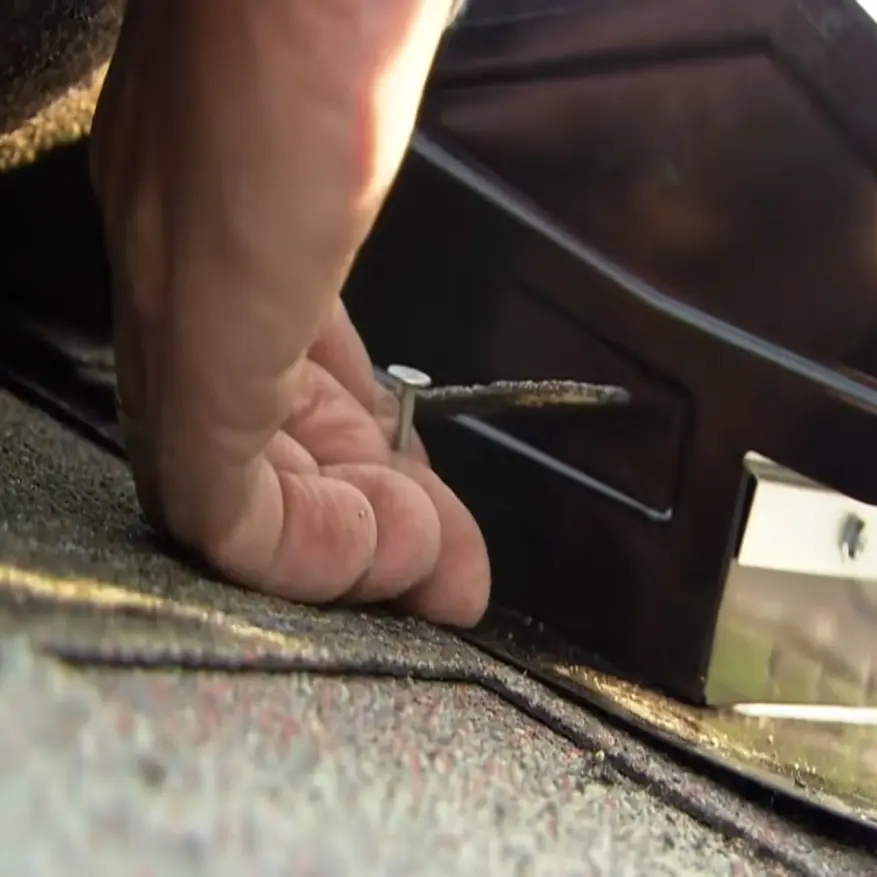
The roof edge matters because intake air often starts there
Many hot attic problems start at the eaves. If soffit intake is blocked by insulation, paint, debris, poor construction, or missing baffles, the roof exhaust cannot move enough air. That problem can stay hidden because the roof may still show visible vents.
We check the roof edge, attic intake path, exhaust vents, and roof penetrations together. On older Denver homes, additions, and homes with several roof repairs over the years, that review matters even more.
Contractor note: More exhaust is not always the fix. The attic needs intake, movement, and exhaust working together. If one part is missing, the system can still run hot.
How Ernie’s Roofing checks a hot attic problem
We do not like guessing at roof ventilation. A hot attic can come from blocked intake, weak exhaust, poor insulation clearance, storm damage, bad vent placement, or a roof system that was never balanced correctly. The process should find the real cause.
1. Listen to the symptoms
We ask about hot rooms, attic smells, comfort issues, past roof work, storm history, and when the heat problem shows up.
2. Review the roof vents
We look at existing roof vents, fan locations, vent condition, flashing, and whether the exhaust layout makes sense.
3. Check intake concerns
We look for signs that soffit or lower intake air may be blocked, undersized, or not connected to the attic space properly.
4. Look for heat and moisture clues
Hot attic problems can travel with moisture stains, damaged insulation, roof deck discoloration, or signs of trapped air.
5. Explain the real fix
We explain whether the home needs ventilation correction, roof vent repair, a solar attic fan, or broader roofing work.
6. Install it like roof work
If a fan or vent is installed, we treat the roof penetration, flashing, and shingle tie-in as the most important part of the job.
Hot attic? Get the roof system checked before summer makes it worse
If your attic feels like an oven, your upstairs rooms stay hot, or your roof vents look questionable, call Ernie’s Roofing. We will give you a straight answer on whether the issue is intake, exhaust, vent damage, insulation blockage, or a solar attic fan opportunity.
Why is my attic so hot FAQs
```Why is my attic hotter than the rest of my house?
Your attic may be hotter because the roof absorbs sunlight and the attic ventilation system is not moving that heat out fast enough. Blocked intake, weak exhaust, damaged vents, or poor airflow design can all trap heat under the roof deck.
Can a hot attic make upstairs rooms uncomfortable?
Yes. Heat trapped in the attic can radiate downward and make upstairs bedrooms or upper ceiling areas feel warmer. It may also make the cooling system work harder during hot weather.
Will a solar attic fan fix a hot attic?
A solar attic fan can help when the home has enough intake air and the fan is installed correctly. It is not the right fix for every attic. The roof ventilation system should be checked before adding a fan.
Do soffit vents matter for a hot attic?
Yes. Soffit vents or other lower intake areas allow cooler outside air to enter the attic. Without enough intake, exhaust vents and attic fans can struggle to move hot air out.
Can insulation make my attic hotter?
Insulation itself is not usually the problem, but insulation packed too tightly at the eaves can block intake airflow. When that happens, the attic may trap heat even if roof vents are visible.
Can a hot attic damage shingles?
Excessive attic heat can add stress to roofing materials over time. It is one reason roof ventilation should be reviewed when shingles age too fast or the home has a long-running attic heat problem.
Is more roof ventilation always better?
No. Correct ventilation is better than simply adding more vents. Too much exhaust, mixed vent styles, or poor intake balance can create airflow problems. The system needs to be evaluated as a whole.
Can storm damage make my attic hotter?
Yes. Hail and wind can damage roof vents, vent caps, fan housings, and flashing. If vents are cracked, loose, or blocked, attic airflow can suffer and roof leak risks can increase.
Should attic ventilation be checked before roof replacement?
Yes. Roof replacement is the right time to review attic ventilation. Installing new shingles over a hidden heat and airflow problem can keep stressing the new roof from underneath.
Who should I call if my attic is too hot in Denver?
Call a Denver roofing contractor who understands attic ventilation as part of the roof system. Ernie’s Roofing checks the roof and attic together so the recommendation is based on the real airflow problem.
Call Ernie’s Roofing for hot attic and roof ventilation help
A hot attic may be telling you the roof system is not breathing the way it should. We check the airflow path, roof vents, intake, exhaust, and installation details so the fix makes sense for the home.

Roof leaks in Denver often begin long before water appears inside. Discover the real causes of delayed roof leaks and when Denver homes need inspection. Since 1978
OUR SERVICES
Your Neighborhood Roofing Contractor
Get more information concerning our service, do not wait to call us at 720 346 ROOF today. We’ll be more than happy to schedule a meeting with you.

Residential Roofing Contractor
Ernie’s Roofing specialize in residential roofing in Denver and have a team of experienced professional Roofers available to help you get the job done right The First Time. From minor repairs and maintenance to full–scale roof replacements,

Commercial Roofing
We construct, repair, as well as maintain Commercial Roofing systems for services both large and also small, creating personalized services that conserve our client’s time, cash, and also power. Call us at 720 346 ROOF and book a consultation today.

Hail Damage
Their knowledgeable staff is ready to help you assess the damage caused by storms and provide you with a comprehensive repair evaluation & plan. We specialize in all types of roof damage, including hail, wind, and even lightning strikes. Hail Claim Help

INSURANCE CLAIMS HELP
Our team of experienced insurance claim specialists will work with you to ensure that the insurance claim process is as stress-free as possible. We will work with your insurance company to provide all necessary documentation and estimates to ensure that your claim is processed quickly and correctly.

Wind Damage
When it comes to roof damage, it can be difficult to determine whether the damage was caused by hail or wind. While both types of damage can cause similar symptoms, they have different causes and require different repair methods.
What’s New on The Blog
What to Expect When Replacing Your Roof
Hey there, dear friends and homeowners! 👋 I’m thrilled to share some valuable insights about roof replacements, straight from the seasoned perspective of a third-generation roofing contractor, yours truly! I’m proud to represent Ernie’s Roofing, a trusted roofing...
Discontinued Shingles in Denver
Hey there, fellow Denverites and roofing enthusiasts! If you’re reading this, chances are you’ve encountered the challenge of dealing with discontinued shingles in the Mile High City. As a licensed roofing contractor with years of experience in Denver, I’m here to...
Need a Roofer in Denver
☑️ Well, Look No Further! Hey there, my friend! If you’re in Denver and find yourself in a bit of a roofing pickle, you’ve come to the right place. I’m Ernie, and I’ve got a story to share about how our family-owned business, Ernie’s Roofing, has been your go-to...
#1 Rated Roofing Contrator In Denver
Craftsmanship That Stands Like a House
Let’s Get Your Project on the Right Track

Let’s Get Started