
Attic Ventilation
Protect Your Roof by Starting at the Attic
Attic ventilation protects your roof from trapped heat, hidden moisture, and early shingle failure. In Denver, poor attic airflow is one of the most overlooked causes of roof damage.
Family Owned. Serving Denver Since 1978
Fast scheduling, Quick response – Reach Out Today
Request Estimate
Ernies Roofing
Attic Ventilation in Denver, CO
Roof ventilation help for Denver homeowners
Attic ventilation starts with one simple truth. A roof does not only fail from the weather above it. It can also fail from trapped heat and moisture below it. In Denver, strong sun, winter snow, dry air, hail, and fast temperature changes can punish a roof from both sides.
Ernie’s Roofing helps Denver homeowners understand whether their attic is breathing the way it should. We look at intake, exhaust, insulation blockage, roof vents, decking condition, and signs of hidden moisture before recommending a repair, fan, vent upgrade, or roof replacement correction.
Featured answer: Proper attic ventilation helps heat and moisture leave the attic before they damage the roof system. Balanced intake and exhaust can reduce trapped heat, limit moisture buildup, protect roof decking, support insulation performance, and help shingles last longer on Denver homes.

Attic ventilation is controlled airflow through the attic space
If this is your first time hearing this, attic ventilation is not just a couple of vents stuck on the roof. The goal is controlled movement of air. Fresh air should enter low near the soffits or eaves, move through the attic, and leave through proper exhaust vents higher on the roof.
When that path is blocked, undersized, or mixed wrong, the attic becomes a holding tank for heat and moisture. In summer, trapped heat can cook the underside of the roof deck. In winter, warm indoor moisture can rise into the attic and condense on cold wood. Both problems can shorten the life of the roof.
Contractor plain talk: Having vents does not automatically mean you have working ventilation. Intake, exhaust, insulation clearance, roof design, and vent placement all need to work together.

What does attic ventilation do?
Short answer: Attic ventilation moves air through the attic so heat and moisture do not stay trapped under the roof deck. A working system needs intake air near the lower roof edge and exhaust air higher on the roof.
That airflow matters because the attic sits between the living space and the roof. When attic air is trapped, heat can build up below the shingles and moisture can collect against decking, framing, insulation, and roof penetrations.
Good attic ventilation does not mean blasting the attic with random exhaust. It means matching intake and exhaust so the attic can breathe without creating dead spots, short cycling, or leak risks around vents.
Signs your home may have poor attic ventilation
Some attic ventilation problems stay hidden for a while. Others leave clues all over the house once you know what to look for. The mistake is treating every symptom like a separate mystery when several of them may point back to the same attic airflow problem.
Upper rooms stay hot
Rooms near the attic can stay uncomfortable when trapped attic heat keeps pushing down into the living space. The roof system should be checked before guessing at the fix.
Shingles age too fast
Heat trapped under the roof deck can add stress to shingles and roof materials. Ventilation should be reviewed before a replacement roof is installed.
Moisture stains on decking
Dark staining, frost marks, damp wood, or musty attic smells can point to moisture staying trapped where it does not belong.
Damaged roof vents
Colorado hail and wind can crack, dent, or loosen vents. Damaged vents can hurt airflow and create leak risks around the roof penetration.
Mixed vent styles
Mixing exhaust vents without understanding airflow can short circuit the attic and leave dead areas where heat and moisture still collect.
Blocked intake air
Insulation packed tight at the eaves can block soffit intake. Without intake air, exhaust vents and attic fans cannot perform the way homeowners expect.
Why is my attic so hot?
Short answer: An attic usually gets too hot when roof heat has no clear way out. Denver sun can heat the roof deck fast, and weak intake, blocked soffits, undersized exhaust, or poor vent layout can trap that heat above the living space.
A hot attic does not always mean the roof needs a fan first. The intake path needs to be checked. If the attic cannot pull replacement air from lower vents, adding more exhaust can disappoint the homeowner and sometimes make the airflow pattern worse.
That is why Ernie’s Roofing checks roof design, soffit intake, exhaust vents, insulation blockage, and signs of roof deck stress before recommending a solar attic fan, vent repair, or broader roof correction.
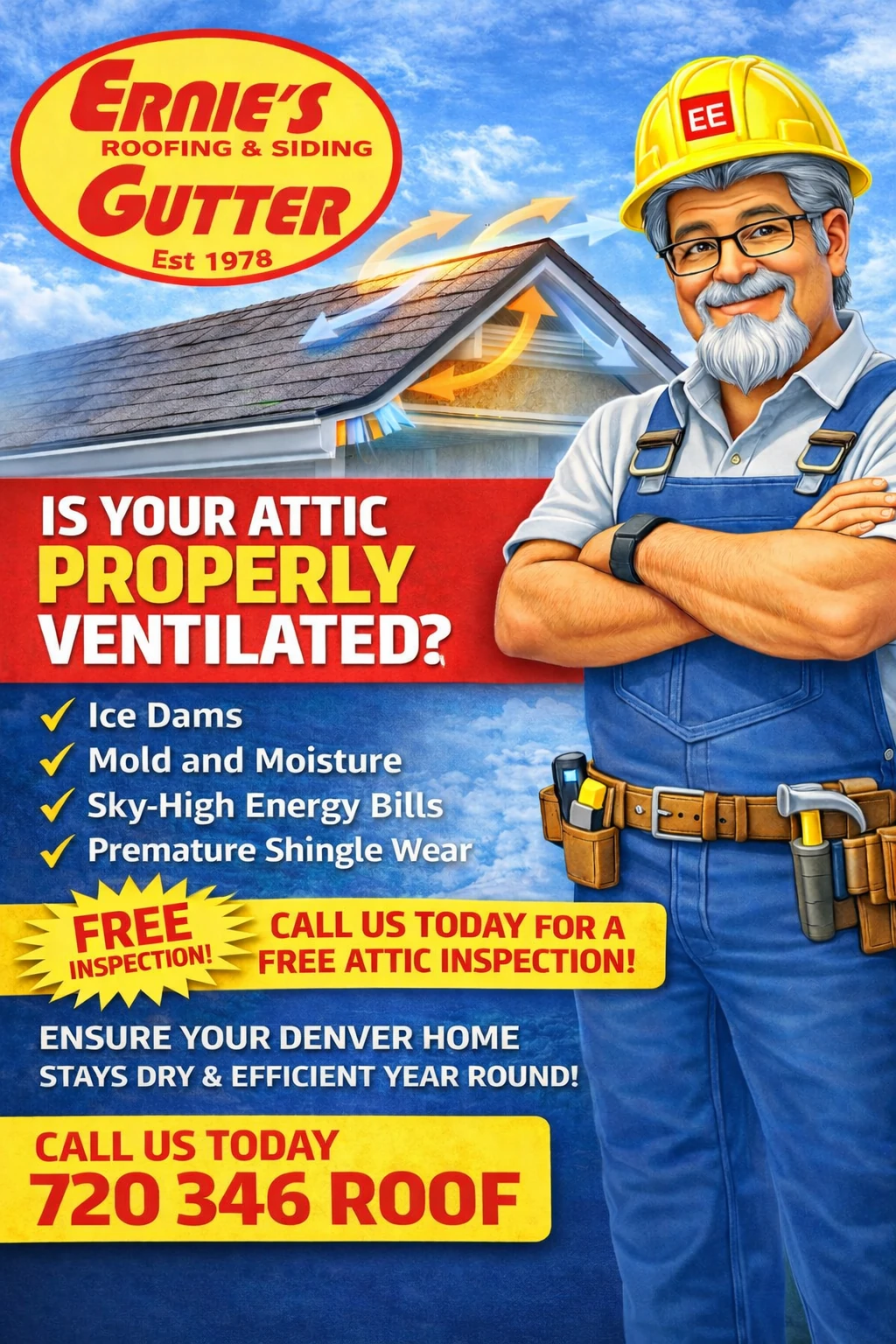
Denver weather is hard on the attic and the roof above it
Denver roofs deal with strong sunlight, sudden storms, dry stretches, snow accumulation, wind, hail, and freeze-thaw cycles. The attic sits in the middle of that fight. When attic airflow is weak, the roof above it is already working harder than it should.
During hot weather, poor airflow can trap radiant heat and raise attic temperatures higher than most homeowners expect. During colder months, everyday moisture from cooking, showers, laundry, and normal living can rise upward and collect against cooler attic materials.
That combination can lead to wet wood, frost, mold concerns, insulation problems, and early shingle wear. A good roofing contractor looks at ventilation as part of the roof system, not as an afterthought.
Do solar attic fans work in Denver?
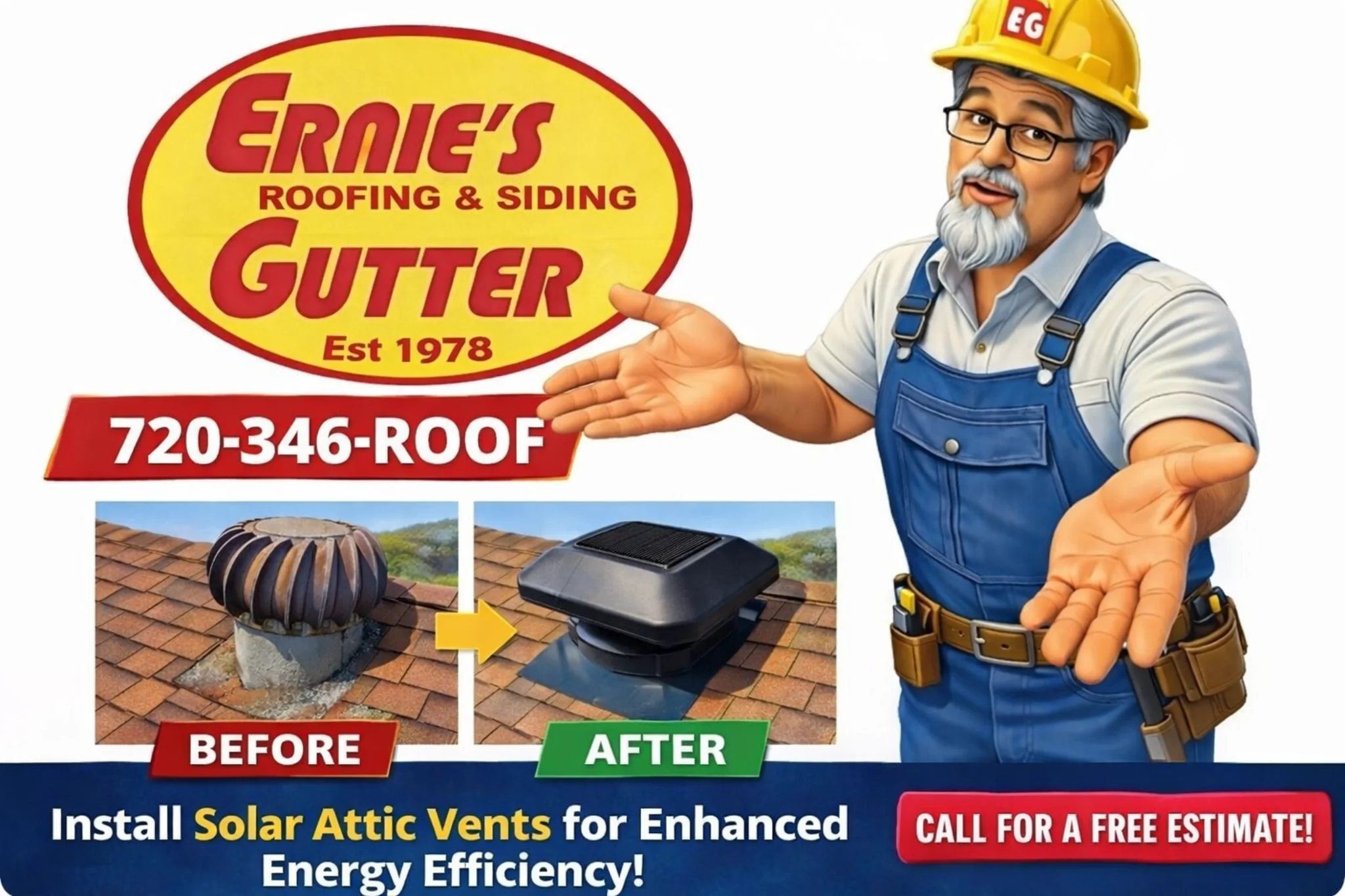
Short answer: A solar attic fan can help move trapped heat out of a Denver attic when the roof has enough intake air and the fan is installed with proper flashing. It is not a cure for blocked soffits, poor insulation clearance, or a bad vent layout.
Denver gets plenty of sun, so a solar-powered attic vent can make sense on the right roof. The part homeowners miss is that the fan still needs replacement air. If the attic intake is blocked, the fan may pull from the wrong places and fail to solve the real airflow problem.
The roof penetration also matters. Any fan installed through the roof needs clean flashing, correct placement, and leak protection. A fan that is slapped into the roof without thinking through water flow can turn a ventilation upgrade into a roof repair.
Bad attic ventilation can make good roofing materials fail early
New shingles will not fix a hidden airflow problem by themselves. If the attic is trapping heat and moisture, the roof is being stressed from underneath. That is why attic ventilation should be reviewed before roof repair, roof replacement, or any ventilation upgrade.
Roof ventilation problems we check for Denver homeowners
Attic airflow problems usually have more than one cause. We check the roof and attic together so the recommendation is based on the home, not a product pitch.
Solar attic fan installation
A solar attic fan may help remove trapped attic heat when the home has proper intake air and the fan is installed with clean roof flashing.
Roof replacement ventilation review
Before replacing a roof, attic ventilation should be checked so new roofing materials are not installed over an old hidden problem.
Roof vent repair
Cracked vents, loose flashing, bad seals, and worn roof penetrations can affect both airflow and leak protection.
Residential roof ventilation
Every home is different. Roof slope, attic size, soffit intake, and exhaust style all affect the right ventilation plan.
Storm-damaged vent checks
After hail or wind, vents can be damaged even when shingles look mostly okay from the ground. Those details matter.
Attic ventilation estimate
We can look at the roof, talk through the symptoms, and tell you whether the problem is intake, exhaust, moisture, heat, or a mix of issues.
Do attic fans and roof vents need soffit vents?
Short answer: Yes, attic exhaust needs intake air to work correctly. Soffit vents or other low intake vents let fresh air enter the attic so ridge vents, roof vents, or attic fans can move stale heat and moisture out.
Exhaust without intake is one of the most common ventilation mistakes. A ridge vent, box vent, or solar attic fan cannot perform well if the attic cannot pull air from below. It may short cycle, pull from nearby vents, or leave sections of the attic stagnant.
Insulation can also block soffit intake. This is common near the eaves where insulation gets pushed too tight against the roof deck. Baffles or intake correction may be needed before adding more exhaust.
Can roof vents and attic fans cause leaks?
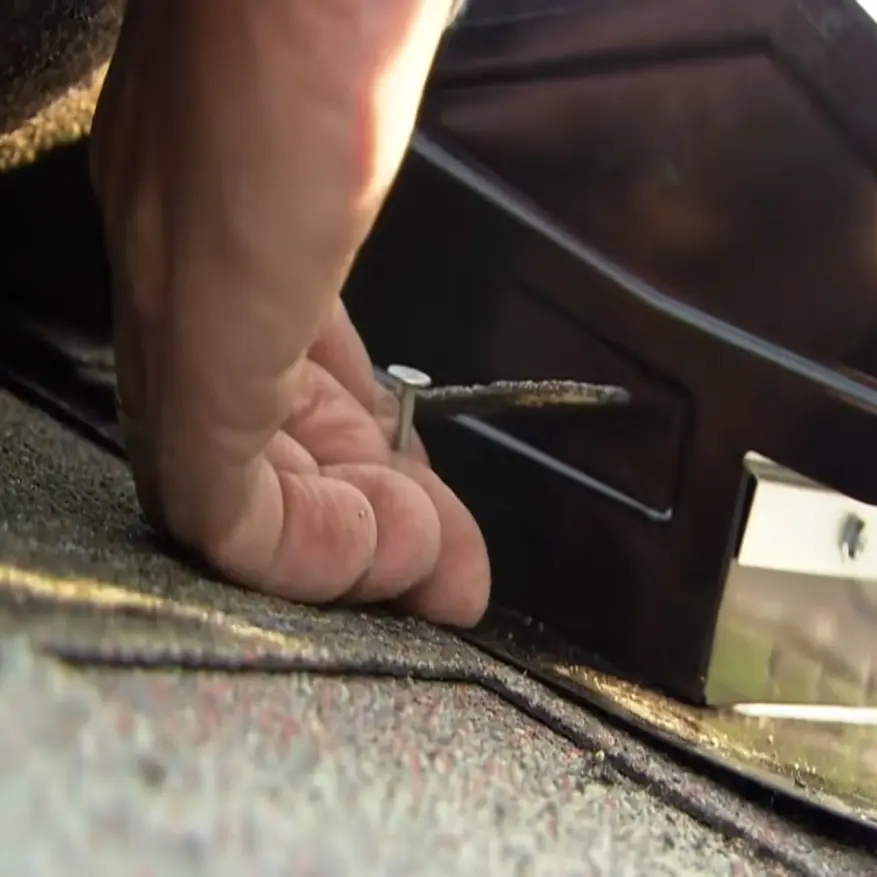
Short answer: Yes, any roof penetration can leak if it is cracked, storm damaged, poorly flashed, or installed in the wrong place. Roof vents, bathroom vents, and attic fans all need proper flashing and water-shedding details.
A roof vent is more than a hole with a cap on it. It has to shed water, resist wind, and stay sealed through sun exposure, hail, snow, and freeze-thaw movement. If the flashing is wrong, the vent becomes a weak spot.
This is why Ernie’s Roofing looks at ventilation and leak protection together. Airflow matters, but so does keeping water out around the vent, fasteners, shingles, and flashing.
The biggest mistake is focusing on one vent instead of the whole airflow path
A ridge vent alone is not enough if intake air is blocked. A solar attic fan is not enough if the attic cannot pull replacement air from below. Adding more exhaust is not always better if the attic is already short on intake. This is where a lot of quick fixes go sideways.
Another common problem is insulation placement. If insulation is packed tightly at the eaves, it can block intake air before the system even starts doing its job. Homeowners are then told they have vents, so everything must be fine. That is not always true.
Good roofing practice means evaluating intake, exhaust, insulation, attic moisture, roof design, decking condition, and vent compatibility together. That is the difference between diagnosis and guesswork.
Exhaust only works when the attic has air coming in
The right ventilation setup depends on the roof style, attic design, existing vent layout, and whether the home already shows signs of moisture or heat stress. Some homes need better soffit intake. Some need corrected exhaust. Some need baffles to keep airflow open above insulation.
Some homes need a broader roofing correction because the original roof system was installed without proper ventilation planning. A quick product install is not always the right answer. The attic needs to be read like part of the roof system because that is what it is.
Contractor note: More ventilation is not always better. Correct ventilation is better. A balanced system gives air a place to enter, a path to move, and a proper place to exit.
The right way to evaluate and improve attic ventilation
A proper attic ventilation review should not stop at a quick look from the driveway. It should include the roof, attic, intake path, exhaust layout, moisture clues, and shingle condition. Guessing at ventilation is a good way to pay for the same problem twice.
1. Roof design review
We look at the roof shape, slope, current vent locations, roof penetrations, and how the system is likely moving air.
2. Intake and exhaust check
We check whether air has a place to enter low and exit high. Without that balance, vents and fans may underperform.
3. Moisture and heat clues
Stained decking, damp insulation, frost marks, musty smells, and hot upstairs rooms can all point toward airflow problems.
4. Insulation blockage review
Insulation at the eaves can block intake air. That hidden blockage can make the whole ventilation system weak.
5. Vent compatibility review
Mixing vent styles can create short cycling. We look at whether the current vents are helping or fighting each other.
6. Practical recommendation
We explain whether the home needs intake correction, exhaust correction, vent repair, a solar attic fan, or roof work.
Review attic ventilation before covering up the same old problem
If a homeowner is planning roof repair or full roof replacement, attic ventilation needs to be reviewed before the work is done. Otherwise, new roofing materials may go right over an old airflow problem that keeps wearing the system down from underneath.
Attic ventilation FAQs
```How do I know if my attic has poor ventilation?
Common signs include hot upper rooms, musty attic smells, condensation, frost on roof decking, damp insulation, dark stains on wood, mold concerns, and shingles aging faster than expected. A roof and attic inspection gives the clearest answer.
Can poor attic ventilation damage a roof?
Yes. Poor attic ventilation can trap heat and moisture against the roof deck. Over time, that can stress decking, reduce insulation performance, contribute to moisture problems, and shorten the life of roofing materials.
Does attic ventilation matter in winter too?
Yes. Winter moisture can rise from inside the home into the attic and condense on colder surfaces. That can lead to frost, wet wood, insulation problems, and long-term roof damage if the ventilation problem is not corrected.
Can attic ventilation help with heat buildup?
Proper attic ventilation helps reduce trapped attic heat by allowing air to move through the attic space. It will not replace air conditioning, but it can support better roof performance and reduce extreme heat buildup under the roof deck.
Is a ridge vent enough by itself?
Not always. A ridge vent needs proper intake air to work correctly. Without enough soffit or lower intake ventilation, the ridge vent may not move air the way it should.
Can insulation block attic ventilation?
Yes. If insulation is packed tightly into the eaves, it can block soffit intake air. That can weaken the entire ventilation system even when the roof has visible vents.
Do solar attic fans need soffit vents?
Yes. A solar attic fan needs enough intake air to work correctly. Without soffit intake or another low intake source, the fan may struggle to move attic air and may pull air from the wrong places.
Can a solar attic fan cause a roof leak?
Yes, if it is installed poorly. A solar attic fan creates a roof penetration, so the flashing, shingles, fasteners, and water-shedding details have to be installed correctly to reduce leak risk.
Should attic ventilation be checked before roof replacement?
Absolutely. Roof replacement is one of the best times to review attic ventilation. Installing new shingles over a hidden airflow problem is a bad trade because the new roof may still be stressed from underneath.
Can poor attic ventilation cause moisture problems?
Yes. Trapped moisture can collect on roof decking and framing, damage insulation, and create conditions where mold or wood deterioration can start. Ventilation is part of controlling that hidden moisture risk.
What is the best attic ventilation setup?
The best setup depends on the home, roof design, attic layout, intake area, exhaust type, and insulation condition. Balanced intake and exhaust is the goal, but the right plan should be based on inspection, not guesswork.
Who should I call for attic ventilation help in Denver?
Call a Denver roofing contractor who understands attic airflow as part of the full roofing system. Ernie’s Roofing checks the roof and attic together so the recommendation fits the home, not just a product.
Call Ernie’s Roofing before small airflow problems turn into bigger roof repairs
If your attic runs hot, shows moisture, smells musty, or your roof seems to be aging faster than it should, now is the time to look deeper. Ernie’s Roofing has served Denver since 1978 with straightforward roofing guidance and practical repairs built for Colorado homes.
General Information Disclaimer
This content is provided for general informational and educational purposes only. It does not constitute professional construction, roofing, or contracting advice. Every property, structure, and situation is different. Always consult a qualified roofing or gutter professional for inspections, recommendations, and repairs specific to your home or building.
Related Reading
- Residential Gutter Contractor in Denver
- Why Roof Inspections Matter More in Denver
- Why Roof Valleys Fail on Denver Homes
This content is provided for general informational and educational purposes only. It does not constitute professional construction, roofing, or contracting advice. Every property, structure, and situation is different. Always consult a qualified roofing or gutter professional for inspections, recommendations, and repairs specific to your home or building.
OUR SERVICES
Your Neighborhood Roofing Contractor
Get more information concerning our service, do not wait to call us at 720 346 ROOF today. We’ll be more than happy to schedule a meeting with you.

Residential Roofing Contractor
Ernie’s Roofing specialize in residential roofing in Denver and have a team of experienced professional Roofers available to help you get the job done right The First Time. From minor repairs and maintenance to full–scale roof replacements,

Commercial Roofing
We construct, repair, as well as maintain Commercial Roofing systems for services both large and also small, creating personalized services that conserve our client’s time, cash, and also power. Call us at 720 346 ROOF and book a consultation today.

Hail Damage
Their knowledgeable staff is ready to help you assess the damage caused by storms and provide you with a comprehensive repair evaluation & plan. We specialize in all types of roof damage, including hail, wind, and even lightning strikes. Hail Claim Help

INSURANCE CLAIMS HELP
Our team of experienced insurance claim specialists will work with you to ensure that the insurance claim process is as stress-free as possible. We will work with your insurance company to provide all necessary documentation and estimates to ensure that your claim is processed quickly and correctly.

Wind Damage
When it comes to roof damage, it can be difficult to determine whether the damage was caused by hail or wind. While both types of damage can cause similar symptoms, they have different causes and require different repair methods.