
Low Slope Self Adhering Roll Roof Installation and Repair in Denver CO
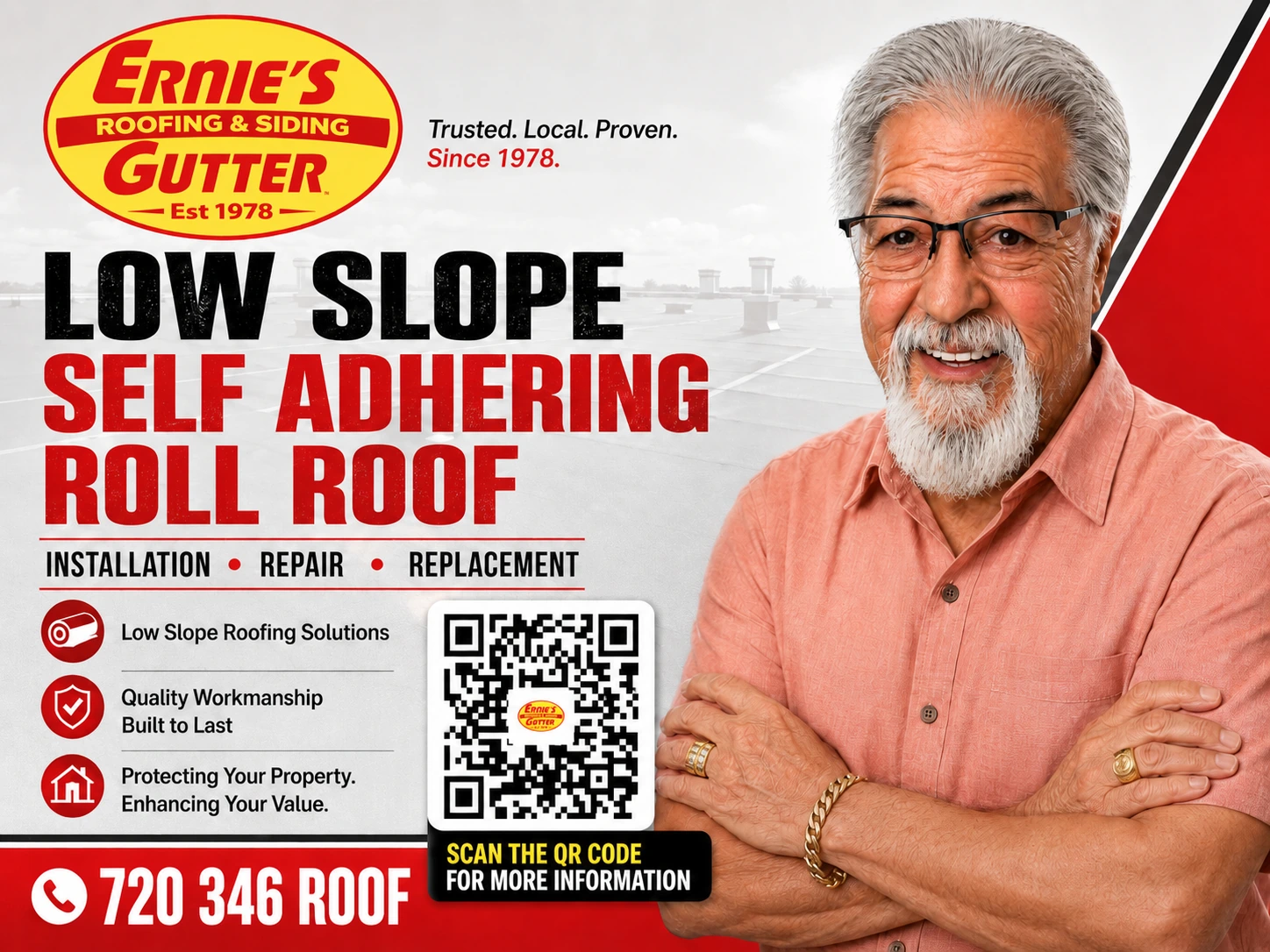
Low Slope Self Adhering Roll Roof systems are made for flatter roof sections where regular shingles are usually the wrong answer. If this is your first time hearing this, a low slope roof does not shed water as fast as a steep roof. Water moves slower, snow sits longer, and every seam, edge, lap, pipe, and wall transition has to be treated like a waterproofing detail.
At Ernie’s Roofing, we install and repair Low Slope Self Adhering Roll Roof systems for Denver area homes, garages, additions, porch roofs, patio covers, mobile homes, and small flat roof sections. The material is important, but the truth is simple: most failures come from bad prep, loose laps, poor primer work, wrong edge detail, or rushing the roll once the backing starts to stick.
```
What A Low Slope Self Adhering Roll Roof Is Used For
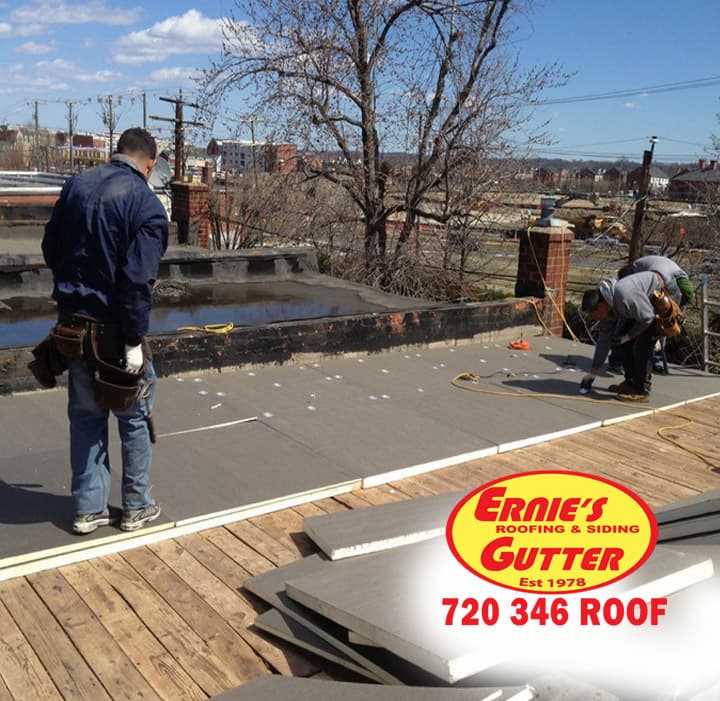
A self adhering roll roof is a rolled roofing membrane with a release film on the back side. The film is peeled away during installation so the membrane can bond to the prepared roof surface. On low slope roofs, that bonded membrane becomes the waterproof layer that helps protect the roof deck from rain, melting snow, and slow drainage conditions.
This system is different from standard asphalt shingles. Shingles are water shedding materials. They work because gravity moves water down a pitched roof quickly. A Low Slope Self Adhering Roll Roof works more like a waterproof skin. That is why the laps, side seams, end seams, T-laps, and edges matter so much.
In Denver, we see this kind of roof on small flat or low pitch sections attached to homes. A homeowner may have a back addition, a porch roof, a low garage section, a mobile home roof section, or a small commercial style roof area that cannot be treated like the main steep shingle roof. When that area is installed wrong, it usually leaks before the rest of the roof does.
Third Generation Denver Roofing Help
We look at the slope, roof deck, drainage, edge metal, roof tie-ins, and existing patches before recommending repair or replacement.
Why Shingles Are Usually A Bad Idea On Low Slope Roof Sections
Here is the blunt answer: shingles do not magically become waterproof because someone nails them to a flatter roof. If the pitch is too low, water can move sideways, back up under the tabs, freeze at the lower edge, or get pushed by wind into places shingles were not designed to protect. That is how a roof can look finished from the ground but still leak inside the house.
A Low Slope Self Adhering Roll Roof is usually the better direction when the roof section needs a membrane instead of a shingle system. The membrane is installed in rows with overlap, sealed laps, and detail work around edges and penetrations. The goal is not just to make the roof look covered. The goal is to build a surface that resists water sitting and moving slowly across it.
That does not mean every roll roof is good. A poor roll roofing job can fail fast. If the deck is not clean, if the material is installed in the wrong temperature, if the backing is pulled carelessly, if the roll gets wrinkled, or if the T-laps are skipped, the roof can leak even when the material itself is a good product.
```Low Pitch Changes The Rules
Water does not leave a low slope roof the same way it leaves a steep roof. Slow drainage means seams and edges are under more pressure.
The Membrane Must Bond
Self adhering roofing needs a dry, clean, stable surface. Dust, moisture, loose material, and unprimed metal can create weak adhesion.
Details Beat Shortcuts
Edges, corners, penetrations, wall tie-ins, and T-laps are where low slope roofs usually leak when the installer cuts corners.
Our Low Slope Self Adhering Roll Roof Installation Process
A clean Low Slope Self Adhering Roll Roof installation does not start with the roll. It starts with the roof deck and the details. We want the surface ready before the membrane is opened because once peel and stick roofing grabs, fighting it is where wrinkles, fishmouths, crooked laps, and ugly seams start.
```Inspect The Roof Deck
We check for soft decking, water damage, loose sheathing, old roofing layers, bad patches, sagging areas, and anything that could stop the membrane from bonding correctly.
Prepare Edge Metal
Edge metal has to be secure, clean, and ready for bonding. If the perimeter is weak, wind and water can attack the roof from the outside in.
Prime Critical Areas
Primer is used where the membrane needs extra bite, especially around metal, older surfaces, dusty decking, and detail areas that cannot afford weak adhesion.
Lay Out The Roll First
The roll should be positioned before too much backing is removed. A good layout keeps the material straight and helps avoid buckles.
Seal Laps And T-Laps
T-laps are where seams intersect and create a T shape. These spots need extra attention because they are common leak points on low slope roofs.
Final Roof Check
We check edges, laps, corners, roof penetrations, transitions, low spots, and any questionable seam before calling the roof done.
Common Problems With Low Slope Roll Roofing
Most low slope roll roofing problems are easy to understand once you know where water wants to go. Water looks for the lowest path and the weakest opening. On a low slope roof, that opening might be a lifted edge, a dry cracked patch, a loose lap, a bad pipe flashing, or a seam that was never sealed right in the first place.
If this is your first time hearing this, a bubble in a roll roof is not just a cosmetic issue. It can mean trapped air, trapped moisture, poor adhesion, or movement under the membrane. A wrinkle can hold water. A fishmouth, which is a small open mouth-shaped gap at a seam or edge, can let water travel under the membrane. These are not details to ignore.
We also see roofs where the installer used too much mastic as a cover-up. Mastic has its place, but smearing a bucket of roof cement over every problem is not the same as correcting the roof system. If the membrane is loose, the deck is rotten, or the slope is holding water, a patch may only buy a little time.
Warning Signs Your Low Slope Roof Needs Attention
A Low Slope Self Adhering Roll Roof should not be ignored just because it is a smaller section of the home. Small low slope roofs often protect expensive interior areas: kitchens, additions, laundry rooms, garages, enclosed patios, and back entries. When a small roof leaks, the drywall, insulation, fascia, soffit, and framing can get damaged fast.
```Bubbles Or Buckles
Bubbles can mean the membrane did not bond correctly or moisture is trapped underneath. Buckles can hold water and stress the seams.
Open Laps
If a side lap, end lap, or T-lap is open, water can work its way beneath the membrane and travel farther than you expect.
Ponding Water
Standing water puts constant pressure on the roof. Low slope does not mean no drainage. Water should still have a path off the roof.
Loose Edge Metal
The roof edge is one of the first places wind and water attack. Loose edge metal can ruin an otherwise decent roof section.
Leaks At Wall Tie-Ins
Where a low roof meets siding, stucco, brick, or another roof section, flashing details decide whether the roof holds or leaks.
Repeated Patch Failure
If the same area keeps getting patched, the real problem may be slope, deck movement, bad seams, or the wrong roof system.
Repair Or Replace A Low Slope Self Adhering Roll Roof?
The honest answer depends on the condition of the membrane, the deck, the seams, and the drainage. A small puncture, loose corner, or isolated seam problem may be repairable. But if the roof has widespread bubbles, poor adhesion, rotted decking, multiple leaks, or bad ponding, replacement is usually the smarter money.
We are not interested in selling a replacement when a proper repair will do the job. But we also will not pretend that a surface patch fixes a roof that has already failed underneath. That is where homeowners lose money: they pay for patch after patch, then still end up replacing the roof after more interior damage.
Low slope roofing is not the place to guess.
If a roof section is too flat for shingles, putting shingles back on it is usually just delaying the same leak. The roof needs the right system for the slope, not just another layer of material.
Self Adhering Roll Roof Details That Make Or Break The Job
A low slope roof is a detail roof. The field area matters, but the edges, corners, laps, penetrations, and transitions are where the roof proves itself. Any contractor can make a roll look decent from twenty feet away. The question is whether the roof is bonded, sealed, and checked where water actually attacks.
```Deck Condition
The roof deck must be solid. Self adhering membrane cannot fix rotten wood, loose panels, wet decking, or structural sag.
Clean Surface
Dust, granules, old coating, loose debris, and moisture can all reduce adhesion. Clean prep is not optional.
Primer
Primer helps the membrane bond to difficult surfaces. It is especially important at edge metal and other critical bonding areas.
Lap Direction
Laps should be consistent and planned. Random lap direction looks sloppy and can create unnecessary water exposure.
Temperature
Very hot weather can make the roll grab too fast. Cold weather can make bonding harder. Installation conditions affect the final result.
Final Pressure
The membrane has to be pressed, rolled, stepped, or worked into place so the bond is strong and the seams are tight.
Denver Weather Makes Low Slope Roof Details Even More Important
Denver roofs deal with sun, hail, wind, snow, freeze-thaw cycles, and fast temperature swings. A low slope roof section can be especially vulnerable because water and snow stay on it longer than they do on a steep roof. That means the membrane, seams, and flashings get tested hard through the year.
Summer heat can soften and stress roof materials. Winter snow can sit in low areas and melt slowly. Spring storms can push wind-driven rain toward wall transitions and edges. Hail can bruise or damage roofing surfaces. If the low slope roof already has poor adhesion or open laps, Denver weather will find that weakness.
That is why we do not look at low slope roofing as a quick side job. It needs the same attention as the main roof, sometimes more. A small bad section can cause stains inside, insulation damage, fascia rot, mold concerns, and repeated service calls.
```Snow Melt
Slow melting snow can expose weak seams for hours or days. Good laps and clean drainage help reduce that risk.
Wind-Driven Rain
Wind can push water sideways into edges and wall tie-ins. Flashing and perimeter bonding need to be right.
Strong Sun
UV exposure and heat can age roofing materials. A proper cap surface helps protect the roof from sun damage.
DIY Low Slope Roll Roofing: What Homeowners Should Know First
Some homeowners look at a roll of peel and stick roofing and think it should be simple. In a basic sense, the idea is simple: clean the surface, line up the roll, peel the backing, stick it down, and seal the laps. But the trouble is that the material does not forgive mistakes easily once it starts to grab.
If you are trying to patch a tiny shed roof, you may be willing to learn by trial and error. On a house, that is a different conversation. A crooked roll, a trapped wrinkle, a dirty deck, or a missed T-lap can turn into an interior leak. If the roof is over living space, finished drywall, insulation, electrical, or a finished garage, the risk is higher.
The other problem is roof safety. Low slope does not mean safe. Edges are still dangerous, the surface can be slick, and working while handling a heavy roll can pull your attention away from where your feet are. We have seen plenty of roofs where the repair was not the hard part; the dangerous part was simply getting around the roof without stepping wrong.
If you are going to inspect your own low slope roof from a ladder, keep it simple. Look for obvious bubbles, open seams, ponding stains, cracked sealant, loose metal, and soft-looking areas. Do not start tearing into the roof unless you are ready for what you might expose. Once water-damaged decking is opened, the job can grow quickly.
Why Homeowners Call Ernie’s Roofing For Low Slope Roof Work
Ernie’s Roofing is a Denver roofing contractor with a third generation family background in roofing, gutter, and exterior work. We talk plainly because homeowners do not need a sales pitch. They need to know what is leaking, why it is leaking, whether it can be repaired, and what happens if it gets ignored.
For low slope roof work, we look beyond the obvious surface. We check the drainage pattern, the surrounding roof, the flashing, the edge metal, the deck condition, and the history of repairs. If the same area has been patched several times, we want to know why. If shingles were used on a roof that was too flat, we will tell you. If a Low Slope Self Adhering Roll Roof can be repaired cleanly, we will tell you that too.
That is the practical way to protect a home. You do not need fancy talk. You need the right roof system, installed correctly, with no skipped details at the seams.
```Related Low Slope Roofing Services
Low slope roofing often connects with other roofing issues. If your low slope roof is leaking, the problem may also involve roof repair, flat roof repair, storm damage, edge metal, gutters, fascia, or drainage. Looking at the whole area is better than chasing one leak over and over.
```Roofing Contractor Denver
Local roofing help for roof repair, roof replacement, roof inspections, and low slope roof questions.
Storm And Hail Damage Roof Repair
Help after hail, wind, and storm damage affects shingles, low slope sections, flashing, or roof edges.
Roof Inspection Checklist
A homeowner friendly guide to spotting roof problems before they become larger repairs.
Low Slope Self Adhering Roll Roof FAQs
```What is a Low Slope Self Adhering Roll Roof?
A Low Slope Self Adhering Roll Roof is a peel and stick roofing membrane used on flatter roof areas where shingles are usually not the correct roofing system. It is designed to create a waterproof surface when installed over a clean, prepared roof deck with proper laps and sealed details.
Can self adhering roll roofing be used instead of shingles?
Yes, self adhering roll roofing can be used instead of shingles on the right low slope roof sections. Shingles are made to shed water on pitched roofs. Low slope sections often need a membrane roof system because water drains slower and can work under shingles.
Does a self adhering roll roof need primer?
Many Low Slope Self Adhering Roll Roof installations need primer, especially on edge metal, older surfaces, dusty decking, or areas where adhesion is critical. Primer helps the membrane bond properly and helps reduce the chance of lifted laps or loose edges.
What are T-laps on a low slope roof?
T-laps are where two seams meet another seam and form a T shape. These areas are important because water can work into seam intersections if they are not sealed, welded, rolled, or detailed correctly during installation.
Why does self adhering roll roofing bubble or wrinkle?
Bubbling or wrinkling can happen when the membrane is installed over moisture, dust, trapped air, uneven decking, or when the release film is pulled too quickly. Hot weather can also make the material grab too fast, which makes wrinkles harder to avoid.
Can a low slope roll roof be repaired?
A low slope roll roof can sometimes be repaired if the problem is isolated and the membrane is still bonded well. If the roof has widespread poor adhesion, soft decking, ponding water, or repeated patch failure, replacement may be the better long-term solution.
Is self adhering roll roofing better than torch down roofing?
Self adhering roll roofing can be a good option because it avoids open flame installation. Torch down roofing can also be a strong system when installed correctly. The better choice depends on the roof slope, deck condition, building type, detail work, and safety requirements.
How long does a Low Slope Self Adhering Roll Roof last?
The life of a Low Slope Self Adhering Roll Roof depends on material quality, sun exposure, drainage, installation temperature, deck condition, lap sealing, and maintenance. Poor prep and bad seams can shorten the roof life quickly.
Why is ponding water bad on a low slope roof?
Ponding water is bad because it keeps moisture sitting on the roof and puts more pressure on seams, laps, edge metal, penetrations, and patches. Low slope roofs should still drain properly even though they are flatter than standard pitched roofs.
Who installs Low Slope Self Adhering Roll Roof systems in Denver CO?
Ernie’s Roofing installs and repairs Low Slope Self Adhering Roll Roof systems for Denver area homeowners. Call 720 346 ROOF or request an estimate through the Ernie’s Roofing contact page.
Protection starts at the top of the home.

Roof leaks in Denver often begin long before water appears inside. Discover the real causes of delayed roof leaks and when Denver homes need inspection. Since 1978
OUR SERVICES
Your Neighborhood Roofing Contractor
Get more information concerning our service, do not wait to call us at 720 346 ROOF today. We’ll be more than happy to schedule a meeting with you.

Residential Roofing Contractor
Ernie’s Roofing specialize in residential roofing in Denver and have a team of experienced professional Roofers available to help you get the job done right The First Time. From minor repairs and maintenance to full–scale roof replacements,

Commercial Roofing
We construct, repair, as well as maintain Commercial Roofing systems for services both large and also small, creating personalized services that conserve our client’s time, cash, and also power. Call us at 720 346 ROOF and book a consultation today.

Hail Damage
Their knowledgeable staff is ready to help you assess the damage caused by storms and provide you with a comprehensive repair evaluation & plan. We specialize in all types of roof damage, including hail, wind, and even lightning strikes. Hail Claim Help

INSURANCE CLAIMS HELP
Our team of experienced insurance claim specialists will work with you to ensure that the insurance claim process is as stress-free as possible. We will work with your insurance company to provide all necessary documentation and estimates to ensure that your claim is processed quickly and correctly.

Wind Damage
When it comes to roof damage, it can be difficult to determine whether the damage was caused by hail or wind. While both types of damage can cause similar symptoms, they have different causes and require different repair methods.
What’s New on The Blog
Roof Maintenance Schedule
Roof Maintenance ScheduleRoofing Contractor Specializing in Roof Repair and Storm Damage Roofing in DenverProviding roof repair, emergency roof repair, storm damage roofing, and roof replacement services throughout the Metro Denver AreaFamily-Owned Legacy Built on...
How to File a Roof Insurance Claim
How to file a roof insurance claimRoofing Contractor Specializing in Roof Repair and Storm Damage Roofing in DenverProviding roof repair, emergency roof repair, storm damage roofing, and roof replacement services throughout the Metro Denver AreaFamily-Owned Legacy...
Class 4 Impact-Resistant Shingles
Class 4 Impact-Resistant ShinglesRoofing Contractor Specializing in Roof Repair and Storm Damage Roofing in DenverProviding roof repair, emergency roof repair, storm damage roofing, and roof replacement services throughout the Metro Denver AreaFamily-Owned Legacy...
#1 Rated Roofing Contrator In Denver
Craftsmanship That Stands Like a House
Let’s Get Your Project on the Right Track

Let’s Get Started