
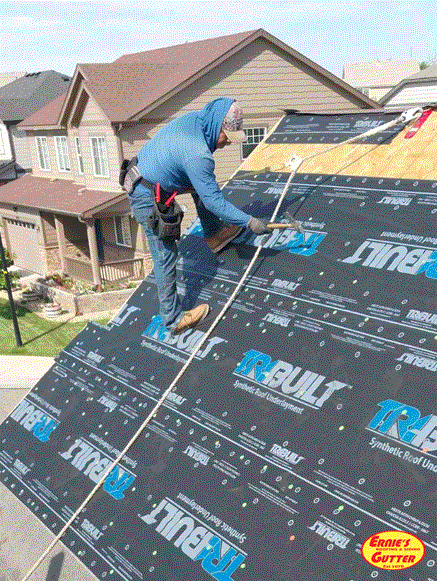
10 Essential Questions to Ask Before Hiring a Roofing Contractor
Roofing Contractor
Hiring a roofing contractor is one of those decisions that can either protect your home for years or turn into an expensive lesson. A roof is not just shingles nailed to wood. It is a full water control system made up of decking, underlayment, flashing, ventilation, drainage, and workmanship. If one part is handled poorly, the whole thing can fail.
Here in Denver, that matters even more. Hail, high wind, hard sun, snow load, and fast temperature swings are rough on roofs. A contractor who cuts corners can leave you with leaks, blown shingles, bad flashing, or warranty headaches that show up after the check has already cleared. That is why smart homeowners ask better questions before they hire anybody.
If this is your first time hearing this, most roofing problems do not start with the shingle you can see from the driveway. They usually start with what was missed underneath, around roof penetrations, along valleys, at wall lines, or where water leaves the roof and enters the gutter system. That is where experience matters.
Plain answer: the right roofing contractor should be able to explain the condition of your roof, the scope of work, the materials being used, the permit and inspection process, the warranty, the cleanup plan, and whether repair or replacement actually makes sense for your home. If they dance around those basics, that is your answer right there.
Call 720 346 ROOF to schedule a straight inspection and get real answers before you sign anything.
Why these 10 questions matter
A lot of homeowners think the biggest risk is overpaying. Truth is, the bigger risk is hiring the wrong crew and paying twice. First for the job, then again to fix the job. A cheap roof can become a very expensive hobby.
These ten questions help you slow the process down and see whether the contractor knows what they are doing, explains things clearly, and understands how Denver homes actually perform in Colorado weather. A real contractor should welcome these questions. A salesman trying to shuffle paper across the table usually will not.
Asking the right questions also helps you compare bids more honestly. Two estimates can look similar on price while being miles apart on underlayment, flashing, ventilation, decking repairs, cleanup, warranty strength, and insurance claim documentation. That is how folks end up comparing apples to old hubcaps.
Related service: https://erniesroofing.com/services/
Question 1: Are you licensed and insured for roofing work in my area?
This is the first question because it filters out a lot of nonsense fast. A roofing contractor should be able to explain their licensing status, insurance coverage, and whether they regularly work in your city. In Denver and the surrounding metro, requirements can vary by jurisdiction, and permits matter.
You also want to know whether they carry both liability coverage and workers compensation. If something goes sideways on the job, you do not want to be learning about insurance gaps after the ladder is already in your flower bed.
A seasoned contractor will not get offended by this question. They should expect it. In fact, if they act squirrelly when you ask, that is not a quirk. That is a warning label.
Question 2: Is my roof a repair job, or am I being pushed toward replacement?
Now we are getting to the meat and potatoes. Not every worn roof needs replacement. Some roofs still have honest repair life left. Others are one storm away from becoming a money pit. A trustworthy contractor should be able to explain which one you have and why.
Ask them what they are seeing. Is the problem isolated or widespread? Are the issues coming from one flashing detail, one slope, or one storm hit area? Or is the roof showing broad age, repeated leak history, missing granules, brittle shingles, soft decking, ventilation issues, and multiple weak spots?
A real inspection should lead the conversation, not the sales pitch. If every house magically needs a full replacement no matter what, that dog will not hunt.
Question 3: What exactly is included in your inspection?
A good inspection is more than glancing at the shingles and taking three dramatic photos. Ask whether they inspect shingles, flashing, roof penetrations, ventilation, valleys, drip edge, decking condition where visible, attic signs of moisture, and the gutter system.
That last part matters. Water control starts at the roofline and continues through the gutter system. If the roof is shedding water but the drainage is failing, you can still end up with fascia rot, siding stains, foundation splash back, and other problems nobody wants to pay for.

Roof leaks in Denver often begin long before water appears inside. Discover the real causes of delayed roof leaks and when Denver homes need inspection. Since 1978
The contractor should also explain whether they are documenting storm damage, active leaks, repair history, and any signs that point to hidden issues. If this is your first time hearing this, hidden issues are often where the real bill comes from.
Related service: https://erniesroofing.com/roof-repair-in-denver-co/
Question 4: What materials are you using, and why are they right for Denver?
A contractor should be able to tell you more than just a shingle brand name. Ask about the entire roofing system. That includes underlayment, ice and water protection where needed, flashing, ventilation, starter material, ridge components, and how the system is built to handle Denver weather.
Colorado roofs deal with hail, UV exposure, freeze and thaw cycles, and sudden weather changes. Materials that perform well in one part of the country are not always the best fit here. A good contractor should be able to explain the logic, not just read a brochure out loud like he is auditioning for radio.
You are not looking for the fanciest answer. You are looking for a clear one.
Question 5: Who is actually doing the work on my roof?
This one gets skipped all the time, and it should not. Ask whether the company has its own crew, uses long standing subcontractors, or farms work out to whoever is available that week. Then ask who supervises the job.
The company representative you meet at the kitchen table may never swing a hammer on your project. That is normal. But somebody needs to be accountable for installation quality, jobsite safety, protection of landscaping, magnet cleanup, and final walkthrough.
You want to know who is responsible when questions come up, when rotten decking is found, or when something does not look right. If the answer is a fog bank, keep shopping.
Question 6: What happens if you find damaged decking or hidden problems?
This is one of the biggest cost questions on a roofing project. Sometimes a roof looks tired but serviceable from above, then the tear off reveals rotten decking, bad flashing details, old patch work, moisture damage, or framing issues around penetrations.
Ask how those conditions are documented, priced, and communicated. Will they stop and show you? Will they explain the repair? Will they provide photos? Will they get approval before charging ahead?
A fair contractor does not use hidden damage as a slot machine. They explain what was found, why it matters, and what the proper fix is. That is the difference between problem solving and opportunism.
Related service: https://erniesroofing.com/roof-replacement-in-denver-co/
Question 7: How do you handle permits, code requirements, and inspections?
If a contractor gets vague here, pay attention. Roofing work often involves permit requirements depending on the scope and jurisdiction. Code issues can also come into play around layers, decking, ventilation, flashing, and other details.
A contractor who works locally should understand the process and be able to tell you what is required, who pulls the permit, and what happens if the city wants corrections. That is not a side detail. That is part of doing the job right.
You are hiring a professional, not adopting a project manager. The contractor should already know how this works.
Question 8: What warranty do I get on workmanship and materials?
A roof warranty has two moving parts. One is the material warranty from the manufacturer. The other is the workmanship warranty from the contractor. Those are not the same thing, and homeowners often do not learn the difference until there is a problem.
Ask what the workmanship warranty covers, for how long, and what would void it. Ask whether they will provide it in writing. Ask who you call if a leak shows up later.
A solid contractor will stand behind the installation because they know the details were done correctly in the first place. A shaky contractor talks about warranties the way some folks talk about fishing stories. Plenty of confidence, not enough proof.
Question 9: How will you protect my property and clean up after the job?
Roofing is messy work. It just is. But sloppy and messy are not the same thing. Ask how they protect landscaping, siding, gutters, windows, driveways, and outdoor furniture. Ask about tarps, magnet cleanup, nail pickup, trailer placement, and what happens to tear off debris.
You should also ask how they handle weather interruptions. Denver weather can turn on a dime. If rain or snow moves in mid job, what is the plan to dry in the roof and protect the home?
Good cleanup is not cosmetic. It is part of professionalism. Nobody wants to explain to the dog why the yard turned into a hardware aisle.
Related service: https://erniesroofing.com/emergency-roof-repair-in-denver-co/
Question 10: Can you give me a clear written estimate and explain what could change the price?
A written estimate should spell out the scope of work clearly enough that you can compare it to another proposal without needing a decoder ring. Ask whether it includes tear off, disposal, underlayment, flashing, ventilation work, decking replacement terms, cleanup, permit handling, and warranty details.
Then ask what could change the final number. Hidden decking damage is one example. Additional flashing corrections are another. The point is not to avoid every variable. The point is to know where the variables live before the job starts.
Straight answers up front are a whole lot cheaper than surprises later.
What a trustworthy roofing contractor sounds like
A trustworthy contractor is usually pretty plain spoken. They do not need ten minutes of smoke and mirrors to explain a flashing problem. They can tell you what is wrong, why it happened, what the right fix is, and whether repair or replacement makes more sense.
They also do not mind questions. In fact, they usually prefer them. Better expectations make for smoother jobs, fewer misunderstandings, and better long term results.
Look for someone who talks about inspection first, not pressure first. Look for someone who discusses the roof as a full system. Look for someone who understands Denver weather, older housing stock, and how roofing and drainage work together. Those are the folks worth calling back.
Related service: https://erniesroofing.com/services/
Common red flags homeowners should not ignore
Some warning signs show up before the first shingle is ever touched. Watch for these:
• Extremely low bids with vague scope
• Pressure to sign the same day
• No clear answer on insurance or licensing
• No written warranty details
• No explanation of materials beyond the shingle color
• No discussion of ventilation, flashing, or decking
• No clear plan for cleanup or property protection
• Pushy replacement recommendation without inspection evidence
• Poor communication before the job even starts
• A bid that feels polished, but the answers feel thin
A roof is too expensive to hand over to a fast talker with a clipboard and a pickup. There is a difference between confidence and camouflage.
The Denver angle most homeowners miss
Denver roofs live a harder life than many homeowners realize. Strong sun cooks materials. Hail can bruise shingles without making the damage obvious from the ground. Snow load and freeze cycles work on weak details. Wind finds edges and flashing problems. Then spring storms come along and expose what was already getting tired.
That is why the cheapest bid is rarely the smartest bid here. Colorado weather punishes shortcuts. A good roof is built and repaired with local conditions in mind, not just price in mind.
If your contractor cannot explain how Denver weather affects installation choices and repair decisions, they are missing the whole picture.
Related service: https://erniesroofing.com/replacement-roof-denver/
When to call a roofing contractor now, not later
There are times when waiting is reasonable, and there are times when waiting is asking for trouble. Call sooner if you are seeing any of the following:
• Active leaks or interior water stains
• Missing shingles after wind
• Granules collecting heavily in gutters
• Sagging areas
• Flashing pulled loose
• Hail concerns after a storm
• Repeated repair history in the same area
• Signs of overflow or drainage failure along the roof edge
The goal is not to panic. The goal is to catch small trouble before it grows teeth.
Final word from a Denver roofing contractor
Hiring a roofing contractor should not feel like gambling with your house. Ask the hard questions. Listen to how the answers are given. A good contractor should make the process clearer, not murkier.
At Ernie’s Roofing, we have been helping Denver homeowners since 1978 by starting with inspection, giving straight answers, and explaining whether a repair, emergency fix, or full replacement is the smarter move. That is how this trade is supposed to work.
If you want a plain English roofing opinion without the circus, call 720 346 ROOF and schedule an inspection.
<h4><b>Protection starts at the top of the home.</b></h4>
FAQs
• What is the most important question to ask a roofing contractor?
Ask whether your roof truly needs repair or replacement and have them explain why. That answer tells you a lot about whether the contractor leads with inspection or with sales pressure.
• Should a roofing contractor inspect the attic too?
When possible, yes. Attic signs of moisture, ventilation issues, and leak paths can reveal problems the roof surface alone does not show.
• How many roofing estimates should I get?
Most homeowners should get at least two or three written estimates. The goal is not just price comparison. It is scope comparison, material comparison, and workmanship comparison.
• Can a contractor tell hail damage from normal wear?
An experienced local contractor usually can, especially when they document impact patterns, granule loss, soft hits, and collateral damage around the property.
• What if one contractor says repair and another says replace?
That is exactly why you ask questions. Have each one explain the evidence, expected lifespan, hidden risk, and where future money would likely go.
• Should gutters be discussed during a roofing estimate?
Yes. Roofing and drainage work together. If water is not leaving the roof edge correctly, roof repairs alone may not solve the bigger problem.
• Is the cheapest roofing bid ever the best one?
Rarely. Lower bids often leave out key details like flashing replacement, ventilation correction, cleanup, or hidden damage language.
• Do I need a written warranty?
Absolutely. Get workmanship terms and material terms in writing so there is no confusion later.
• What if my roof is leaking right now?
That is an emergency call. You need immediate water control first, then a proper inspection and permanent repair plan after the area is stabilized.
• How do I know a contractor understands Denver homes?
They should be able to explain hail exposure, UV wear, freeze cycles, roof age patterns, drainage concerns, and how local weather changes installation decisions.
Protection starts at the top of the home
This content is provided for general informational and educational purposes only. It does not constitute professional construction, roofing, or contracting advice. Every property, structure, and situation is different. Always consult a qualified roofing or gutter professional for inspections, recommendations, and repairs specific to your home or building.
Related Reading
- Residential Gutter Contractor in Denver
- Why Roof Inspections Matter More in Denver
- Why Roof Valleys Fail on Denver Homes
This content is provided for general informational and educational purposes only. It does not constitute professional construction, roofing, or contracting advice. Every property, structure, and situation is different. Always consult a qualified roofing or gutter professional for inspections, recommendations, and repairs specific to your home or building.
OUR SERVICES
Your Neighborhood Roofing Contractor
Get more information concerning our service, do not wait to call us at 720 346 ROOF today. We’ll be more than happy to schedule a meeting with you.

Residential Roofing Contractor
Ernie’s Roofing specialize in residential roofing in Denver and have a team of experienced professional Roofers available to help you get the job done right The First Time. From minor repairs and maintenance to full–scale roof replacements,

Commercial Roofing
We construct, repair, as well as maintain Commercial Roofing systems for services both large and also small, creating personalized services that conserve our client’s time, cash, and also power. Call us at 720 346 ROOF and book a consultation today.

Hail Damage
Their knowledgeable staff is ready to help you assess the damage caused by storms and provide you with a comprehensive repair evaluation & plan. We specialize in all types of roof damage, including hail, wind, and even lightning strikes. Hail Claim Help

INSURANCE CLAIMS HELP
Our team of experienced insurance claim specialists will work with you to ensure that the insurance claim process is as stress-free as possible. We will work with your insurance company to provide all necessary documentation and estimates to ensure that your claim is processed quickly and correctly.

Wind Damage
When it comes to roof damage, it can be difficult to determine whether the damage was caused by hail or wind. While both types of damage can cause similar symptoms, they have different causes and require different repair methods.