Why Knowing the Inspection Checklist Matters for Denver Homeowners

An inspection is only as valuable as what it actually covers. A contractor who walks around the yard and looks up at the roof from the ground is not performing an inspection. A contractor who gets on the roof, checks every component systematically, and documents findings in writing is. The difference between those two experiences can be thousands of dollars in missed damage and undetected problems.
Denver homeowners are in a particularly vulnerable position when it comes to roof inspections because the demand for inspections spikes after every hail event. When storm chasers flood the market after a major hail storm, the quality of what passes for an inspection drops significantly. Knowing what a thorough inspection should include gives you the ability to ask the right questions and recognize whether the person on your roof is actually doing the job.
Ernie's Roofing has been performing professional roof inspections on Denver homes since 1978. The checklist below reflects nearly fifty years of understanding what Colorado weather does to Front Range roofs and what needs to be evaluated on every inspection.
erniesroofing.com/residential-roofing/
Checklist Section One: Shingle Surface and Overall Roof Condition

The shingle surface is the first and most visible component of any roof inspection. A proper shingle inspection goes well beyond looking for missing shingles. It evaluates the physical condition of every shingle on the roof across multiple performance indicators.
- Granule retention: Shingles that have lost significant granule coverage expose the underlying asphalt mat to direct UV, accelerating breakdown. Granule loss is evaluated across the full roof surface, not just at visible wear points.
- Shingle tab bond: The adhesive strip that seals shingle tabs is checked for separation. Tabs that have lost their bond are vulnerable to wind lift even in conditions that would not affect a properly bonded roof.
- Curling and cupping: Upward curling at the edges or lifting in the middle indicates shingle aging, moisture imbalance, or ventilation problems underneath. Both conditions increase vulnerability to wind damage.
- Surface cracking and fracturing: Shingles that show surface cracking have lost flexibility and are no longer absorbing impact the way they were designed to. Colorado hail hitting a cracked shingle punches through rather than deflecting.
- Hail impact marks: Circular bruising or punctures from hail impact require close-up assessment to distinguish from normal surface wear. This is one of the most critical findings on any post-storm inspection in Denver.
- Missing shingles: Location, count, and extent of missing shingle coverage documented with photos.
erniesroofing.com/storm-and-hail-damage-roof-repair/
Checklist Section Two: Flashing, Penetrations, and Roof Deck
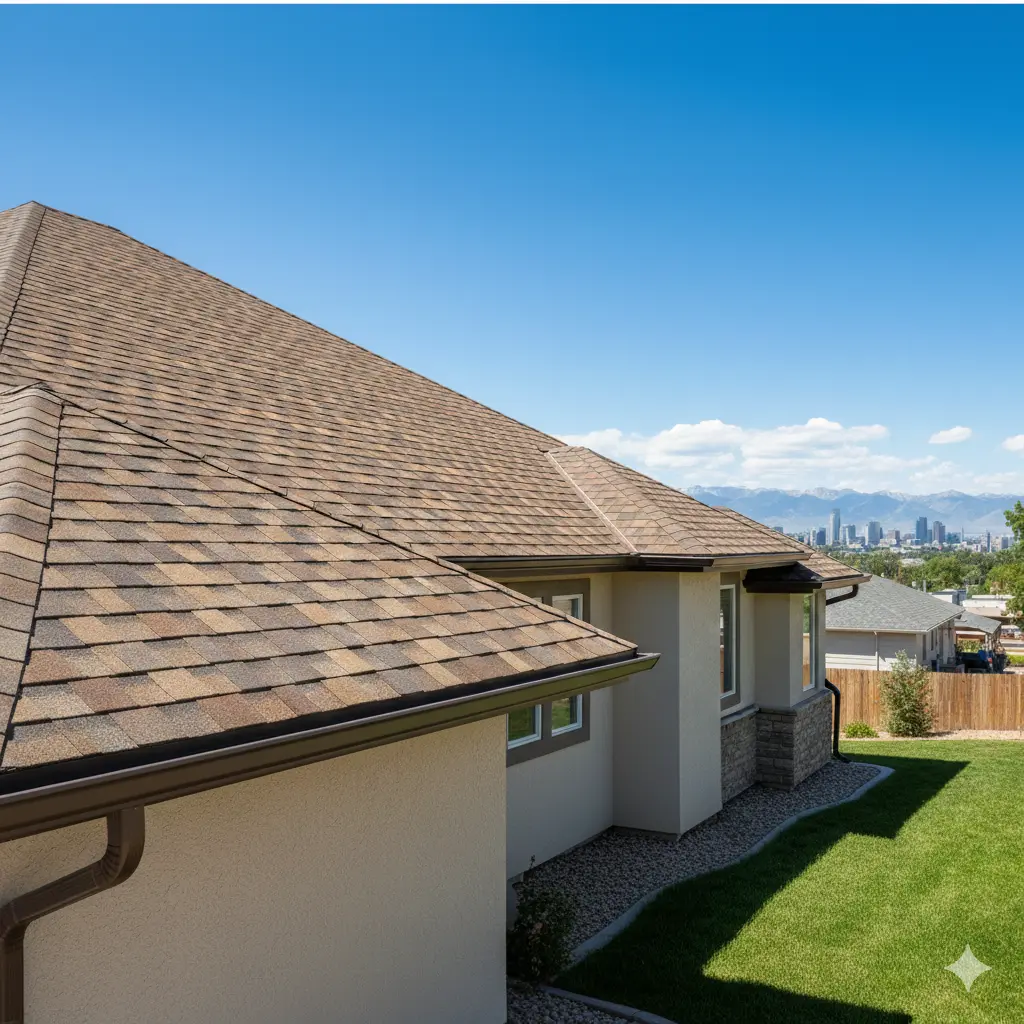
Flashing and penetration failures account for a large percentage of the roof leaks we find on Denver homes. These components are often invisible from the ground and require direct on-roof inspection to evaluate correctly. A thorough checklist covers every penetration point without exception.
- Chimney step flashing and counter flashing: Step flashing along the chimney sides and counter flashing at the cap are checked for lifting, separation, and caulk failure at every joint.
- Skylight perimeter flashing: Skylight frame to roof deck seals checked for cracking, separation, and proper overlap. Skylights are among the most frequently failed penetrations on Denver residential roofs.
- Plumbing vent pipe boot seals: Every rubber boot seal around plumbing penetrations is checked for UV cracking, separation from the pipe collar, and uplift. Failed pipe boots are a leading cause of attic moisture we find on inspection.
- Valley flashing: Metal or woven valley flashing is checked for corrosion, lifting at edges, and granule wear that exposes the metal surface.
- Drip edge condition: Metal drip edge at eaves and rakes checked for proper installation, rusting, and separation from the fascia.
- Roof deck integrity: Soft spots and spongy areas are identified by walking the deck. Any area that flexes under foot indicates compromised sheathing that needs further evaluation.
erniesroofing.com/roof-repair/
Checklist Section Three: Attic, Gutters, and Interior Indicators
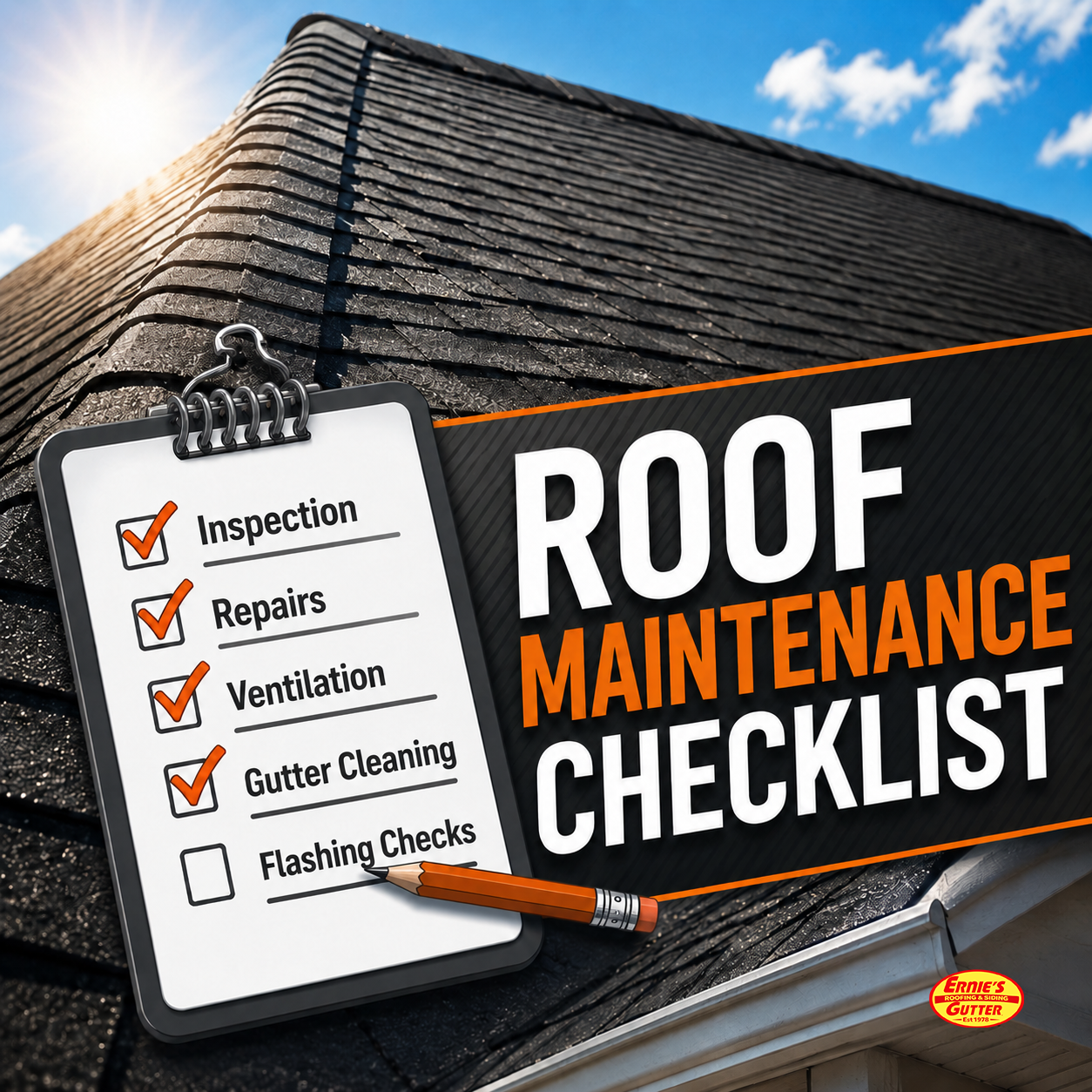
A roof inspection that only covers the exterior surface is an incomplete inspection. The attic provides critical information about ventilation adequacy, moisture intrusion, and structural condition that is not visible from the roof surface. The gutter system directly affects how the roof sheds water. Interior indicators tell you whether water has already crossed into the living space.
- Attic ventilation: Soffit vent and ridge vent adequacy evaluated. Blocked vents cause heat and moisture buildup that accelerates sheathing rot and premature shingle failure from underneath.
- Attic moisture and staining: Sheathing is inspected for frost, condensation staining, water streaks, and active moisture. Any staining pattern is traced to identify the likely entry point.
- Daylight through the deck: Any visible daylight coming through the roof boards from inside the attic is documented. Where light gets through, water follows.
- Insulation condition: Insulation that has been compressed or contaminated by moisture loses its R-value and can harbor mold. Condition is noted where visible.
- Gutter hanger and slope: Gutters are checked for proper slope toward downspouts, hanger integrity, and sections that are pulling away from the fascia board.
- Gutter seam and joint condition: Seam failures and joint separations are located and documented. Leaking seams direct water against the fascia continuously rather than through the downspout.
- Interior ceiling and wall check: Ceiling and wall surfaces inside the home are evaluated for water staining that indicates active or historic moisture intrusion from the roof system.
erniesroofing.com/emergency-roof-repair/