
Solar Attic Fan Installation
When a Denver attic gets too hot, that heat does not just stay in the attic. It can push into upstairs rooms, bake the roof deck, stress shingles, and make the whole home harder to cool. Solar attic fan installation is one practical way to help move trapped attic heat out of the home.
Ernie’s Roofing installs solar attic fans for homeowners across Denver and the surrounding metro area. We look at the roof, the existing ventilation, the attic layout, and the best place to install the fan so the upgrade helps the roof system instead of creating another roof problem.
Featured answer: A solar attic fan helps pull hot air out of the attic during sunny hours, when attic heat is usually building the fastest. When installed correctly with proper flashing and enough intake air, it can support better attic airflow, reduce trapped heat, and help protect the roof system.
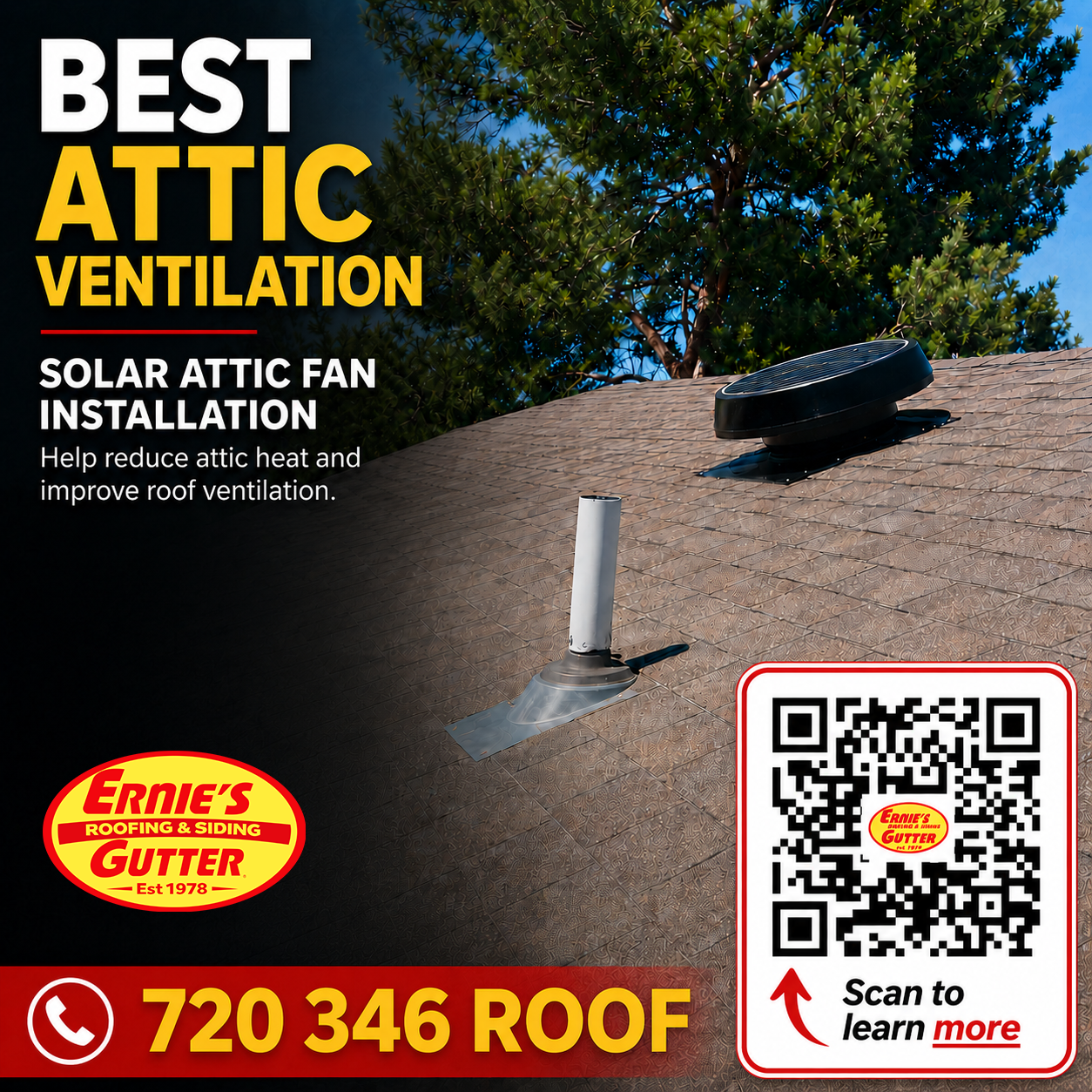
Better attic airflow starts with removing trapped heat
If this is your first time hearing this, attic ventilation is not only about comfort. It is part of how the roof system breathes. A hot attic can keep heat trapped under the roof deck long after the sun goes down. That can make upper rooms uncomfortable and add stress to roofing materials over time.
A solar attic fan uses sunlight to power a fan that helps exhaust hot attic air. That means the fan is usually working when the roof and attic are taking the most heat. It does not replace a complete ventilation plan, but it can be a strong upgrade when the home has the right intake and roof conditions.
Good candidates for solar attic fans often include: homes with hot upstairs rooms, older roof ventilation, limited roof exhaust, attic heat buildup, or homes where the owner wants an energy-conscious ventilation upgrade without hardwiring a standard electric fan.

Signs your attic may need better ventilation
Not every hot home needs a solar attic fan, and that is where homeowners get sold the wrong fix. Sometimes the problem is blocked intake, not enough exhaust, poor insulation, sealed soffits, damaged vents, or a roof design that needs a different ventilation approach. We look at the whole roof system before recommending the fan.
Hot upstairs rooms
When the second floor stays hot even after the air conditioner runs, attic heat may be part of the problem. A roofing contractor can inspect the ventilation before you spend money on the wrong fix.
Roof deck heat stress
Heat trapped under the roof deck can add wear to shingles and roof materials. A ventilation upgrade may help reduce that heat load when the rest of the system is set up correctly.
Bad vent installation
A fan or vent installed without proper flashing can become a roof leak. Solar attic fans need clean placement, secure fastening, and a water-shedding detail that belongs on the roof.
Storm-damaged vents
Colorado hail and wind can damage roof vents, fan housings, and flashing. If a vent is bent, cracked, or loose, it should be checked before adding another roof penetration.
Old roof ventilation
Older roofs often have mixed ventilation that has been changed over time. Before adding a fan, we look at what is already on the roof and whether the current setup is balanced.
Comfort and roof protection
The goal is not just to add a gadget to the roof. The goal is to support the home with better airflow, clean installation, and practical roof protection.

Denver roofs take a beating from sun, heat, wind, and hail
In Colorado, a roof does more than keep rain out. It takes strong sun, fast temperature swings, hail, wind, snow, and long dry spells. When attic ventilation is weak, the heat can stack up under the roof deck and make the home harder to manage in summer.
A solar attic fan can be a smart add-on when the roof has enough intake air and the fan is placed where it can move air effectively. We do not like blind installs. If the attic cannot pull replacement air from the soffit or lower intake areas, the fan can struggle to do its job.
Solar attic fan installation has to be done like roofing work, not handyman work
A solar attic fan creates a roof penetration. That means the flashing, shingle tie-in, fasteners, seal points, and placement all matter. A bad install can leak, lift, or pull from the roof. Ernie’s Roofing treats ventilation upgrades like part of the roof system because that is what they are.
Solar attic fan installation and roof ventilation services
Many homeowners call about a solar attic fan because the house feels hot. We can help with the fan installation, but we also check related roof ventilation issues that can make or break the result.
Roof ventilation inspection
We check the roof vents, intake areas, attic heat clues, and whether a solar attic fan makes sense for the home.
Roof vent repair
Damaged vents, loose flashing, and worn vent seals should be corrected before they turn into leaks.
Residential roof ventilation
Attic airflow needs the right balance of intake and exhaust. We explain the options in plain English.
Leak prevention around vents
Any roof penetration needs the right flashing detail. That is especially important on older shingles and storm-worn roofs.
Hail and storm vent checks
Roof vents can crack, dent, or loosen after hail. We check ventilation parts during storm damage inspections.
Solar attic fan estimate
We can look at your home, explain the fan location, and give you a straight answer on whether this upgrade is worth doing.
How solar attic fans fit into the full ventilation system
Think of attic ventilation like breathing. Exhaust vents let hot air leave. Intake vents let cooler outside air come in. A fan can help pull air out, but it should not fight the rest of the system. If there is not enough intake, the fan may pull from the wrong areas or simply underperform.
That is why we look at soffit vents, gable vents, ridge vents, roof vents, attic access points, insulation, and the roof surface before giving advice. A solar attic fan is not magic. It is a tool. Used right, it can help. Used wrong, it can be a waste of money or a leak waiting to happen.
For many Denver homes, the best solution is a simple, clean installation with the fan placed high enough to exhaust heat and flashed properly into the shingle field. On some homes, we may recommend correcting existing ventilation first.
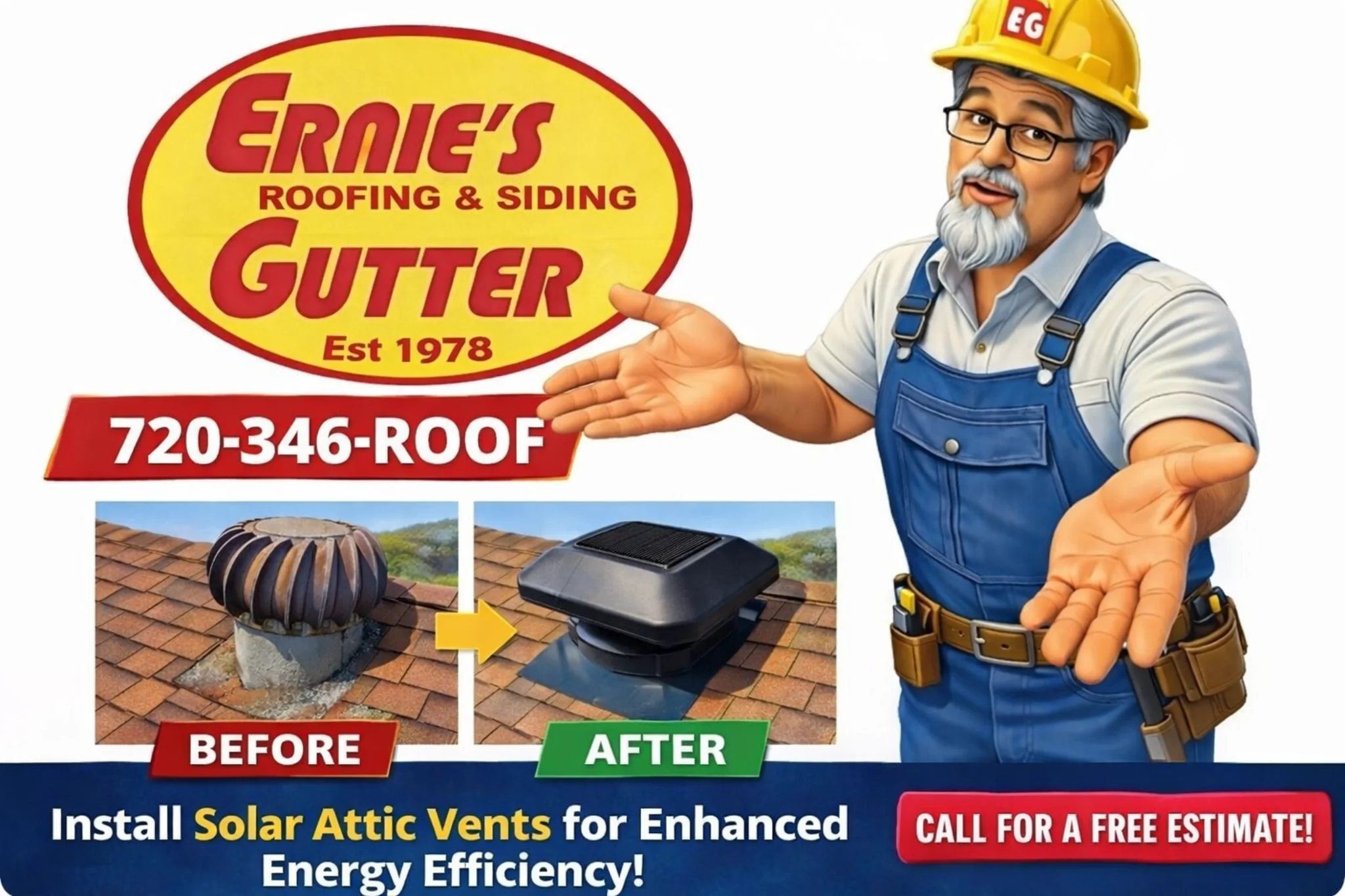
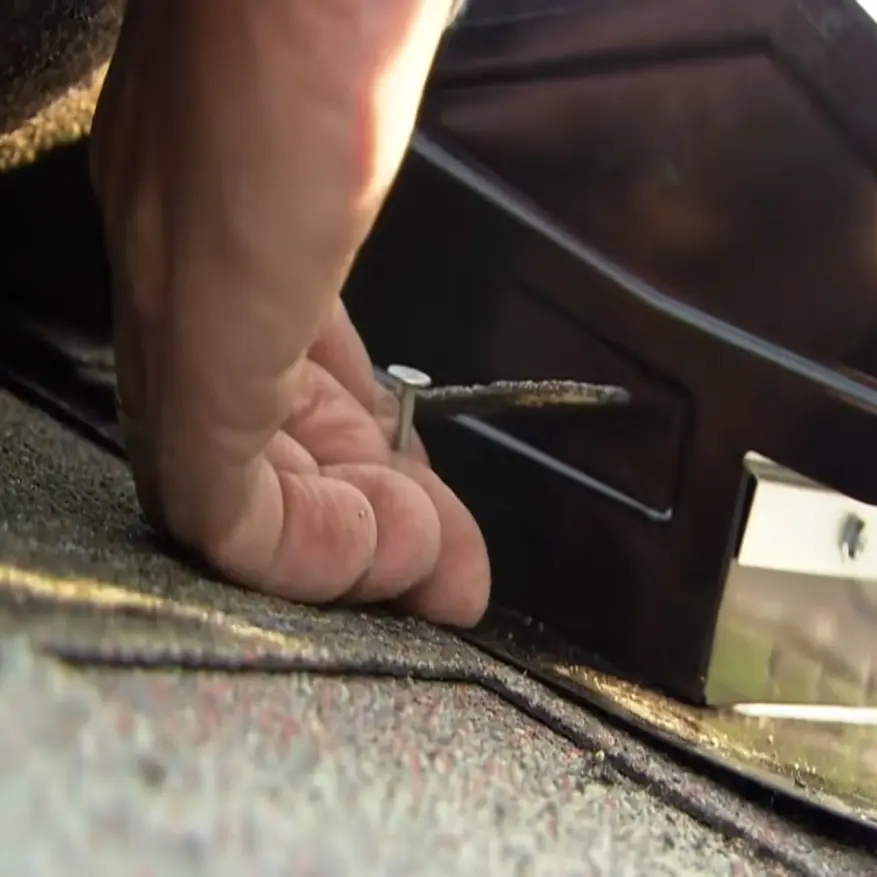
Exhaust only works when the roof has a place to pull air from
One of the biggest mistakes we see is adding exhaust without thinking about intake. For a solar attic fan to work properly, the attic needs lower intake air, often from soffit or eave areas. If those areas are blocked by insulation, paint, debris, or poor construction, the fan may not move attic air the way the homeowner expects.
We check the roof edge, intake paths, attic signs, and existing exhaust before installing the fan. This is especially important on older Denver homes, additions, vaulted ceiling areas, and homes that have been re-roofed several times.
Contractor note: More ventilation is not always better. Correct ventilation is better. The right fan in the wrong roof system can disappoint you. The right fan in the right location, with enough intake and clean flashing, is the better answer.
How Ernie’s Roofing installs a solar attic fan
Our process is straightforward because homeowners should know what they are paying for. We do not like mystery work on a roof. We explain the reason for the fan, the location, and what has to happen to keep the roof watertight.
1. Roof and attic review
We look at the current vents, roof slope, shingle condition, attic heat concerns, and whether the home has proper intake air.
2. Fan placement
We choose a practical location that helps exhaust attic heat while keeping the installation clean and roof-friendly.
3. Proper roof cut-in
The opening must be clean, sized correctly, and placed carefully so the fan sits right on the roof surface.
4. Flashing and fastening
We tie the fan into the shingle system with proper flashing details and secure fastening. This is where shortcuts create leaks.
5. System check
We check the fan, the roof area around it, and the visible installation details before calling the job complete.
6. Homeowner explanation
We explain what was installed, where it is located, and what signs to watch for during future roof maintenance.
Need better attic ventilation without guessing?
Call Ernie’s Roofing and we will give you a straight answer. If a solar attic fan makes sense, we can install it. If the real issue is something else, we will tell you that too.
Solar attic fan installation FAQs
```Does a solar attic fan really help cool the house?
A solar attic fan can help reduce attic heat, which may help upper rooms feel less affected by heat buildup. It is not the same as air conditioning, and it will not fix every comfort problem. It works best when the attic has enough intake air and the fan is installed in the right location.
Will a solar attic fan lower my energy bill?
It may help reduce attic heat that contributes to cooling load, but energy savings depend on the home, insulation, attic design, cooling system, and weather. We do not promise magic savings. We look at it as a roof ventilation upgrade that can support comfort and roof health.
Where should a solar attic fan be installed?
Most solar attic fans are installed high enough on the roof to help exhaust hot attic air. The exact location depends on roof slope, attic layout, sun exposure, shingle condition, and existing vents. Placement matters because the fan has to move air and stay watertight.
Can a solar attic fan cause a roof leak?
Yes, if it is installed poorly. Any time a hole is cut into a roof, flashing and shingle tie-in matter. A proper installation should shed water correctly and protect the roof. This is why it should be treated as roofing work, not just an accessory install.
Do I still need soffit vents with a solar attic fan?
In most cases, yes. A fan needs intake air so it can pull hot attic air out effectively. If the attic does not have enough intake, the fan may not perform well. We check intake conditions before recommending or installing the fan.
Is a solar attic fan better than a standard electric attic fan?
It depends on the home. A solar attic fan avoids hardwiring and usually runs during sunny heat-building hours. A standard electric attic fan may offer different control options. We help homeowners choose based on roof layout, attic needs, budget, and practical performance.
Can you install a solar attic fan on an older roof?
Sometimes, but the roof condition matters. If shingles are brittle, worn, storm damaged, or near the end of their life, adding a new roof penetration may not be the best move. We inspect the installation area before making that call.
How long does solar attic fan installation take?
Many installations can be completed in a short visit, but time depends on roof access, fan location, roof condition, and weather. We care more about doing the flashing and placement right than rushing the job.
Can a solar attic fan help with attic moisture?
Ventilation can help move air through the attic, which may support moisture control. But moisture problems can also come from bathroom vents, air leaks, poor insulation, or blocked intake. We look for the real cause instead of assuming the fan fixes everything.
How do I schedule solar attic fan installation?
Call Ernie’s Roofing at 720 346 ROOF or request an estimate online. We can look at the roof, discuss the attic heat issue, explain the installation, and let you know whether a solar attic fan is a good fit for your home.
Call Ernie’s Roofing for solar attic fan installation in Denver
Better attic ventilation starts with a roof contractor who understands the roof system, not just the fan. We install solar attic fans with clean placement, proper flashing, and plain-English advice.
OUR SERVICES
Your Neighborhood Roof Contractor
Get more information concerning our service, do not wait to call us at 720 346 ROOF today. We’ll be more than happy to schedule a meeting with you.

Residential Roofing
Ernie’s Roofing specialize in residential roofing in Denver and have a team of experienced professional Roofers available to help you get the job done right The First Time. From minor repairs and maintenance to full–scale roof replacements,

Commercial Roofing
We construct, repair, as well as maintain Commercial Roofing systems for services both large and also small, creating personalized services that conserve our client’s time, cash, and also power. Call us at 720 346 ROOF and book a consultation today.

Hail Damage
Their knowledgeable staff is ready to help you assess the damage caused by storms and provide you with a comprehensive repair evaluation & plan. We specialize in all types of roof damage, including hail, wind, and even lightning strikes. Hail Claim Help

INSURANCE CLAIMS HELP
Our team of experienced insurance claim specialists will work with you to ensure that the insurance claim process is as stress-free as possible. We will work with your insurance company to provide all necessary documentation and estimates to ensure that your claim is processed quickly and correctly.

Wind Damage
When it comes to roof damage, it can be difficult to determine whether the damage was caused by hail or wind. While both types of damage can cause similar symptoms, they have different causes and require different repair methods.