

Third-Generation Family Contractors · Since 1978
Roof Replacement Process Denver
A clear scope before work starts. Careful attention to what is uncovered. A final review before the project is closed out.
Ernie’s Roofing helps Denver homeowners understand the work, the decisions, and the next step—from the first roof evaluation through installation and cleanup.
Know What Happens Before The Roof Comes Off
The roof replacement process starts with an evaluation and a written scope. Next come property preparation, removal of old roofing, deck assessment, and installation of the specified system. Cleanup and final review complete the work. Hidden conditions, weather, and additional repairs should follow the procedures agreed upon before installation.
Family-Owned Since 1978
Serving Denver and the Front Range.
Understand The Scope
Review materials, responsibilities, and exclusions.
Know The Next Step
Discuss preparation, changes, and closeout.
A New Roof Should Not Begin With Unanswered Questions
A leak, worn shingles, or storm damage is the visible concern. What sits beneath the roof covering can affect the work just as much. If those conditions are ignored, a new-looking roof can leave an old problem underneath.
Unclear scope creates another risk: unexpected charges, missed components, and confusion while the roof is open. Our process begins with understanding the roof and discussing the proposed work before you commit.
Still deciding whether replacement is appropriate? Visit our Roof Replacement service page for the broader repair-versus-replacement discussion.
Six Stages From Evaluation To Final Review
Evaluate The Existing Roof
Start with the roofing condition, visible damage, leak history, and prior repairs. Determine why replacement is being considered and whether a localized repair remains practical.
Define The Written Scope
Review the proposed roofing product, tear-off, flashing, ventilation, disposal, and cleanup. Clarify exclusions and the procedure for concealed conditions before scheduling.
Prepare The Property
Discuss delivery, equipment placement, access, vehicles, landscaping, and pets. Confirm applicable approvals and how weather or scheduling changes will be communicated.
Remove And Assess
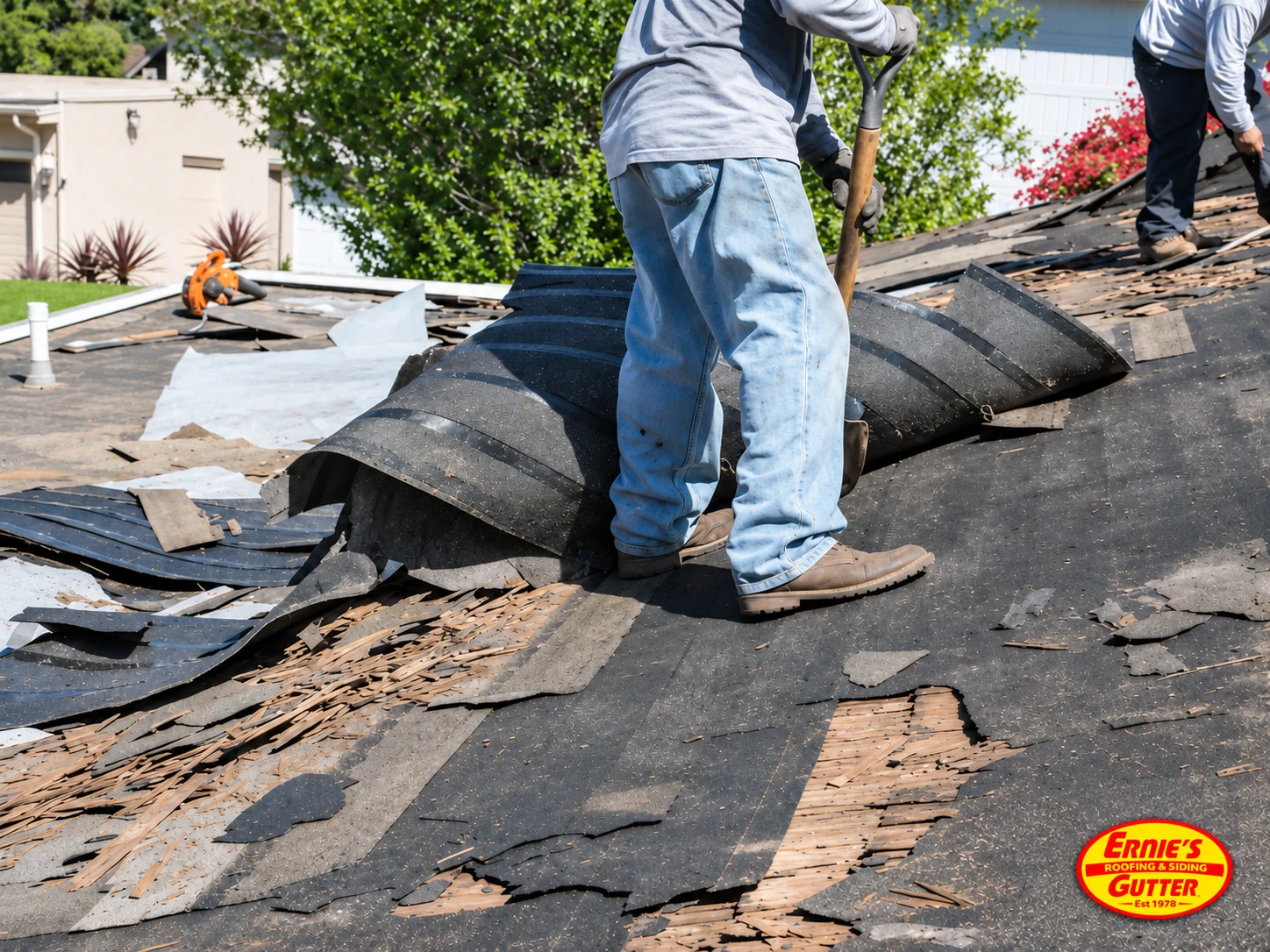
Remove the roofing layers included in the scope. Evaluate exposed decking and connections. Address unsuitable conditions through the agreed documentation and authorization procedure.
Install The Roofing System
Install the specified protective layers, roof covering, flashing, and ventilation components as applicable. The assembly must suit the roof and follow product requirements.
Clean Up And Review
Review the finished work, cleanup, approved changes, and any remaining inspection items. Keep project records and understand the separate warranty responsibilities.
Let’s Start With The Roof You Have
Tell us what you are seeing, where the problem appears, and whether the roof has been repaired before. Start with an evaluation and a clear discussion of the work.
Hidden Damage Needs A Clear Decision
If this is your first time hearing this, the roof deck is the wood surface beneath the roofing layers. Deterioration, previous openings, and old patchwork may not be fully visible until those layers are removed.
See What Was Uncovered
Ask for photographs and an explanation of the affected area. Determine whether the correction involves decking alone or another component outside the original scope.
Understand What Changes
Confirm quantities, the pricing method, authorization, and schedule effects. Additional work should follow the written procedure established before the roof is opened.
Correcting an unsuitable base before installation helps avoid covering deterioration with new materials. Do not assume every older deck needs replacement—or that every hidden condition is included in the original price.
The Details Around The Shingles Matter
Flashing And Connections
Walls, chimneys, valleys, vents, and roof edges need appropriate water-shedding details. Review which components are being replaced, retained, or evaluated after removal.
Protection And Ventilation
Underlayment, specified water protection, intake, and exhaust work together with the finished roof covering. A roofing product alone cannot correct poor preparation or unresolved airflow problems.
Ask which installation stages can be documented before they are covered. Available photographs help explain the work; they do not replace applicable inspections.
Prepare For Installation Day
Your Preparation
- Move vehicles before the driveway or garage is blocked.
- Clear outdoor belongings near the work area.
- Secure fragile interior items and discuss attic storage.
- Arrange gates and keep children and pets clear.
- Stay reachable for questions and change approvals.
What To Confirm With Us
- Delivery, disposal, and equipment locations.
- Property protection and safe access routes.
- The proposed work window and project contact.
- Weather protection between work periods.
- Cleanup, inspection, and closeout arrangements.
Noise and vibration are part of roofing work. Plan around work calls, sensitive pets, and household needs. Roof-mounted equipment and utilities require coordination with the appropriate trades.
Denver Scheduling, Weather, And Approvals
Ordering materials and arranging approvals happen before installation. Time onsite depends on roof size, pitch, access, materials, concealed conditions, and weather. Ask for a property-specific work window rather than relying on a general completion promise.
Confirm the actual permitting jurisdiction. Denver publishes roofing and siding permit guidance, while landmarks and historic properties can require additional roofing review.
Discuss forecast monitoring, exposed-area protection, and communication before tear-off. Unsuitable weather can require a change in schedule. Homeowner association approval, when applicable, is separate from municipal permitting.
Insurance Claim Support
Document The Roofing Conditions
Ernie’s Roofing can document visible conditions and explain the proposed roofing scope. Keep inspection findings, photographs, and approved changes with your project records.
Keep Coverage Decisions Separate
The insurer determines coverage and claim payments under the policy. Hidden damage does not automatically establish coverage. Confirm project payment terms in your agreement.
For the separate documentation discussion, visit Insurance Claim Help Denver.
Know What Remains Before Closeout
Review cleanup, approved changes, applicable inspections, and any remaining items. Keep the agreement, invoices, available photographs, product information, and warranty documents.
Manufacturer and workmanship warranties have different terms and responsibilities. Review Ernie’s Roofing warranty information and confirm how to report a later concern.
Ready To Discuss Your Roof?
Work with a third-generation family contractor serving Denver since 1978. Let’s identify the condition, explain the options, and discuss the scope before work begins.
Roof Replacement Process Questions
How does your roof replacement process begin?
It begins with evaluating the existing roof and discussing visible problems, prior repairs, and your goals. The next step is a written scope identifying the proposed materials, removal, flashing, ventilation, cleanup, and exclusions. Replacement should follow the roof’s condition rather than an assumption that every leak requires a new roof.
How long will the replacement take?
The schedule depends on roof size, pitch, access, materials, existing layers, weather, and concealed conditions. Material ordering and applicable approvals happen before installation. Confirm the proposed start window, expected time onsite, and how changes will be communicated for your property.
What should I do before installation day?
Move vehicles before access is blocked, clear belongings near the work area, secure fragile interior items, and discuss attic storage protection. Arrange access through gates, keep children and pets clear, and remain reachable for questions. Roof equipment and utilities should be handled through the appropriate trades.
What if damaged wood is found after tear-off?
The exposed deck is evaluated before new materials cover it. Ask for photographs, an explanation of the affected area, and the proposed correction. Quantities, pricing, authorization, and any schedule change should follow the procedure established in the written agreement.
Will all flashing and vents be replaced?
The written scope should identify components being replaced, retained, or evaluated after removal. Roof-to-wall connections, chimneys, valleys, penetrations, edges, and attic ventilation require property-specific decisions. Do not assume every component is included without reviewing the scope.
What happens if weather interrupts the work?
Discuss forecast monitoring, exposed-area protection, and communication before removal starts. The plan depends on the roof and stage of installation. Unsuitable conditions can require a schedule change. Contact the project representative promptly if you notice water entering, and stay clear of wet electrical equipment.
Who handles roofing permits and inspections?
Confirm responsibilities in the project agreement. Requirements depend on the property jurisdiction and scope. Denver historic properties may need additional review, and structural changes may follow a different permitting path. Homeowner association approval, when applicable, is separate from municipal approval.
Can you help document storm-related roofing damage?
Ernie’s Roofing can document visible conditions and explain the proposed roofing scope. The insurer determines coverage and claim payment under the policy. Concealed damage discovered during removal does not automatically establish coverage. Keep project changes and claim documents with your records.
What happens at the final review?
Review completed work, approved changes, cleanup, and any remaining inspection or closeout items. Keep invoices, applicable permit records, product information, available photographs, and warranty documents. Manufacturer warranties and contractor workmanship warranties have separate terms and responsibilities.
Where should I start if I am unsure I need replacement?
Request a roof evaluation before committing to replacement. A localized problem on a serviceable roof may call for repair. Visit our main Roof Replacement service page for the broader repair-versus-replacement discussion, or call 720 346 ROOF to discuss your home.