Denver Roof Warning Signs
Signs Your Roof Is Failing
12 Early Warning Signs Before Water Damage Reaches Your Home
Most Denver roofs don't fail overnight. They send signals for months before the first leak shows up inside. Curling shingles, granule loss, soft spots, staining around penetrations. Each one is a warning. The homeowners who catch them early pay for repairs. The ones who miss them pay for structural damage.
Featured Answer: A failing roof in Denver typically shows twelve early warning signs before water damage begins: granule loss in gutters, curling or cupping shingles, cracked or missing shingles, sagging roof sections, damaged or missing flashing, daylight visible in the attic, staining on ceilings or walls, moss or algae growth, soft spots on the roof deck, failed pipe boot seals, shingle tab lifting, and unexplained energy bill increases. Any one of these signals warrants a professional inspection.
Why Early Warning Signs Matter For Denver Homeowners
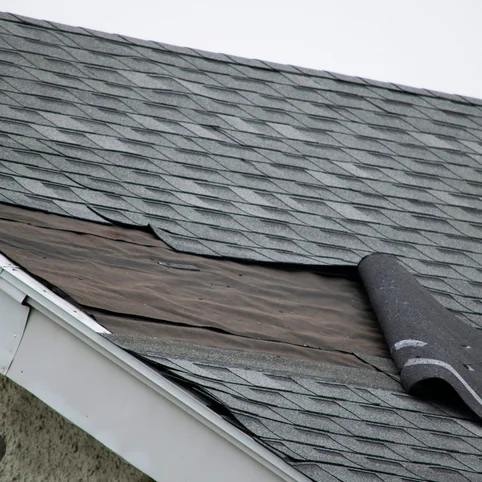
Denver's climate is one of the hardest on residential roofing in the country. Three hundred days of sun means UV exposure that dries out shingles faster than most people realize. Hail seasons that arrive without notice. Temperature swings of forty to sixty degrees in a single day that expand and contract every seam, fastener, and flashing detail on your roof. By the time a leak shows up inside your home, the roof has usually been signaling the problem for months.
The difference between a roof repair and a full replacement often comes down to how early the warning signs were caught. A cracked shingle caught in year one is a straightforward fix. That same crack ignored through two Colorado winters, a hail season, and a spring melt becomes a rotted deck board, compromised insulation, and water staining across your ceiling. The warning sign did not get worse. The damage did.
This guide covers the twelve warning signs we see most often on Front Range homes. Some are visible from the ground. Some require getting on the roof or into the attic. All of them are worth knowing before storm season gives you a more expensive lesson.
See Something On Your Roof You Are Not Sure About?
Do not wait until the storm confirms what the warning sign already told you. A free inspection from Ernie's Roofing gives you the facts about your roof before the damage compounds.
Get My Roof Checked
The First Four Warning Signs: What You Can See From The Ground
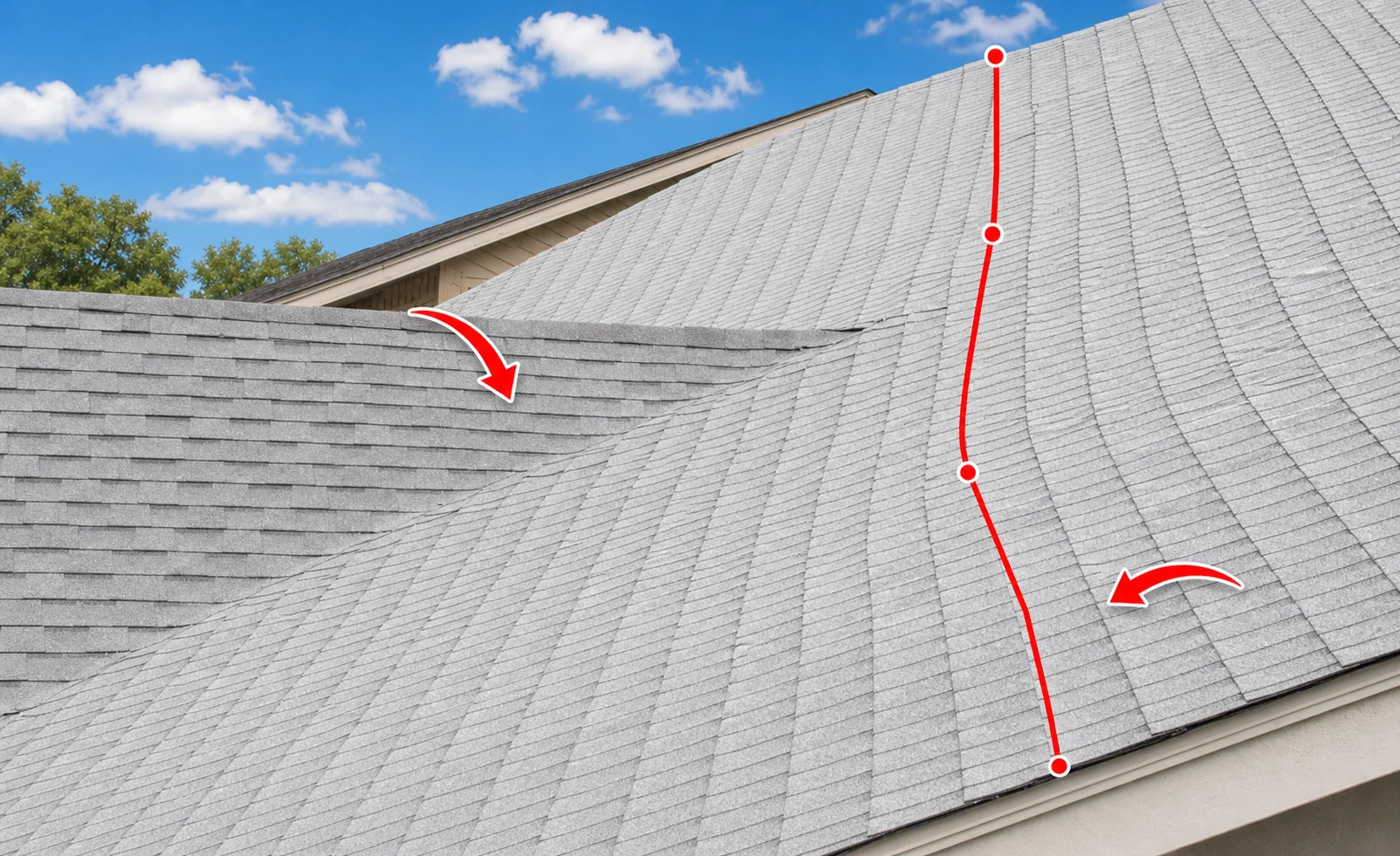
You do not need to climb on your roof to catch these first four signs. A pair of binoculars and a walk around the perimeter of your home is enough to spot each one. If you see any of these from the ground, the conversation about what comes next should happen sooner rather than later.
- Granule Loss In The Gutters: Asphalt shingles shed granules as they age. When those granules start collecting in your gutters in meaningful quantities after rain, the shingles are past their protective prime. Granule loss exposes the asphalt mat underneath to direct UV and impact, accelerating breakdown. This is one of the first signs a roof is heading toward the end of its service life.
- Curling Or Cupping Shingles: Shingles curl in two ways. Cupping is when the edges turn upward. Clawing is when the edges stay flat but the middle lifts. Both mean the shingle is losing its bond, drying out, or reacting to moisture imbalance between the top and bottom surface. Either way, curled shingles are lifted shingles, and lifted shingles are wind damage waiting to happen.
- Cracked Or Missing Shingles: A cracked shingle is a shingle that has already lost its weather resistance in that spot. A missing shingle is an open invitation for water. Wind and hail cause sudden shingle loss, but cracking is usually a slower process driven by age, thermal movement, and UV exposure. Either condition requires prompt attention before moisture reaches the underlayment.
- Sagging Sections Along The Roofline: Any visible sag or dip in the roofline is a structural signal, not just a surface one. Sagging indicates the roof deck, rafters, or support structure underneath may be compromised by moisture, rot, or overload. This is one of the most serious warning signs on this list and should be inspected immediately.
Warning Signs Five Through Eight: Flashing, Attic, and Interior Signals
These next four warning signs require a closer look. Some can be partially evaluated from the ground or from a ladder at the eave. Others require attic access or an interior walk-through. All four are common findings on Front Range homes, and all four can be corrected before they turn into structural problems.
Warning Sign 5: Damaged Or Missing Flashing
Flashing seals every point where the roof meets a vertical surface. Chimney, skylight, vent, dormer, and valley flashing that is lifted, cracked, or missing creates a direct water entry point. Failed flashing is responsible for a large percentage of the roof leaks we see on Denver homes.
Warning Sign 6: Daylight Visible In The Attic
If you can see daylight through the roof boards when standing in your attic, water can get through the same gaps. Daylight in the attic also means the attic is not sealed properly against weather infiltration, pests, and moisture. This one requires no tools to check — just access.
Warning Sign 7: Ceiling Or Wall Staining Inside
Brown or yellow water stains on ceilings and walls are evidence that moisture has already crossed into your living space. The stain is rarely directly below the entry point because water travels. A stain in the living room may trace back to a flashing failure at the chimney fifteen feet away.
Warning Sign 8: Moss Or Algae Growth
Moss and algae thrive in moisture. Their presence on a roof surface means that area is retaining water longer than it should. Moss root systems physically lift shingle edges over time, creating gaps. Algae leaves dark streaking that signals ongoing moisture retention. Both warrant inspection and treatment.
Spotted Any Of These Eight Warning Signs?
Each one is manageable when caught early. Each one becomes more expensive the longer it sits. Call Ernie's Roofing for a straight answer about what your roof actually needs.
Warning Signs Nine Through Twelve: The Ones Most Homeowners Miss
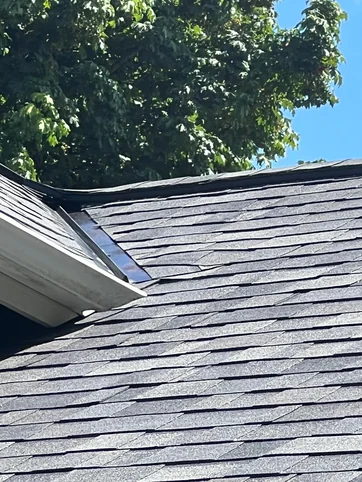
These final four warning signs are the ones that do the most damage precisely because they are harder to spot. They do not announce themselves with a visible crack or a missing shingle. They work quietly until the problem is no longer small.
- Soft Spots On The Roof Deck: When you walk a roof and feel a spongy or soft area underfoot, the sheathing beneath that spot has absorbed moisture and begun to break down. Soft spots mean the structural layer of your roof is compromised in that location. The shingles above may look fine. What is underneath them is not.
- Failed Pipe Boot Seals: Every plumbing vent that exits through your roof is surrounded by a rubber boot seal. These boots crack and fail from UV exposure, typically within ten to fifteen years. A failed pipe boot is a guaranteed leak path that most homeowners never notice because the vent stack does not look damaged from the ground. This is one of the most common causes of attic moisture we find on inspection.
- Shingle Tab Lifting At The Edges: Shingle tabs that have lost their seal strip bond are partially detached from the shingle below them. They may lay flat in calm weather and look fine from the ground, but in a wind event they lift, bend back, and either break off or allow wind-driven rain underneath the shingle layer. This is a failure waiting for the right weather conditions to become visible damage.
- Unexplained Energy Bill Increases: When a roof's ventilation is compromised or insulation has been affected by moisture intrusion, heating and cooling efficiency drops. If your energy bills have climbed without an obvious cause, the attic may be the place to look. Compromised insulation from roof moisture is a common finding on older Denver homes that have never had an attic inspection.
Repair Or Replace: What The Warning Signs Tell You
Not every warning sign means a new roof. Not every warning sign means a patch job will hold either. The answer depends on the number of signs present, the age of the roof, the condition of the underlying deck, and the extent of any moisture intrusion. Here is the honest breakdown.
Repair Is The Right Move
One or two isolated warning signs on a roof under fifteen years old. Flashing failure, failed pipe boots, a small number of cracked or missing shingles. The deck is dry and solid. The damage is localized. A repair handled correctly buys meaningful additional life.
Repair Now, Plan To Replace
Multiple warning signs on a roof approaching or past fifteen years. Widespread granule loss, curling shingles, a soft spot or two. The roof has functional life remaining but is telling you replacement is on the horizon. Repair now and budget for replacement in the next few years.
Replacement Is The Answer
Widespread failure across multiple warning sign categories. Sagging, structural compromise, saturated decking, extensive moisture intrusion. Patching or coating over this level of failure costs money twice. A proper replacement is the only responsible answer at this stage.
What Happens During A Professional Roof Inspection

A professional inspection is not a salesperson walking around your yard and quoting you a new roof. It is a systematic review of every component that determines whether your roof is doing its job. When we inspect a Denver residential roof, here is what we actually look at.
- Shingle condition: Granule retention, surface integrity, curling, cracking, tab bond, and missing sections across the full roof surface.
- Flashing condition: Step flashing, counter flashing, chimney, skylight, vent, valley, and drip edge details inspected and documented.
- Pipe boot seals: Every penetration checked for cracking, separation, and seal failure.
- Ridge and hip caps: Cap shingles and ridge vent condition evaluated for lifting, cracking, and fastener exposure.
- Roof deck integrity: Soft spots, spongy areas, and visible sheathing damage identified where accessible.
- Attic inspection: Daylight, moisture staining, insulation condition, ventilation adequacy, and signs of active water intrusion.
- Interior check: Ceiling and wall staining documented to help identify leak pathways from roof to living space.
- Written summary with photos: Every finding documented so you have a clear record of your roof's current condition.
Catch The Warning Signs Before Water Makes The Decision For You
Every one of the twelve warning signs on this page is manageable when caught early. Every one of them becomes more expensive the longer it goes unaddressed. A free inspection from a Denver contractor who has been doing this since 1978 costs nothing and tells you exactly where you stand.
Request Free Inspection Today
All 12 Warning Signs: Quick Reference Guide
Use this checklist before and after every major weather event. If you check more than three boxes, call for an inspection before the next storm arrives.
1. Granule Loss In Gutters
Sand-like granules collecting in gutters after rain means shingles are past their protective prime.
2. Curling Or Cupping Shingles
Edges turned up or middle lifted means bond failure and wind vulnerability are already underway.
3. Cracked Or Missing Shingles
Any cracked or missing shingle is a gap in your roof's weather resistance. Prompt attention required.
4. Sagging Roofline
Any visible dip or sag signals structural compromise underneath. Inspect immediately.
5. Damaged Or Missing Flashing
Flashing failure at chimneys, skylights, and vents is a leading cause of Denver roof leaks.
6. Daylight In The Attic
Visible light through roof boards means water can follow the same path. Check your attic.
7. Ceiling Or Wall Staining
Interior water stains mean moisture has already crossed into your living space. Find the source.
8. Moss Or Algae Growth
Biological growth means ongoing moisture retention and potential shingle lifting from root systems.
9. Soft Spots On The Deck
Spongy areas underfoot mean the sheathing has absorbed moisture and begun to break down.
10. Failed Pipe Boot Seals
Cracked rubber boots around plumbing vents are a guaranteed leak path most homeowners never see.
11. Shingle Tab Lifting
Tabs that have lost their bond lay flat in calm weather but lift and break in wind events.
12. Rising Energy Bills
Unexplained increases in heating or cooling costs may indicate attic moisture or ventilation failure.
Why Work With A Denver Roofing Contractor Who Knows These Signs
Any contractor can spot a missing shingle. What separates an experienced Denver roofing contractor from someone just reading a checklist is understanding how these twelve warning signs interact with each other, with the age of the roof, with Colorado's specific weather patterns, and with the construction details common to Front Range homes built across different decades.
A pipe boot that failed on a twenty-year-old roof with widespread granule loss tells a different story than the same failure on a ten-year-old roof with otherwise solid shingles. A soft spot near the north-facing eave of a home with known drainage issues is a different problem than a soft spot under a poorly flashed chimney. The sign is the same. The cause and the right answer are not.
Ernie's Roofing has been identifying these warning signs on Denver homes since 1978. Three generations of contractor knowledge means we have seen every combination of failure this climate produces. When we tell you what your roof needs, it comes from that experience, not from a sales script.
Frequently Asked Questions: Signs Your Roof Is Failing Denver
How do I know if my roof is failing or just old?
Age alone does not tell the full story. A fifteen-year-old roof in good condition with no warning signs is different from a twelve-year-old roof showing granule loss, curling shingles, and a failed pipe boot. The warning signs matter more than the year on the calendar.
Can I check my roof for warning signs myself?
You can check from the ground using binoculars and check inside from your attic without getting on the roof. Signs one through four on this list are all visible from the ground. Signs five through eight require closer access. Signs nine through twelve need a professional on the roof.
How many warning signs mean I need a new roof?
There is no fixed number. It depends on which signs are present, how severe they are, and the age and overall condition of the roof. One soft spot from a known flashing failure may be a straightforward repair. Three or four warning signs across an older roof often indicate replacement is the more responsible answer.
What causes roofs to fail faster in Denver?
Denver's combination of high UV exposure, frequent hail, temperature swings of forty to sixty degrees in a single day, and freeze-thaw cycles accelerates every form of roof wear. Roofs in Denver age faster than the same materials would in a milder climate.
Is granule loss always a sign I need a new roof?
Not necessarily. Some granule shedding is normal, especially on newer roofs. Heavy granule loss that exposes the black asphalt mat in multiple spots is a more serious signal. Granule loss from hail impact looks different from age-related shedding and requires professional evaluation to assess correctly.
How long does a free roof inspection take?
A thorough inspection of a standard Denver residential roof takes between forty-five minutes and ninety minutes. You receive a written summary with photos of any findings. We do not rush inspections because what we miss is what costs you later.
Can I file an insurance claim for these warning signs?
It depends on the cause. Storm-related damage from hail or wind is typically covered. Damage attributed to age or maintenance neglect usually is not. A professional inspection with photo documentation helps establish whether the damage is storm-related and supports the claims process with your insurance company.
What does a sagging roofline mean exactly?
A sagging roofline means the structural support below the surface is compromised. This could be rot in the sheathing, failure in the rafters or trusses, or accumulated damage from long-term moisture intrusion. It is one of the most serious warning signs on this list and should be inspected without delay.
Are pipe boot failures common in Denver?
Very common. Rubber pipe boots typically last ten to fifteen years under Colorado sun exposure. Because they are not visible from the ground and rarely cause immediate interior leaks, they go unnoticed until they have been leaking into the attic for a season or more. We find failed boots on a large percentage of the older roofs we inspect.
How often should I have my Denver roof inspected?
Every two years for roofs in good condition. After any significant hail or wind event regardless of when the last inspection was. Annually for roofs over fifteen years old. And any time you notice one of the twelve warning signs on this page.
Ready To Get The Facts About Your Roof?
Do not wait until one of these twelve warning signs turns into water damage inside your home. Ernie's Roofing has been inspecting Denver roofs since 1978. Free inspection. No pressure. Just the truth.
Schedule Free Inspection
720 346 ROOF
Protection starts at the top of the home.