
Roof Valley Leaks Denver
Roof Valley Leaks Denver
What They Are, Why They Happen, and How We Fix Them Right the First Time
If this is your first time hearing the term roof valley, it can sound like just another bit of roofing jargon. But roof valleys are one of the most common places leaks develop on Denver houses, especially with our snow, ice dams, wind-driven rain, and dramatic freeze-thaw cycles.
In a nutshell, a roof valley is where two roof planes come together and form a channel. Water — whether from rain or melting snow — funnels down these channels faster and with more pressure than on other parts of your roof. That makes valleys high-stress zones that are prone to failure if not designed, installed, and maintained properly.
In Denver, we see valley leaks in both older and newer roofs. Sometimes it’s poor original construction. Other times it’s decades of snowpack working on worn-out flashing. Either way, when water sneaks in through a valley, it doesn’t fool around — it travels, spreads, and often ends up in your attic or walls before you even notice a stain on the ceiling.
This article will give you the full tour of roof valley leaks in our Denver market: what causes them, how to recognize them, why DIY fixes often fail, and how a professional roofing contractor like Ernie’s Roofing repairs them the right way.
What Is a Roof Valley?
A roof valley is the internal angle created where two sloping roof sections meet. Think of a mountain pass where water naturally runs down. On a roof, that channel moves a lot of water during a storm or snowmelt.
Valleys are everywhere on roofs with more than one plane — hips, cross gables, dormers. They’re practical, but they are also one of the most common trouble spots we check when we do inspections in Denver.
Why Roof Valleys Leak: The Top Causes
Let’s cut to the chase. Roof valleys leak for a handful of reasons. Most fall into these categories:
1. Poor Installation from the Start
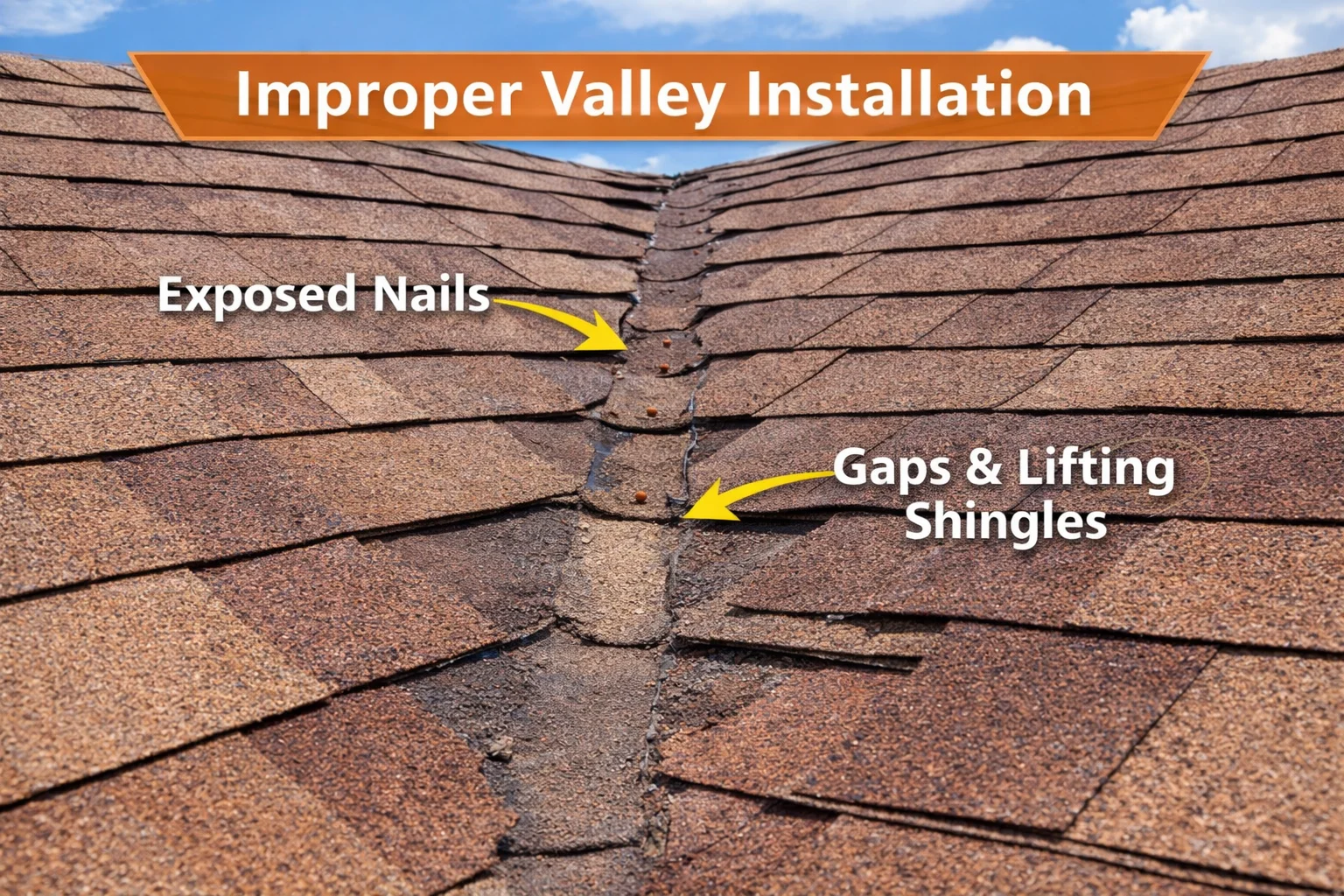
A valley needs proper flashing, proper underlayment, and proper shingle integration. If any of those are cut corners — missing metal, improper sealing, shingles not seated correctly — the valley will fail sooner rather than later.
This is one of the most frequent causes we see on houses that were built by inexperienced or budget contractors.
2. Worn-Out Flashing
Even well-built roofs eventually age out. Galvanized flashing corrodes. Nails back out. Asphalt around fasteners dries and cracks in Denver’s intense sun and cold.
When that happens, the valley loses its waterproof integrity.
3. Ice Dams and Snow Load Abuse
Denver winters are no joke. Snow melts during the day, refreezes at night, and this cycle causes ice dams. Ice dams push water back up under shingles and into valleys.
Ice makes everything worse: it holds moisture against the roof, expands small gaps, and creates pressure that forces water past defenses.
4. Clogged Valleys and Debris Build-Up
Valleys carry a lot of water and a lot of debris. Leaves, needles, sticks — all that rides down the valley and lodges in the low spot. Once it sits there, water pools, doesn’t run off properly, and eventually soaks under the shingles.
We rarely see a clogged valley that’s leak-free.

Roof leaks in Denver often begin long before water appears inside. Discover the real causes of delayed roof leaks and when Denver homes need inspection. Since 1978
5. Improper Shingle Cuts in the Valley
There are two common valley shingle types:
-
Open valley (exposed metal): shingles are cut back on both sides to reveal metal.
-
Closed (woven) valley: shingles interlock without exposing metal.
Both styles work when done right. But if the shingle cuts are sloppy, or a mix-and-match style is used without proper technique, you get exposed nail holes, improper overlaps, or gaps that let water in.
How to Spot a Roof Valley Leak (Before It Gets Worse)
You don’t have to be a roofer to notice something is off. Here’s what to watch for:
Interior Signs:
-
Stains on ceilings or walls right below a roof valley.
-
Peeling paint or bulges near the top of walls along exterior corners.
-
Drips during or after heavy rain or snowmelt.
Exterior Signs:
-
Shingle edges curled or split near valleys.
-
Rust or gaps in valley flashing.
-
Granule loss right at the valley line.
-
Debris build-up or moss and vegetation growing in the valley.
-
Water running sideways or pooling on the roof instead of down the gutter.
Attic Signs:
-
Damp insulation near the valley area.
-
Water stains on rafters or sheathing.
If you notice any of these, you should take it seriously — valley leaks rarely fix themselves.
Why DIY Patches Don’t Solve the Problem
I get it: YouTube makes everything look doable. In Denver, homeowners like to take pride in their property. But here’s the blunt truth: roof valley leaks are not a good DIY project.
Reasons:
-
Valleys are high-stress zones — water pressure there is greater than on flat runs.
-
Improper patching often traps water instead of redirecting it.
-
Roof traffic can worsen damage if you don’t know how to walk on a roof safely.
-
Underlayment and flashing layers are hidden — you can’t fix what you can’t see.
Temporary tar patches might stop a leak for a week or a few storms, but they don’t address the root cause. Worse, they can hide the real problem until it becomes a catastrophic roof failure.
How We Diagnose Roof Valley Leaks at Ernie’s Roofing
Here’s how a professional inspection actually works:
Step 1: Exterior Visual Scan
We examine valley lines from the ground and up on the roof (safely), looking for:
-
Missing or damaged flashing
-
Shingle cuts and wear patterns
-
Debris accumulation
-
Water flow patterns
Step 2: Interior & Attic Inspection
We get into the attic to check:
-
Sheathing condition
-
Water stains
-
Insulation damage
-
Mold or rot
This tells us if the issue is minor or if the underlying structure has been compromised.
Step 3: Diagnose the True Source
Water travels. A leak in your ceiling near a valley might actually be coming from an adjacent plane or a ridge.
We trace it back to the exact entry point, not just where water shows up inside.
Step 4: Recommend a Fix That Lasts
From minor flashing replacement to full valley re-flash and shingle reset, we tailor the solution to the issue — and your budget.
The Right Way to Fix Roof Valley Leaks
There are essentially three levels of repair:
1. Minor Flashing or Shingle Replacement
If flashing is loose or rusted and shingles are still in good shape, we’ll:
-
Replace the metal valley flashing
-
Reset surrounding shingles
-
Seal fasteners correctly
-
Clear debris and improve drainage
This is the least invasive fix and often all that’s needed on moderately aged roofs.
2. Valley Re-Flashing and Re-Shingling
For older roofs where flashing and shingles are worn, we:
-
Remove existing valley materials
-
Install new underlayment — ice and water shield
-
Place new valley metal or woven shingles
-
Integrate with existing roof in a watertight way
This is the standard fix on roofs over a decade old.
3. Full Roof Replacement
If the entire roof is near the end of its life or multiple valleys and roof features are failing, the only sensible long-term solution is complete roof replacement.
This protects the value of your home and avoids repeated patchwork that adds up over time.
Valley Flashing Options: Pros & Cons
Denver roofs typically use one of these valley styles:
Open Metal Valley
Pros:
-
Very durable metal channel
-
Known performance when installed correctly
Cons:
-
Requires expert installation to prevent nail exposure
-
Can look industrial on some roof styles
Closed (Woven) Valley
Pros:
-
Blends in with shingles
-
Traditional look on craftsman and classic homes
Cons:
-
More complex to shingle correctly
-
Higher labor cost
Whichever style you choose, the details matter. Improper overlap, wrong fasteners, or lack of underlayment are the weak points that end up leaking.
What Valley Repair Costs in Denver — A Realistic Look
Roof valley repairs can vary widely because every roof is different. That said, here’s a realistic range you might expect in Denver:
-
Minor flashing & shingle reset: lower end of the spectrum
-
Valley re-flashing with new shingles: mid-range
-
Full roof replacement: highest
Prices depend on:
-
Roof pitch and access difficulty
-
Valley length and number of intersections
-
Underlayment condition
-
Roof age and material type
We always provide a detailed quote after inspection — no guessing.
Ice Dams: The Valley Leak Accelerator
Denver winters are brutal on roof valleys for one main reason: ice dams.
Here’s how they form:
-
Heat escapes from your attic
-
Snow on the roof melts
-
Melted water runs downhill
-
Nighttime temperature drop refreezes water at the eaves
-
Ice builds a dam
-
Water backs up under shingles and into valleys
Once that happens, the valley becomes a sponge, not a channel. That’s when leaks escalate.
Preventing ice dams isn’t just about fixing the valley — it’s about improving attic insulation and ventilation so snow doesn’t melt unevenly in the first place.
How to Prevent Future Roof Valley Leaks
Proactive care is the cheapest fix of all. Here’s what we recommend:
Annual or Biannual Inspections
We suggest at least two roof checks per year:
-
Spring (after snowmelt)
-
Fall (before winter storms)
This helps us catch valley issues before they turn into leaks.
Keep Valleys Clear
Debris buildup is one of the easiest causes to prevent. Clean valleys after:
-
Fall leaf drop
-
Summer storms
-
Wind events
Improve Attic Insulation
Even a perfect valley will leak if heat escaping through your attic melts snow unevenly.
Seal air leaks. Add insulation where needed. This helps water run off instead of refreezing into ice dams.
Install Ice & Water Shield
This specialized underlayment is installed under shingles in valleys and other high-stress zones. It bonds to the roof deck and forms a second line of defense against leaks.
Roof Valley Leaks vs. Other Roof Problems
It’s important to know that not all leaks near a valley are caused by the valley. Here are other common culprits we check:
-
Skylights
-
Dormer walls
-
Chimney flashings
-
Ridge vents
-
Plumbing stacks
Water travels. A stain on your ceiling near a valley is a clue — not the final diagnosis.
Why You Want an Experienced Denver Roofing Contractor
Denver home weather beats up roofs differently than in other regions. Flashing that works in a dry climate can fail here. Ice and snow move joints differently. Wind drives rain under shingles in ways many builders don’t account for.
At Ernie’s Roofing:
-
We’ve been doing this for decades
-
We know local materials and weather patterns
-
We don’t guess — we inspect and diagnose
-
We fix the root cause, not the symptom
We also document the problem and the proposed fix so you know exactly what we’re doing and why.
When to Call a Pro — and How Fast
Here’s the quick rule: If you see water stains or drips, call before the next storm.
Valley leaks can go from annoying to destructive in a matter of days, especially during snowmelt or spring rains.
The sooner you address it, the less interior damage, mold risk, and secondary repairs you’ll face.
Roof Valley Leaks Denver — Your Next Steps
-
Don’t delay — leaks don’t heal themselves.
-
Schedule a professional inspection — we’ll find the cause quickly.
-
Get a clear, written repair plan — including cost and timeline.
-
Ask questions — we’ll explain every step.
Don’t let a valley leak undermine your roof or your peace of mind. A small problem now can become a huge one later.
Frequently Asked Questions about Roof Valley Leaks
Q: How long do roof valleys typically last?
A: It depends on materials and weather exposure, but with proper installation and maintenance, a well-built valley should last as long as the roof — often 20–30 years on asphalt shingles. Failures usually come from installation defects or abuse from ice dams.
Q: Can I just put roofing tar in the valley to stop the leak?
A: Roofing tar is a band-aid, not a repair. It traps water and hides the real problem. Temporary fixes like that often lead to more damage over time.
Q: What is ice and water shield, and do I need it?
A: Ice and water shield is a self-adhesive underlayment that bonds to your roof deck. It’s critical in valleys, eaves, and around penetrations to prevent leaks under shingles. In Denver, it’s highly recommended.
Q: How do I know if the roofing structure under the valley is damaged?
A: Signs include sagging, soft sheathing, staining, or rot in the attic. Only a professional inspection can properly assess structural damage.
Q: Will insurance cover a roof valley leak?
A: It depends on the cause. Storm damage may be covered; wear and tear usually is not. Always check your policy and documentation.
Related Reading
- Roof Repair in Denver: Finding and Fixing Leaks Before They Spread
- Emergency Roof Repair Denver: What to Do When Water Is Coming In
- Storm and Hail Damage Roof Repair in Denver Homes
- When Roof Replacement Makes More Sense Than Another Repair
- Residential Roofing Systems Built for Denver Weather
- How to Choose a Roofing Contractor in Denver You Can Trust
- Roofing and Gutter Systems That Prevent Water Damage
- Ernie’s Roofing: Denver Roofing Contractor Serving Homes Since 1978
This content is provided for general informational and educational purposes only. It does not constitute professional construction, roofing, or contracting advice. Every property, structure, and situation is different. Always consult a qualified roofing or gutter professional for inspections, recommendations, and repairs specific to your home or building.
OUR SERVICES
Your Neighborhood Roofing Contractor
Get more information concerning our service, do not wait to call us at 720 346 ROOF today. We’ll be more than happy to schedule a meeting with you.

Residential Roofing Contractor
Ernie’s Roofing specialize in residential roofing in Denver and have a team of experienced professional Roofers available to help you get the job done right The First Time. From minor repairs and maintenance to full–scale roof replacements,

Commercial Roofing
We construct, repair, as well as maintain Commercial Roofing systems for services both large and also small, creating personalized services that conserve our client’s time, cash, and also power. Call us at 720 346 ROOF and book a consultation today.

Hail Damage
Their knowledgeable staff is ready to help you assess the damage caused by storms and provide you with a comprehensive repair evaluation & plan. We specialize in all types of roof damage, including hail, wind, and even lightning strikes. Hail Claim Help

INSURANCE CLAIMS HELP
Our team of experienced insurance claim specialists will work with you to ensure that the insurance claim process is as stress-free as possible. We will work with your insurance company to provide all necessary documentation and estimates to ensure that your claim is processed quickly and correctly.

Wind Damage
When it comes to roof damage, it can be difficult to determine whether the damage was caused by hail or wind. While both types of damage can cause similar symptoms, they have different causes and require different repair methods.