Covering and Flashing
We review shingles and vulnerable transitions, including chimneys, walls, valleys, and penetrations. A weak detail may need attention even when the main roof covering remains useful.

Denver roofing judgment built on three generations
Ernie’s Roofing has served Denver since 1978. We believe the best time to do roof replacement starts with roof condition, a suitable weather window, and an honest conversation about whether the work can safely wait.
Should I replace my roof before winter or wait until spring? Replace before winter when the roof needs it and suitable installation conditions remain. If your roof can safely wait, spring may be the better choice. Ernie looks for about five days of daytime warmth around 60°F or warmer afterward for planned asphalt-shingle replacements.
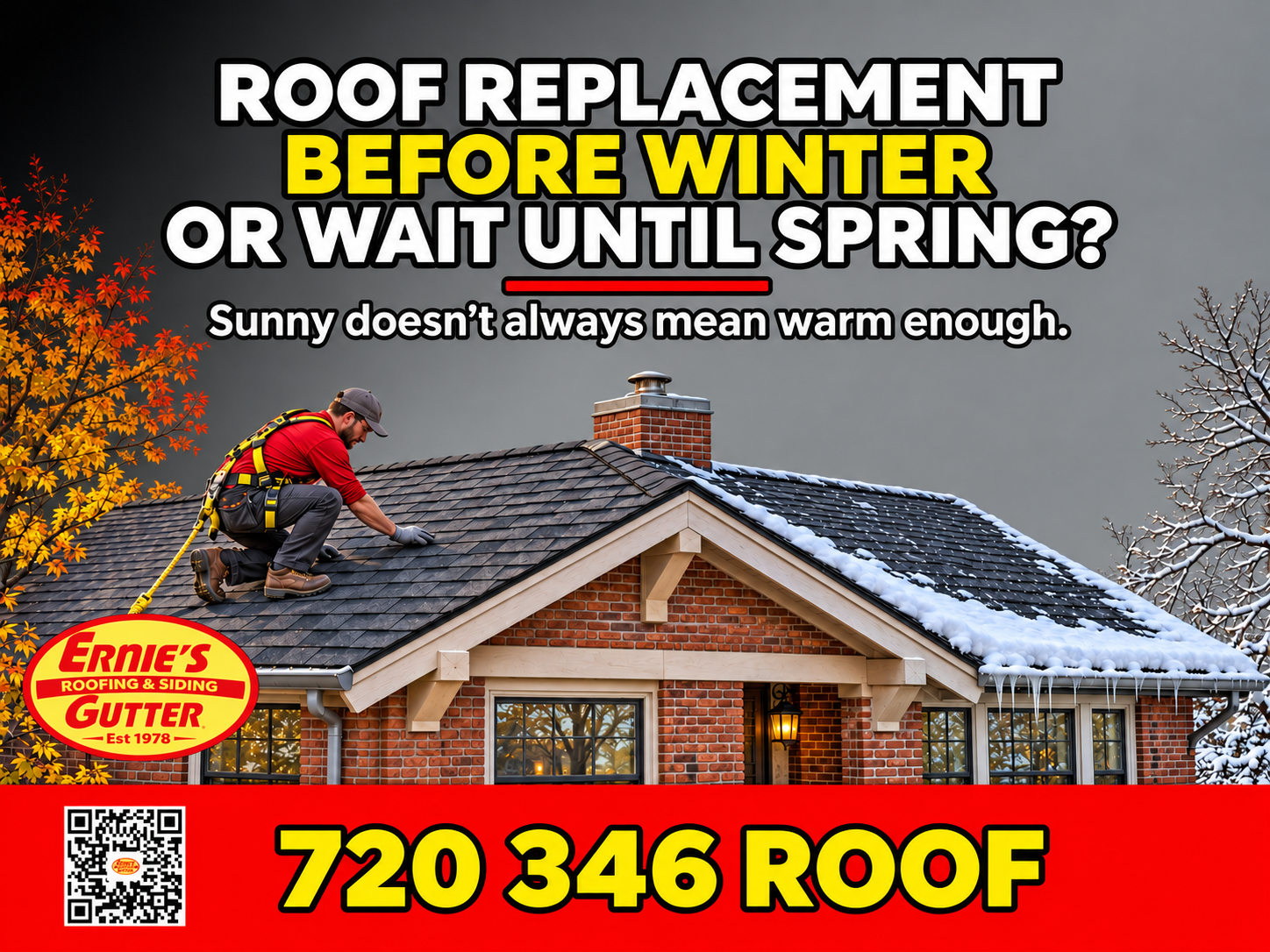
When cold weather approaches, homeowners often hear the same pitch: get the roof replaced now before winter makes everything worse. Sometimes prompt work is necessary. Sometimes the roof is still protecting the house, and rushing a full replacement creates an avoidable concern. Those are different situations, and you deserve an explanation of which one applies to your home.
If this is your first time hearing this, installing asphalt shingles involves more than placing them in overlapping rows and driving nails. The shingles also have sealing strips intended to bond overlapping shingles together. That bond contributes to the roof’s resistance to wind. A roof can look finished from the street while the sealing process still needs attention.
Our first question is whether your existing roof can remain dependable while we plan the work. We review visible deterioration, leak history, previous repairs, storm damage, flashing, and the surrounding roofing. An isolated leak may call for a repair. Widespread deterioration may call for replacement. The calendar helps us schedule the solution; it does not diagnose the roof.
The best time to do roof replacement is therefore a decision about condition and installation quality together. For the full replacement process and roofing options, see our Roof Replacement service page. This guide focuses on the seasonal decision: replace before winter, protect and wait, or plan for spring.
Ernie’s approach to a planned asphalt-shingle replacement is to look for approximately five days of daytime temperatures around 60°F or warmer following installation, along with suitable conditions during the work. He wants a meaningful opportunity for warmth and sun exposure after the roof is installed. One mild afternoon followed by a prolonged cold spell does not satisfy that judgment.
This is Ernie’s personal scheduling standard, grounded in three generations of hands-on roofing experience. It is not presented as a building-code requirement, an industry-wide cutoff, or a rule issued by every manufacturer. Manufacturer instructions still apply to the exact products being installed. Ernie’s preference is an additional reason to postpone elective work when the existing roof can safely wait.
“Five days” does not mean a guarantee that every shingle will seal by a deadline. “Around 60°F” does not mean nighttime temperatures must remain above 60°F. Roof exposure, shading, clouds, wind, material condition, and the selected product matter. Forecasts can also change. We reassess before tear-off rather than treating an earlier forecast as permission to proceed regardless of actual conditions.
Colorado sunshine can make a winter day look inviting without providing the sustained warming Ernie wants for a scheduled replacement. A shaded roof plane may behave differently from a sunny one. We consider the roof itself and the days after installation, rather than relying only on a sunny weather icon.
In everyday conversation, people describe shingles as “melting down.” More precisely, warmth helps activate the factory-applied sealing material between overlapping shingles. The shingle itself is not supposed to melt. Nails secure the roofing in the specified fastening area, while the sealing strip serves a different purpose. Shingle weight alone should not be treated as proof that the required bond has formed.
GAF’s published cool-weather installation guidance recommends installation at 40°F or warmer and permits colder work with required precautions. Those provisions can include hand sealing. That explains why cold-weather installation may be permitted without making it Ernie’s preferred choice for an elective replacement that can safely wait.
There is no responsible answer based on season alone. The next step should follow inspection findings and the available weather window. An urgent need to stop water does not automatically require an immediate full tear-off. Equally, a spring appointment does not make an actively leaking roof acceptable to leave unprotected through winter.
| Your roof’s situation | Practical next step | What matters most |
|---|---|---|
| Replacement is needed and suitable warmth remains. | Consider replacement before winter. | Confirm product requirements, the following days’ forecast, and a complete installation plan. |
| The roof remains serviceable and replacement is planned. | Consider scheduling for spring. | Document current condition and establish what needs monitoring or repair before then. |
| A localized leak or damaged flashing is present. | Evaluate a targeted repair now. | Find the source and determine whether a dependable repair is practical. |
| Water is entering or the roof covering is open. | Arrange prompt professional assessment and protection. | Safety, weather access, and limiting additional damage come first. |
| Widespread failure makes waiting unsafe. | Develop a project-specific protection and replacement plan. | Do not leave the home exposed or assume the normal elective schedule applies. |
A reasonable wait has evidence behind it. The roof covering is still serviceable, known defects have been addressed, and there is no unresolved active water entry. Inspection cannot promise that a roof will never develop a problem, but it can give you a better basis for planning than guessing from the driveway or relying on roof age alone.
For example, a homeowner planning replacement because the roof is aging may have time to choose materials and arrange spring work. Another homeowner with repeated leaks and widespread brittle shingles may need a different solution. A third may need only a flashing repair. Treating all three as an immediate replacement sale ignores the information that should guide the recommendation.
You should not have to accept a rushed replacement to get an honest inspection. Let’s establish what your roof needs, what can be repaired, and which installation window makes sense.
Missing shingles, lifted edges, a ceiling stain, or a failed flashing detail deserve attention before more weather arrives. Water may travel along framing or roofing layers before appearing inside. A dry ceiling on the day of inspection does not necessarily explain an earlier stain, and an exterior surface that looks ordinary may still contain a damaged transition.
Persistent moisture can affect decking, insulation, ceilings, and finishes. If deterioration spreads, work that began as a limited repair may become a larger project. That is the financial risk of ignoring an actual opening. It is also why “wait until spring” must include a practical protection plan whenever a defect has been identified.
At the same time, those concerns should not become a scare tactic. A stain does not establish that the entire roof needs replacement. We need to determine the source, assess surrounding materials, and explain whether a targeted correction is likely to be dependable. Visit Roof Repair for localized repair options or Emergency Roof Repair for urgent water-entry situations.
We review shingles and vulnerable transitions, including chimneys, walls, valleys, and penetrations. A weak detail may need attention even when the main roof covering remains useful.
The deck is the wood surface beneath the roof covering. Visible moisture damage or suspected deterioration can change the scope. Some concealed conditions become clear only after roofing is removed.
Moisture may involve more than rain entry. Attic conditions, insulation, and air movement deserve evaluation where relevant. New shingles alone do not automatically correct every moisture problem below them.
Look from the ground for missing materials, displaced flashing, debris, or a changed roofline. Note when interior stains appeared and whether they followed rain, snowmelt, or another event. Photograph accessible interior evidence and gather any records of previous repairs. Share those observations with the contractor rather than trying to identify concealed damage yourself.
Stay off icy, snowy, steep, or damaged roofing. Do not lift shingles to test whether they have bonded, and do not improvise heating methods to make shingles seal. If water is entering, protect belongings where safe and avoid wet electrical fixtures. Professional access and temporary protection depend on actual weather and roof conditions.
Fall can offer an opportunity to finish necessary work before winter, but the season’s name is not an installation specification. Early fall and a late cold spell are different working conditions. Ernie considers the forecast after installation, roof exposure, product requirements, and whether the existing roof can safely remain in place. A booking deadline should not override those considerations.
Winter roofing can require additional procedures, later starts, and greater scheduling flexibility. A roof may retain frost or snow even when nearby ground looks dry. Materials and access have to be suitable before work begins. When your roof is stable and the warmth Ernie wants is absent, his preference is to plan the replacement for a better window.
Waiting for spring does not mean automatically starting on the first spring date. Snow, cold periods, and changing forecasts can still affect the work. Use the waiting period to select products, review the written scope, and resolve scheduling details. Then confirm suitable conditions before the existing roof comes off. Spring is an opportunity to reassess, not a substitute for that assessment.
Summer may offer more warmth, but heat, storms, access, and material handling remain relevant. The same principle applies throughout the year: select a workable window and follow the roofing system’s instructions. No season removes the need for good fastening, sound decking, correctly integrated flashing, and a plan to protect the home if work is interrupted.

Ernie’s personal opinion
“In my opinion, a contractor who pressures you to replace a roof during cold winter weather, when the roof can safely wait and conditions aren’t right for installation, is putting their payday ahead of your home. That’s greed, and it doesn’t reflect the values I believe a contractor should have.
“My standard comes from three generations of hands-on roofing experience. I look beyond installation day because those shingles need sufficient warmth afterward for their sealing strips to bond. Sunshine alone doesn’t mean we have the heat we need.
“If your roof can safely wait until spring, I’ll tell you to wait. If it needs immediate protection, we address that first. Your home matters more than filling our winter schedule. We’ve been serving Denver since 1978.”
A responsible proposal should also explain scope, payment terms, permits where applicable, material choices, and how concealed damage will be handled. Keep copies of the written agreement and product information. You are buying a roofing system and the judgment behind its installation, rather than simply purchasing a date on a calendar.
Waiting may give you time to budget and make decisions, but it is not automatically cheaper if an existing defect continues admitting water. Rushing is not automatically cheaper either. Compare a practical repair and monitoring plan with the proposed replacement scope. Avoid assuming a winter discount makes an unsuitable installation window a bargain.
Our Denver roof replacement out-of-pocket cost guide explains the separate budgeting questions. Seasonal timing should be evaluated alongside the actual roofing condition and financial obligations. You should understand what you are paying for, which items remain uncertain, and what could change once the old roof covering is removed.
If a storm-related insurance claim is part of your project, discuss the timing with your insurer before assuming that replacement can wait without affecting claim requirements. Ernie’s Roofing can document visible roofing findings and explain the proposed construction work. Your insurer determines coverage and the requirements that apply to your particular claim.
Keep photographs, inspection findings, repair records, and your communications together. Ask that storm-related observations and general wear be explained clearly.
Ask your insurer about reporting, repair completion, documentation, and any extension needed because of weather. Do not assume every policy uses the same deadlines.
Retain records and receipts for temporary protection or repairs. Discuss requirements with the insurer and avoid treating a construction recommendation as a promise of payment.
Use our Insurance Claim Help Denver contact resource when you need insurer contact information. The goal is to coordinate a sound roofing plan with the requirements of your claim, without promising coverage or using a claim as a reason to ignore installation conditions.
Call Ernie’s Roofing to discuss what your roof needs now and whether a planned replacement can safely wait. Three generations of roofing experience. Serving Denver since 1978. A recommendation based on your home.
Start with the roof’s condition. Replacement before winter may make sense when it is needed and suitable installation conditions remain. If the roof is serviceable and can safely wait, Ernie prefers waiting for a better weather window rather than forcing an elective cold-weather replacement. Active leaks and exposed areas need prompt assessment and protection.
For planned asphalt-shingle replacement, Ernie looks for about five days of daytime warmth around 60°F or warmer after installation, together with suitable conditions during the work. This is his personal scheduling judgment from hands-on experience. It is not a universal manufacturer rule, a nighttime temperature requirement, or a guarantee that every shingle will seal within five days.
Asphalt shingles have sealing strips intended to bond overlapping shingles. Completing the nailing does not by itself establish that those strips have bonded. The following weather, roof exposure, and product instructions matter. Ernie looks beyond the installation day because he wants an adequate opportunity for warmth after a scheduled replacement.
Sunshine alone does not establish that a roof has adequate warmth for its shingles to seal. Shading, wind, roof orientation, and the product affect conditions. Ernie does not treat a sunny winter forecast as sufficient reason to replace an otherwise serviceable roof when his preferred weather window is missing.
Yes. A manufacturer may allow colder installation with specified precautions for the product. Those instructions still apply and should be reviewed for the complete roofing system. Ernie’s personal preference for elective scheduling is separate: if the roof can safely wait for conditions he considers better, he will recommend waiting.
The shingle itself is not intended to melt. Warmth helps activate the sealing material between overlapping shingles. That bond and the specified fastening both matter, but they serve different functions. Describing a roof as melting down is everyday language for a process that should be explained more accurately as the sealing strips bonding.
Do not leave an active leak untreated while waiting for a replacement date. Arrange professional assessment to determine whether a targeted repair, temporary protection, or a larger project is needed. The response depends on damage, safe access, weather, and available materials. Waiting for elective work should include addressing any immediate protection needs.
No. Age is useful background, but condition, leak history, repairability, and the extent of deterioration guide the recommendation. An aging roof may remain serviceable, while a younger roof may have a serious localized defect. Inspection helps distinguish a planned replacement from work that needs attention before another weather event.
Ask your insurer before postponing claim-related work. Reporting requirements, completion deadlines, documentation, and extension options depend on the policy and claim. Keep inspection records and protection-work receipts. Ernie’s Roofing can explain the construction scope and document visible conditions, but cannot promise coverage or approve an insurer’s extension.
Call 720 346 ROOF or use the contact page to arrange an inspection. Discuss immediate repair needs, whether waiting is reasonable, material choices, and the written replacement scope. Before work starts, reassess the forecast and roof conditions. A spring appointment is still subject to a suitable installation window.